Alligators Will Eat Anything: The Murder of Pilar Sophia Rodriguez
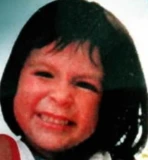
Pilar Sophia Rodriguez was three years old in January 1999, living with her father, Marco Rodriguez, in Hollywood, Florida. She was small even for her age, three feet tall and thirty five pounds, with black hair, brown eyes, and a distinctive red birthmark on the bridge of her nose. On January 30, 1999, Marco allowed Pilar's babysitter, a young woman named Melissa Cooper, to take his daughter on what was supposed to be a two week vacation. Cooper brought Pilar roughly a hundred thirty five miles from home to Punta Gorda, Florida, to stay with her former boyfriend, a man named Keith Allen Wilson.
The two weeks came and went without Pilar returning home. When Cooper and Pilar still had not come back by February 22, 1999, more than three weeks after they had left, Marco contacted authorities, setting off an investigation into what had happened during a trip that had stretched on far longer than anyone had agreed to.
A Story of Escape and Abuse
When investigators eventually located and questioned Melissa Cooper, she offered an account centered on her own victimization. She told authorities she had fled the vacation home she had been sharing with Pilar and Wilson after Wilson became physically abusive, both toward her and toward the child in her care. In her telling, Wilson had punched Pilar, and that violence had ultimately caused the little girl's death, after which Wilson disposed of her body. Wilson, for his part, denied any responsibility, offering his own account that placed the blame for Pilar's death on Cooper instead. With both adults blaming each other and no physical evidence or remains to corroborate either version, the case initially stalled, going cold for years without producing charges against anyone.
A Cold Case Broken by a New Witness
For a decade, Pilar's disappearance sat unresolved, one more missing child case without a body, a conviction, or any real forward momentum. That changed in 2009, when new information came to light, including a new witness willing to speak with investigators about what they claimed to have seen or heard connected to Wilson during the period surrounding Pilar's death. That new information gave prosecutors enough to finally begin building a case that had sat dormant for ten years.
What that renewed investigation eventually surfaced was deeply disturbing. One witness later testified that Wilson had made comments suggesting he believed the state would never be able to prove a murder charge against him without a recovered body, and separately that alligators would eat anything, remarks that, if accurately reported, suggested Wilson had thought carefully about how to dispose of Pilar's remains in a way that would eliminate any physical evidence entirely. Another witness reported having seen what appeared to be a small child's foot protruding from the trunk of Wilson's car during the period in question, a detail almost too horrifying to process on its own, and one that, combined with the other testimony, painted an increasingly clear and damning picture of what had actually happened to Pilar after her babysitting trip took its dark turn.
A Plea Deal and a Trial
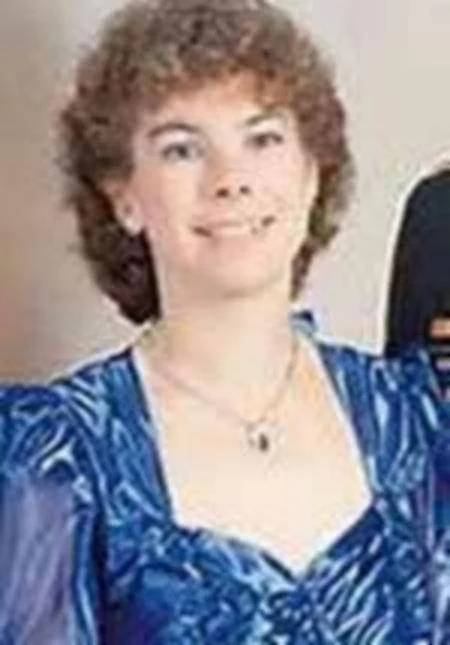
In July 2013, prosecutors reached a plea agreement with Melissa Cooper, by then going by the name Melissa Harding-Jones. She pleaded guilty to being an accessory after the fact to murder, and in exchange for that plea, agreed to testify truthfully against Wilson at trial, becoming the prosecution's central eyewitness in a case that otherwise rested heavily on circumstantial testimony and statements from other witnesses.
Wilson's trial finally took place in October 2017, eighteen years after Pilar disappeared. At trial, Harding-Jones testified that Wilson had grown increasingly violent during their time together in Punta Gorda, punching Pilar in the head with a closed fist hard enough that the small child fell into a wall. According to her testimony, Pilar grew progressively more ill in the days that followed the assault and ultimately died from her injuries. Harding-Jones told the jury that Wilson then placed Pilar's body inside a garbage bag, after which she never saw the child's remains again. The trial lasted eight days. Following that testimony and the accompanying evidence, the jury took only about two hours to reach its verdict, finding Keith Wilson guilty of second degree murder in Pilar's death.
A Life Sentence, and Consequences for the Babysitter Too
In December 2017, Keith Wilson, then forty six years old, was sentenced to life in prison for Pilar's murder. Melissa Harding-Jones received her own sentence separately, twelve years of probation on her accessory after the fact conviction, a considerably lighter outcome that reflected both her cooperation with prosecutors and, according to the judge overseeing her sentencing, her own documented history of abuse at Wilson's hands during the relationship. Judge George Richards, in explaining the sentence, specifically noted that without Harding-Jones's testimony, prosecutors would never have been able to bring Wilson to trial at all, acknowledging the uncomfortable reality that securing justice for Pilar required relying on testimony from someone who had also played a role, however coerced or complicit, in concealing what had happened to her. As part of her probation, Harding-Jones was required to speak to domestic violence organizations and to complete a mental health evaluation along with whatever treatment that evaluation recommended.
A Grave That Was Never Found
Despite the conviction, despite the trial testimony describing exactly what happened to her, and despite eighteen years of investigation that eventually connected all the pieces together, Pilar Rodriguez's body has never been found. Whatever Wilson actually did with her remains after placing them in that garbage bag, whether they ended up in the water among the alligators he reportedly joked about, or somewhere else entirely across the Florida landscape near Punta Gorda, that detail died with the silence Wilson maintained even after his conviction, having offered no cooperation in helping investigators or Pilar's family locate where she actually rests.
Pilar Sophia Rodriguez would be in her late twenties today had she lived, a toddler sent off on what her father believed was an ordinary two week vacation with a trusted babysitter, never to come home again. Her case stands now as a conviction without a body, justice secured eighteen years after the fact through the testimony of the one person who had also helped cover up what happened to her, a resolution that answered the central question of who was responsible for Pilar's death while still leaving her family without anywhere to bring her home to.
Prosecutors Dan Feinberg and Cynthia Rebholz-Rubin, who handled the case for the State Attorney's Office in Florida's Twentieth Judicial Circuit, spent years building a prosecution around testimony rather than forensic evidence, a difficult path in any homicide case and an especially hard one when the victim was a three year old child who had no voice of her own left to describe what happened to her. The verdict they secured did not undo the eighteen years Marco Rodriguez spent without answers, and it has not given him a grave to visit, but it did close the door on the possibility that Keith Wilson would spend the rest of his life free, having gambled, according to the words witnesses attributed to him, that a body buried well enough would keep him beyond the law's reach permanently.
Anyone with information related to Pilar Sophia Rodriguez's case is asked to contact the Charlotte County Sheriff's Office at 941-639-2101.
Sources
- The Charley Project: Pilar Sophia Rodriguez
- State Attorney's Office, 20th Judicial Circuit: The Murder of Pilar Rodriguez
- State Attorney's Office, 20th Judicial Circuit: Guilty for the Murder of Pilar Rodriguez
- State Attorney's Office, 20th Judicial Circuit: Life in Prison for the Murder of Pilar Rodriguez
- WINK News: Man convicted of killing Punta Gorda toddler sentenced to life
- Fox News: Florida man gets life for killing girl who vanished in 1999