A Year Nobody Noticed: The Death of Justina Morales
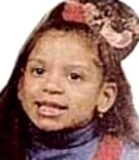
Justina Morales was eight years old in the fall of 1995, living on Halsey Street in the Bedford-Stuyvesant neighborhood of Brooklyn, New York, with her mother, Denise Solero, and her mother's boyfriend, a man named Luis Santiago. She was Hispanic, with brown hair and brown eyes, an ordinary elementary school student enrolled at Public School 1 in the neighborhood. In November 1995, Denise withdrew Justina from that school, telling administrators the family was relocating and that Justina would be transferred to a new school elsewhere. That transfer never happened. Justina was never re-enrolled anywhere.
When neighbors asked after the little girl in the months that followed, Denise told them Justina had gone to live with her father out of town, a story that, for a devastatingly long stretch of time, nobody thought to question closely enough to look into further.
Beaten for Refusing a Bath
Justina Morales died on December 31, 1995, New Year's Eve, only weeks after she had been pulled from school. According to what would later come out at trial, Luis Santiago had been physically abusing Justina for years by that point, a pattern of violence that predated her final months by a long stretch. On the night she died, Santiago beat her after she refused to take a bath in preparation for a New Year's Eve party the household was planning to attend. That beating proved fatal. Justina's body was never recovered, and investigators later came to believe her remains had simply been disposed of along with the household's ordinary garbage, an especially bleak detail even by the standards of a case already defined by cruelty and neglect.
A Disappearance Nobody Reported for Fourteen Months
What makes Justina's case especially haunting is not only how she died but how completely her absence went unnoticed by anyone positioned to catch it. More than a year passed with no formal report to police, no follow up from her former school despite her sudden, unexplained withdrawal, and no welfare check from any agency that might reasonably have been expected to notice an eight year old child had simply vanished from the systems meant to track her, school enrollment, medical care, any of the ordinary touchpoints of a child's daily life. It was not until February 1997, fourteen months after Justina's actual death, that a family friend finally went to police and reported that Justina had been killed, giving investigators their first real indication that something had gone seriously wrong.
That report set off an investigation that eventually determined Justina had died back on December 31, 1995, and pointed investigators directly at Luis Santiago and Denise Solero as the people responsible for both her death and the extended cover-up that had kept anyone from learning about it for well over a year.
A Trial That Exposed a Broken System
Santiago's trial in 1997 revealed the extent of the abuse Justina had suffered, testimony that described years of physical mistreatment culminating in the beating that finally killed her. The trial also revealed that Denise Solero herself had been a victim of Santiago's abuse throughout their relationship, a detail that complicated, without excusing, her own role in covering up what had happened to her daughter. Solero ultimately agreed to testify against Santiago and pleaded guilty to hindering prosecution, receiving a sentence of probation in exchange for her cooperation. A Brooklyn jury found Santiago guilty of second degree manslaughter, and roughly two years after Justina's death, he was sentenced to a term of six to nineteen years in prison.
Justina's case emerged during a period when New York City's child welfare system was already facing intense public scrutiny over its repeated failures to protect children who were known or suspected to be at risk. Her case became grouped, in public discussion and subsequent policy reviews, alongside other high profile failures of the same era, including the deaths of Elisa Izquierdo and Nadine Lockwood, children whose deaths likewise exposed how thoroughly at risk kids could slip through the cracks of a system that was, at least in theory, designed to catch exactly this kind of danger before it became fatal. Elisa Izquierdo's death in particular, just months before Justina's, had already forced a public reckoning over the city's Administration for Children's Services, prompting new mandates around how caseworkers were supposed to track and follow up on children flagged as being at risk. Justina's case arrived on the heels of that reckoning and showed, in the starkest possible terms, that the reforms prompted by Elisa's death had not closed every gap. A school system that allowed an eight year old to simply vanish from enrollment records without any follow up, no home visit, no inquiry into where she had actually gone, for well over a year, represented exactly the kind of institutional blind spot those reforms were supposed to eliminate.
The scale of that failure is difficult to fully absorb even now. An eight year old girl, enrolled in a New York City public school one month and gone from its rolls the next, prompted no mandated report, no visit from a truancy officer, no call to child protective services, nothing beyond a mother's unverified claim that her daughter had been sent to live with her father. For fourteen months, that explanation was simply accepted by everyone around Justina's family, until a family friend finally decided it no longer made sense and went to police herself, doing what no official system built specifically to catch this kind of situation had managed to do on its own.
A Mother's Later Attempt at Contact
Years after the trial concluded, in 1999, Denise Solero, who had by then changed her surname to Forbes, sought supervised visitation rights with another daughter, Sierra, a child separate from Justina. Brooklyn Supreme Court Justice Joseph Bruno denied that request outright, telling Solero plainly that he saw no basis at that point to allow her to visit with any child, a ruling that reflected the court's own assessment of what her role in Justina's death and its cover-up meant for her fitness to be trusted around any other child going forward.
No Grave, No Closure
More than a quarter century after Justina Morales died, her case remains formally closed in the sense that both people responsible for her death and its concealment were identified, tried, and sentenced, yet it remains permanently unresolved in the one way that might have offered her family something resembling closure. Her remains have never been found, believed lost among ordinary household trash disposed of sometime after her death, meaning there is no grave, no marker, no physical place connected to Justina at all beyond the Brooklyn street where she once lived and the elementary school records that stopped, without explanation, in November 1995.
Justina would be in her late thirties today had she lived. Instead, her case stands as one of the clearest examples of how completely a child can disappear from every system meant to protect her, not through any single dramatic failure but through an accumulation of missed signals, unasked questions, and institutions that simply stopped looking once a name dropped off an enrollment list.
Anyone with information related to Justina Morales's case is asked to contact the New York Police Department at 212-694-7781.
Sources
- The Charley Project: Justina Morales
- Wikipedia: Murder of Justina Morales
- UPI Archives: Santiago guilty of manslaughter 2
- Medium: The Tragic Case of Justina Morales, A Forgotten Life
- PeoplePill: Justina Morales, American murder victim