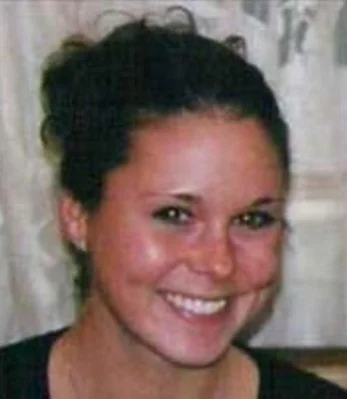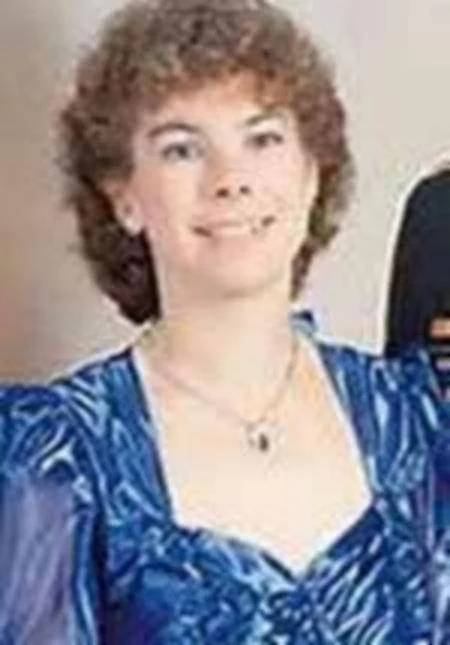
The Murder of Katherine Heckel
On the morning of July 15, 1991, Katherine "Kathy" Dolan Heckel woke up in Mill Hall, Pennsylvania, and went to work like it was any other Monday. She called her daughter at 9:15 a.m. to wake her up. She stopped by a mid-morning meeting and brought coffee and donuts for her colleagues. She called her kids again just before noon to check in on basketball practice and ask her daughter to start dinner, pork chops, before she got home. Then she left for her lunch break, drove her silver 1990 Ford Festiva out of the parking lot of the International Paper Company in Lock Haven, and was never seen again.
She was 40 years old. She had been married for eighteen years. She had a nine-year-old son and a thirteen-year-old daughter who were home alone that afternoon, waiting for a mother who would never walk back through the door.
It would take twenty-four years before anyone was arrested for Kathy's murder. It would take another three before the man convicted of killing her was sentenced to prison. And through all of it, across every search and grand jury proceeding and trial and appeal, her body was never found. Kathy Heckel remains missing to this day. But the man a jury held responsible for her death is behind bars, the product of one of the most tenacious cold case investigations Pennsylvania has ever seen.
Who Kathy Was
Katherine Dolan Heckel was a management secretary at the International Paper Company's Hammermill plant in Lock Haven, a small city in Clinton County in north-central Pennsylvania. She was a reliable employee, a devoted mother, and the kind of person whose colleagues noticed immediately when she did not return from lunch. She was known for keeping people informed, for being consistent, for caring about the people around her. Her daughter Alicia and son John were the center of her world.
Kathy's husband, John Heckel III, was a full-time member of the National Guard, and on July 15 he was away on a two-week training exercise at Fort Drum, New York, several hours from home. The couple had been married since 1972, and by the summer of 1991, John suspected the marriage was under strain, though he had not confronted Kathy directly about his concerns. What he suspected, and what multiple witnesses at trial would later confirm, was that Kathy had become involved in a brief extramarital affair with a coworker at the paper mill.
That coworker was Loyd Waitman Groves.
Loyd Groves and the Affair
Loyd Groves was 42 years old in the summer of 1991, an industrial chemist and hygienist who specialized in asbestos abatement. He had worked at the Hammermill plant since 1981. He was married, with four school-aged children; his wife was also named Katherine and worked part-time at a local library. The Groves and Heckel families lived in the same community, their children attended the same schools and moved in the same circles, and Kathy and Loyd had regular contact both at work and socially, including on a company-sponsored volleyball team.
According to multiple witnesses, an affair between Kathy and Loyd developed during the spring and summer of 1991. Loyd has always denied this, but the testimony at trial was consistent: the relationship was real, it was brief, and by the time July arrived, Kathy had decided to end it. She told her close friend Dennis Taylor, with whom she was also involved, that Loyd was deeply upset about being broken off with. She described feeling anxious and fearful of him, telling people he had been stalking her and sending her lewd messages.
On the morning of July 15, in a conference room near Groves's office, something significant happened. Kathy was attending a meeting with roughly eighteen colleagues when Groves came in and disrupted it. Witnesses described him barging into the room and storming after her. An argument between the two followed, audible to others nearby though the specific words were not overheard. The confrontation rattled Kathy visibly. She called Dennis Taylor at around 11:30 that morning, sounding disturbed and upset, telling him Loyd was pressing her to go to lunch with him. Dennis had to cut the call short but told her he would ring back. When he did, she had already left the building.
She never made it to the restaurant where she and Dennis had planned to meet that evening.
The Car, the Clues, and the Silence
When Kathy did not return from her lunch break, her work friend Carol Smith grew concerned. Kathy was the kind of person who always called if she was running late. That evening, Dennis Taylor went to the restaurant where they had plans, hoping she had simply lost track of time. She was not there. Meanwhile, at Kathy's home, her nine-year-old and thirteen-year-old children were waiting alone. John was hours away at Fort Drum. When Kathy's mother, Margaret Dolan, eventually called him, he came home immediately on emergency leave. The family reported her missing that same night.
Two days later, on the evening of July 17, Kathy's silver Ford Festiva was found near the Lock Haven Hospital. It was parked in third gear with the emergency brake applied. The keys were missing. There was no sign of Kathy, no blood, nothing that pointed directly to what had happened. Police, firefighters, volunteers, horse-mounted search crews, and canine rescue teams scoured the surrounding forests and rural areas for weeks. Nothing was found.
Loyd Groves was identified as a suspect almost immediately. The timeline put his van leaving the International Paper Company around the same time as Kathy's car. When police asked him about his whereabouts, he told them he could not remember where he had been that afternoon. He had stopped keeping his meticulously maintained daily work log on July 1, two weeks before the disappearance. He had missed a 2:00 p.m. meeting at work that day but had been spotted at the mill later in the afternoon. That evening, it was his and Katherine's eighteenth wedding anniversary; he arrived home around 5:30 with pizza, and the couple went out to dinner. His wife later told investigators he had seemed preoccupied that evening and she assumed it was something to do with work.
In the weeks that followed, Groves's behavior alarmed those around him. He appeared anxious and paranoid, repeatedly asking colleagues and acquaintances whether police thought he was involved. He asked a friend to look after his wife and children in case he was arrested. He never once asked about Kathy or expressed concern for her welfare. He cut a section of stained carpeting from his van. When investigators examined the van's interior, they found traces of Type A human blood on the upholstery, the middle seat, and the interior light. A box of .25 caliber ammunition was in the van, along with a hunting knife, a partially used roll of duct tape, and two duffel bags. A .25 caliber pistol was recovered from his desk inside the paper plant. The mill had a strict no-firearms policy.
Despite all of this, investigators did not feel they had enough to charge him. Groves was questioned, treated as a suspect, watched, but not arrested. He soon sold his property in Lock Haven and moved his family to the Pittsburgh area in Beaver County. Life went on. Kathy's family waited.
Twenty-Four Years of Waiting
Kathy was declared legally dead on July 15, 1998, exactly seven years to the day after she vanished. Her family erected a tombstone at an empty grave. Her husband John told reporters he would keep searching for her body as long as he could draw breath. Kathy's children, Alicia and John William, grew up without her, carrying the knowledge that the man they believed responsible for their mother's death was living freely in another part of the state.
The cold case was never truly closed. Over the years, Pennsylvania State Police troopers continued to revisit the evidence, conduct interviews, and monitor Groves. A significant piece of testimony emerged years later from a woman named Gayle Taylor, who had worked with Groves at the Portage County Health Department in Ohio after he left Lock Haven. She told investigators that sometime around 1994 or 1995, during a conversation in which she mentioned that drugs might be the end of her teenage son, Groves responded: "I can show you how to get rid of a body so it can never be found."
That statement, combined with the ongoing work of two state troopers, Curtis Confer and Michael Hutson, who re-examined the evidence with fresh eyes, eventually led to a grand jury. In 2014, a statewide grand jury presentment concluded there was sufficient evidence to charge Groves. DNA testing had by this point confirmed that the blood found in his van, including traces identified near the area where the carpet had been cut out, belonged to Kathy Heckel. On January 28, 2015, twenty-four years after Kathy went missing, Loyd Groves was arrested at his home in Beaver, Pennsylvania, and charged with first-degree and second-degree murder. He was 65 years old.
The Trial and the Verdict
Groves remained in custody at the Clinton County Correctional Facility from his arrest in January 2015 until his trial in November 2018, a wait of nearly four years. The trial itself lasted two weeks, with prosecutors presenting a case built entirely on circumstantial evidence, witness testimony, behavioral patterns, and forensic DNA analysis. There was no body. There was no direct witness to the killing. But there was a detailed and damning picture of a man who had motive, who had been seen in conflict with Kathy on the morning she died, whose van contained her blood, and whose behavior in the aftermath was that of someone who knew exactly what had happened to her.
Pennsylvania Senior Deputy Attorney General Daniel Dye told the jury in his opening: the case was about greed, lust, jealousy, and anger. The prosecution's theory was that Groves, unable to accept that Kathy had ended their affair, killed her sometime between noon and 3:00 p.m. on July 15 and disposed of her body so thoroughly it has never been located. The defense argued the whole case was a theory built on one source, Dennis Taylor, who was himself having an affair with Kathy, and that investigators had spent thirty years trying to convict Groves rather than genuinely investigate what happened.
Kathy's family took the stand. Her daughter Alicia, who had been thirteen when her mother left for lunch and never came home, told the jury her mother left for work that day exactly as she always did and had packed no suitcases. Her son John said he still felt broken, twenty-seven years later. Kathy's mother, Margaret Dolan, told the court: "It was the worst of the worst. It was not like Kathy to do this."
After two days of deliberation, the jury returned its verdict on December 3, 2018: not guilty of first-degree murder, guilty of third-degree murder. Groves was taken from the courthouse in handcuffs. Kathy's family wept.
At sentencing the following January, Groves again maintained his innocence. "I hurt no one, I committed no crime," he told the court. Judge Kenneth Brown was not moved. He sentenced Groves to ten to twenty years in state prison, the maximum permitted under guidelines in effect at the time of the crime in 1991. The judge said he would have imposed double that sentence had the law allowed it, calling the crime horrendous. Kathy's daughter's words at that hearing cut to the heart of what the family still carried: "There will be no closure until we know where Mom's body is."
After Conviction
Groves filed an appeal of his conviction, which was heard by a Pennsylvania Superior Court panel. In October 2020, that panel affirmed both the conviction and the sentence, ruling that there was overwhelmingly circumstantial evidence to support the jury's finding. The appeals court rejected Groves's arguments that evidence from the van and his desk should have been suppressed, and upheld the admission of Gayle Taylor's testimony about his comment regarding disposing of a body. His further appeals to the full Superior Court and the Supreme Court did not succeed.
Groves has been in state prison since his sentencing, receiving credit for the four years he spent in pretrial custody beginning in 2015. Under his ten-to-twenty year sentence, he became eligible for parole around 2025, at approximately 75 years of age.
Kathy Heckel's body has never been found. Her grave remains empty. Her family has had a conviction, but not the one thing they asked for above everything else: to know where she is, to bring her home, to lay her to rest somewhere with her name on it.
If you have any information about the location of Katherine Dolan Heckel's remains, please contact the Pennsylvania State Police, Troop F, at 570-726-6000, or submit a tip to Pennsylvania Crime Stoppers at 1-800-4PA-TIPS.
Sources
- The Charley Project: Katherine Dolan Heckel
- FBI ViCAP: Katherine Dolan Heckel
- The Lock Haven Express: Court Affirms Groves' Murder Conviction
- The Lock Haven Express: Possible New Evidence Leads to More Searches in Woman's Disappearance Nearly 30 Years Ago
- The Lock Haven Express: The Story of Kathy Heckel and Loyd Groves
- The Record Online: Groves Sentenced to 10 to 20 Years
- The Record Online: Groves Murder Trial Under Way
- TribLive: Man Gets 10 to 20 Years in Death of Lock Haven Woman Missing Since 1991
- CBS Pittsburgh: Beaver Co. Man Convicted of Murder; Victim's Body Was Never Found
- WNEP: Verdict in Clinton County Cold-Case Murder
- WNEP: Groves Sentenced in Cold-Case Murder Trial
- Criminal Discourse Podcast: Incomplete Justice: The Vanishing of Kathy Heckel
- DOE Network: Katherine Dolan Heckel