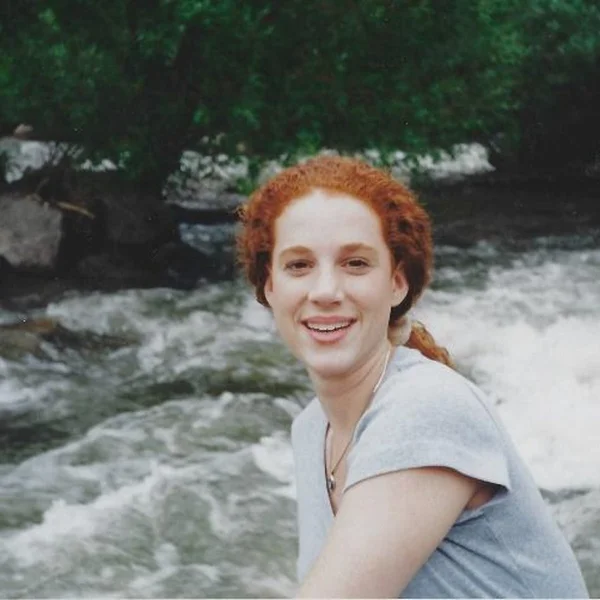
The Disappearance and Murder of Amanda Victoria Brown
Amanda Victoria Brown was seven years old, small for her age, with blonde hair and a gap-toothed smile. She was a second-grader at Lopez Elementary School in Tampa, Florida, and by all accounts she was exactly what you would hope a seven-year-old to be: cheerful, curious, and full of weekend plans. In September 1998, she was looking forward to a trip to Daytona with her father. She never made it. On the morning of September 11, 1998, her mother woke up to an empty bed and a silence that would never fully be explained, at least not by the man responsible for it.
Amanda's case is one that haunts not only because of what was done to her, but because of how easily it might have been prevented, had the right information been in the right hands at the right moment.
A Child Caught Between Two Households
Amanda was born on March 13, 1991, to Roy Brown and Kathryn Hartman, a couple who had ended their relationship when Amanda was still very young. Roy had since remarried and was living in Lakeland, Florida, running a car painting business. The custody arrangement was a familiar one: Amanda spent every other weekend and every Wednesday with her father, with the rest of her time at her mother's mobile home on Old Hillsborough Avenue in Tampa.
By all accounts, Amanda loved both parents. The morning before her disappearance, her father drove her to school in Brandon after a night of Nintendo and dinner together. He told her it would be just two more sleeps before they headed to Daytona. She drew him a picture of Tweety Bird, his favorite cartoon character, and told him she loved him. That was the last time Roy Brown ever saw his daughter.
The Man His Daughter Introduced to a Stranger
On September 9, 1998, a Wednesday evening, Willie Seth Crain Jr. went to a bar in Hillsborough County with his daughter, Cynthia Gay. It was there that Cynthia introduced her father to Kathryn Hartman. Crain was 52 years old, a commercial crab fisherman who worked the waters of Tampa Bay. He and Hartman danced and talked for hours, until well past midnight, and when the evening ended he dropped her off at her trailer. She told him she wanted to see him again.
What Hartman did not know, and what nobody thought to tell her, was that the man her daughter had just introduced her to was a convicted child sex offender. In 1985, Crain had been convicted of three counts of sexual battery on a child and sentenced to twenty years in prison. His victims were all girls under the age of eleven, some of them neighbors, some of them relatives. He served only six years before being released. His criminal history stretched back further still, to 1969, but the 1985 conviction was the one that should have, by any reasonable measure, kept him far away from families with young children. It did not.
The following afternoon, September 10, Crain returned to Hartman's trailer. Amanda was there after school. He sat down with her at the kitchen table and helped her with her homework, offering her a dollar for every correct answer. He noticed she had a loose tooth and offered her five dollars to let him pull it. She refused. Before he left that afternoon, Hartman invited him back for dinner.
The Last Night
Crain returned that evening as invited. After dinner, he told Amanda and her mother about the large collection of videotapes he had at his trailer, and Amanda, being seven and delighted by the prospect of movies, pleaded with her mother to go. Hartman agreed. Crain drove them both to his place, where they settled in to watch Titanic in the living room.
At some point during the evening, Hartman's account states that Crain was found alone in his bedroom with Amanda, who was sitting between his legs while he showed her how to use the remote control. Hartman separated them. Later, around 2:30 in the morning, Hartman told Crain he could lie down to sober up while she went to bed. Within minutes of her going to sleep, Crain entered the bedroom and lay down on the bed alongside Hartman and Amanda, fully clothed. Amanda was wearing her nightgown. Hartman did not ask him to leave.
When Hartman's alarm went off at 6:12 in the morning, Crain was gone. So was Amanda. Hartman called Crain on his cell phone, and he told her he did not know where Amanda was. He said he was loading his boat at a boat landing.
A neighbor, Penny Probst, later testified that she had seen a white truck parked outside the trailer in the early morning hours, its engine running, before it drove away. The timeline of what happened in that window between Crain leaving the bed and Hartman's alarm going off has never been fully closed by anyone other than Crain himself, and he has never told the truth about it.
The Boat Ramp and the Rolling Items of Clothing
At approximately 6:15 in the morning of September 11, fisherman Albert Darlington witnessed Crain arriving at the Courtney Campbell Causeway boat ramp on Tampa Bay. What he saw was unusual enough that it stayed with him. Crain backed his truck and boat trailer so far into the water that the front tires were halfway submerged, far deeper than his normal habit. He was wearing dress clothes, a two-tone maroon shirt and dark slacks, rather than the jeans he typically wore on the water, and he was carrying what appeared to be a rolled-up bundle of clothing.
Crain launched his boat in what Darlington described as an overall odd manner, and headed out onto Upper Tampa Bay. At around 8:30 that morning, Detective Mike Hurley located Crain already out on the water. By then, Hartman had reported Amanda missing.
What Darlington also shared with investigators was something far more chilling than the strange behavior at the ramp. On two separate occasions in the eighteen months before Amanda vanished, Crain had told him plainly that he had the ability to get rid of a body in such a way that no one would ever find it.
What the Luminol Revealed
When police searched Crain's trailer, the first thing they noticed was the overwhelming smell of bleach in the bathroom. Crain told investigators that between 1:30 and 5:30 in the morning, he had been cleaning his bathroom because he had spilled bleach. Investigators performed a Luminol test, a chemical process that reacts to both blood and bleach even when invisible to the naked eye. The result was unambiguous. The floor, the bathtub, and the walls all lit up.
Further examination of the bathroom produced bloodstains on the toilet seat and a piece of tissue inside the toilet bowl. When tested, the DNA from both the toilet seat and the tissue matched Amanda Brown. A stain on the boxer shorts Crain had been wearing that morning also matched her DNA. Perhaps most damning of all, the combined DNA sample taken from one item contained genetic material from both Amanda Brown and Willie Crain. The probability that the match could belong to any other random individual was one in 388 million.
Crain also had fresh scratches on his arms when police encountered him that morning.
He was arrested on October 2, 1998, charged with first-degree murder and kidnapping. Two weeks before that arrest, he had already been detained on charges brought by two women who came forward to report that Crain had repeatedly sexually assaulted them as children between 1965 and 1971.
A Trial Built on What Was Left Behind
The trial of Willie Seth Crain Jr. lasted nine days. It was, in the truest sense of the phrase, a circumstantial case, because Amanda's body was never recovered. Investigators conducted an extensive two-week search of Upper Tampa Bay, the land surrounding the causeway, and the areas near both residences, and found nothing. The maroon shirt and dark slacks Darlington had seen Crain wearing at the boat ramp also disappeared and were never recovered. Investigators believe Crain, using his knowledge as a commercial crabber of the bay's waters and crab trap locations, disposed of Amanda's body somewhere in the water where it would not be found.
What the jury had before them was the DNA evidence, Darlington's testimony about the early morning boat launch and Crain's prior statements about disposing of bodies, the scratches on Crain's arms, the bleach-soaked bathroom that lit up under Luminol, and the undeniable fact that Amanda had been in Crain's care and was simply gone. At the penalty phase, three of Crain's victims from the 1985 sexual battery convictions were permitted to testify, placing his pattern of predatory behavior toward young girls squarely before the court.
On September 17, 1999, after just two hours of deliberation, the jury found Willie Seth Crain Jr. guilty of first-degree murder. They recommended the death penalty. Circuit Judge Barbara Fleischer agreed, and Crain was sentenced to death.
A Man Who Never Spoke and a Father Who Never Stopped Asking
Crain has maintained his innocence throughout his time on death row, filing multiple appeals in the years that followed. The Florida Supreme Court affirmed his conviction in 2004, finding sufficient evidence that he killed Amanda during the course of a kidnapping with intent to inflict bodily harm. Subsequent postconviction motions were denied as well. As of his last known status, Crain remained on Florida's death row.
What has never happened, in all the years since September 1998, is a full account from Crain of what he did with Amanda's body. Roy Brown, Amanda's father, has never stopped trying to get that answer. In 2006, he began writing letters to Crain directly, hoping to persuade him to reveal where his daughter was. In 2009, reports emerged that Crain had written back and expressed a willingness to cooperate, while still maintaining he was innocent of the crime. The Florida Department of Corrections refused to allow the two men to meet in person, citing security concerns. The answer, if Crain has one, remains locked somewhere he has chosen not to open.
Amanda's remains have never been found.
The Weight of What Was Allowed to Happen
There is a particular kind of grief that follows cases like Amanda Brown's, one that folds guilt and horror together in ways that are hard to separate. Crain was a convicted child sex offender. He had served prison time. He was known to law enforcement. But in 1998, the infrastructure of public sex offender registries was still new and inconsistently maintained, and a mother at a bar had no practical way of knowing that the man her daughter had just introduced her to had already been convicted of brutally harming children like her own.
Amanda probably felt safe around Crain, at least at first. He had been invited into her home by her mother. He had played games with her, helped with her homework, offered her money, paid her the kind of attention that some adults offer to children simply to earn their trust. It is a pattern as old as predation itself, the careful construction of access, one evening at a time, until the moment comes.
She was seven years old, three feet ten inches tall, and weighed forty-five pounds. She had a loose tooth she wouldn't let anyone pull, and she was excited about Daytona. Her father still does not know where she is.
Amanda Victoria Brown has never been officially declared found. She remains listed as a missing person, her case still open in the way that all cases with unrecovered remains remain technically open. But the jury and the courts long ago reached the only conclusion the evidence supported. She is gone, and the man who took her from that trailer in the early hours of a September morning has never said where he left her.
Sources
- The Charley Project — Amanda Victoria Brown
- Wikipedia — Willie Crain Jr.
- Odd Murders and Mysteries — The Murder of Amanda Brown
- Chilling Crimes — Amanda Brown
- The DOE Network — Amanda Victoria Brown
- FindLaw — Crain v. State (2004), Florida Supreme Court
- FindLaw — Crain v. State (2011), Florida Supreme Court
- Florida Legislature Capital Cases — Willie Seth Crain Jr.
- Resource Center for Cold Case Missing Children — Amanda Victoria Brown
- Murder DB — Willie Crain Murders Child in Florida