Maybe I Have a Split Personality: The Disappearance of Tricia J. Kellett
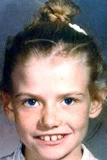
Tricia J. Kellett was eight years old on May 7, 1982, living with her family in the Uptown neighborhood of Chicago, Illinois. She stood four feet tall, weighed seventy pounds, with blonde hair and hazel eyes, a small gap between her upper front teeth, and a medical history that included a previously broken left wrist and a fractured skull. That afternoon after school, Tricia went out to play with friends while waiting for her father to come pick her up for the weekend. She ended up on a neighbor's porch near Leland and Malden streets, playing with a litter of puppies, an entirely ordinary way for an eight year old to spend a spring afternoon.
Witnesses reported seeing Tricia get into a car with one or two men sometime that afternoon, a blue four door 1979 Dodge or Pontiac with a damaged front passenger door and a license plate beginning with the letters Q and R. She never came home. That sighting became the last confirmed trace of Tricia Kellett, and it set off an investigation that would eventually center on one of the most disturbing suspects in Chicago's cold case history.
A Suspect Identified Almost Immediately
Investigators moved quickly toward a man named Marvin Pontarelli, a known sex offender whose vehicle matched the description witnesses had given almost exactly. Pontarelli's criminal history already included kidnapping, sexual assault, and rape, and multiple witnesses from the neighborhood picked him out of a police lineup shortly after Tricia disappeared, including one who stated he had seen Pontarelli entering the Malden Arms Hotel with Tricia and another man on the day she vanished.
Pontarelli was brought in for a polygraph examination, which returned what investigators described as a non-cooperative, guilty result. Around the same time, three of Tricia's friends, all between eleven and twelve years old, came forward and told police that Pontarelli had taken them to his apartment, given them beer and drugs, sexually assaulted them, forced them into sexual acts, and photographed them, disclosures that led to a search of his apartment. That search turned up sixty six separate items of child pornography, including photographs of the three girls who had come forward, along with guns, brass knuckles, tear gas, cattle prods, and handcuffs. Pontarelli was charged with contributing to the delinquency of a minor, indecent liberties with a child, child pornography offenses, and weapons violations. Six months later, all of those charges were dismissed without public explanation, after the victims failed to appear in court to testify against him. Investigators came to believe Pontarelli had paid the girls' families to ensure their silence, a theory that, if true, would explain how a man facing that volume of physical evidence and eyewitness testimony walked away from every charge entirely.
An Address Book in Arizona
The case sat cold for nearly two years until information surfaced out of Tucson, Arizona, connected to a man named Larry Fassler, a former inmate who had known Pontarelli. When investigators searched Fassler's belongings in connection with an unrelated matter, they found his personal address book, and inside it, under an entry dated October 1982, roughly five months after Tricia disappeared, was her name and home address in Chicago, with Pontarelli's name written directly underneath it.
That discovery reopened active interest in Pontarelli as a suspect, and in 1985, he was arrested in Phoenix on matters unrelated to Tricia's case. When investigators pressed him about Tricia during that arrest, Pontarelli grew visibly emotional and told them he believed she was dead, buried somewhere on property his own family owned in Illinois. He then shifted the blame, suggesting Fassler had actually been the one responsible, and later changed his account again, claiming Fassler had taken Tricia to Mexico rather than killing her at all. None of his shifting statements were ever fully corroborated, and no charges connected to Tricia's disappearance were ever filed against him despite the admission.
A Foundation Poured the Same Week
One Chicago detective who worked the case developed a specific, chilling theory about where Tricia's remains might actually be. According to that theory, Tricia's body may lie within the foundation of the Pontarelli Apartments, a building connected to the suspect's family, noting that cement was being poured at that property around the exact time Tricia disappeared in May 1982. If accurate, the theory would mean Tricia's remains have been sealed inside solid concrete for more than four decades, permanently inaccessible to any search effort short of demolishing the structure itself.
Perhaps the most unsettling detail to emerge from the entire case came from Pontarelli's own pre-sentence report, compiled in connection with an unrelated conviction. In it, Pontarelli was quoted making a statement that has stuck with investigators and researchers who have studied the case in the years since: that maybe he had a split personality, and that the personality he was not aware of was the one that killed her, a statement that read less like a genuine claim of dissociative illness and more like a half admission wrapped in just enough ambiguity to avoid ever being usable as a formal confession.
A Suspect Who Died Without Ever Answering For It
Marvin Pontarelli died in prison in 1994, having never been charged or tried in connection with Tricia Kellett's disappearance despite the lineup identifications, the address book, the split personality statement, and his own emotional admission during his 1985 arrest that he believed she was dead and buried on family property. Larry Fassler has also since died, taking with him whatever he actually knew about the entry in his own address book connecting Tricia's name directly to Pontarelli's.
Tricia's family has continued pushing for the case to be fully reopened and reexamined in light of everything investigators pieced together over the years, and Chicago Police have indicated they would review the file for any new leads worth pursuing. Tricia's own sister has expressed hope that the information that surfaced out of Arizona, connecting Larry Fassler's address book directly to both Tricia's name and Pontarelli's, might finally be enough to prompt a full, formal reopening of the investigation, rather than the periodic, incomplete reviews the case has received in the decades since Pontarelli's death closed off the possibility of ever prosecuting him directly.
What makes Tricia's case especially frustrating for investigators who have studied it since is how close it came, on paper, to being solved in the conventional sense. There was a matching vehicle, multiple lineup identifications, a hotel sighting placing the suspect with the victim on the day she vanished, physical evidence in the form of pornography seized from his own apartment, an address book entry linking two known predators directly to Tricia by name, and finally a statement from the suspect himself, given under the pressure of an unrelated arrest, all but admitting he believed she was dead and knew roughly where her remains might be. In most cold cases, any single one of those pieces would represent a significant break. In Tricia's case, every one of them existed, and none of them, together or separately, was ever enough to bring a single charge connected to her disappearance before the one man closest to it died in prison.
Tricia would be in her early fifties today had she lived. More than forty years after she was last seen playing with puppies on a neighbor's porch, her case remains formally unsolved, anchored to a suspect who admitted just enough to implicate himself without ever facing a courtroom for it, and to a foundation of poured concrete that may or may not still hold the answer investigators have never been able to reach.
Anyone with information about Tricia J. Kellett's disappearance is asked to contact the Chicago Police Department at 312-744-8266.
Sources
- The Charley Project: Tricia J. Kellett
- NBC Chicago: Troubling Clues in Case of Unsolved 1982 Chicago Kidnapping
- The Resource Center for Cold Case Missing Children's Cases: Tricia J. Kellett
- Missing People in America: Tricia Kellett Missing from Chicago, Illinois