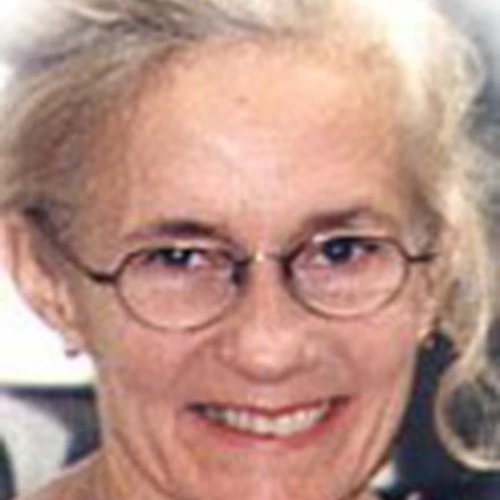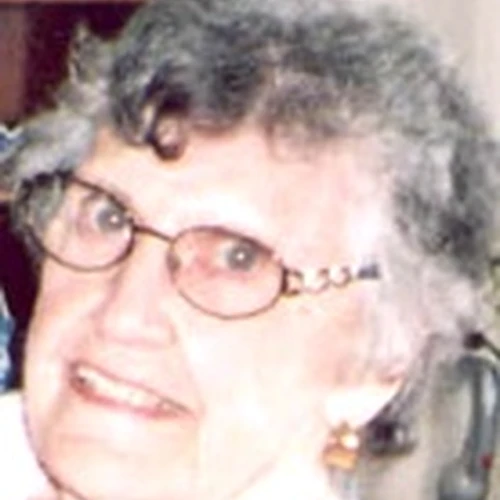
The Man Who Called Himself Her Grandson: Mabel Pugliese
Mabel A. Pugliese was 82 years old, living in her home on Oak Run Circle in Lakeland, Florida, with early stage Alzheimer's disease and a condition called sundowners syndrome that left her confused and disoriented during the late afternoon and evening hours. She had a replaced hip, needed a walker or wheelchair to get around, and relied on a daily dose of the blood thinner Coumadin, a prescription she had not refilled since April 2008, three full months before she disappeared. On July 13, 2008, Mabel called for help from inside her own house and asked a neighbor to phone the police. It was the last confirmed contact anyone outside her household had with her. She has never been found.
A Man Who Found His Way In
The person living in Mabel's home at the time was Edward Lee Caldwell, a thirty five year old registered sex offender who had moved in as her live-in caregiver in October 2007. Caldwell had reportedly met Mabel's actual grandsons while he himself was in jail, a connection he then used to ingratiate himself with the family and, eventually, with Mabel directly. Once inside the household, he presented himself in a way that blurred the line between hired caregiver and family member, and Mabel, whose cognitive decline made her increasingly dependent on whoever was closest to her day to day, began treating him accordingly. She bought him a truck, a bicycle, and clothing. Within nine months of moving in, Caldwell had taken roughly 173,000 dollars from her, obtained power of attorney over her affairs, and gotten himself named as a beneficiary in her will.
The Daughter Who Was Pushed Out
Mabel's daughter, Cathie Cameron, was living in the home as well and distrusted Caldwell from early on, worried about what his growing influence over her mother actually meant. That conflict came to a head in October 2007, when Mabel fell and broke her hip during an argument in the house. Caldwell accused Cameron of pushing her mother and throwing a glass bottle at her during the confrontation. Cameron maintained that her mother had simply slipped, and Mabel herself, when asked, said she had not actually seen who pushed her, if anyone had. Cameron was charged with battery on an elderly person over the incident, and a restraining order was issued barring her from having any contact with her own mother. The charges against Cameron were ultimately dropped, but the restraining order had already accomplished something with lasting consequences regardless of the incident's true circumstances: it removed the one person in the household who had been actively suspicious of Caldwell, clearing the way for him to consolidate his position with Mabel entirely uncontested. Not long after, Mabel disinherited Cameron from her will and named Caldwell as a primary beneficiary alongside two of her grandsons.
Warning Signs an Aide Could Not Ignore
Even as Caldwell tightened his control over Mabel's finances and legal affairs, a home health aide who continued visiting the house grew increasingly alarmed by what she was seeing. At one point, Mabel borrowed the aide's cell phone specifically because Caldwell was not letting her use the house phone, and called a friend in Connecticut to say that Caldwell was abusing her. The aide, disturbed by the pattern she was witnessing, filed an elder abuse complaint with Florida's Department of Children and Families in June 2008, roughly one month before Mabel disappeared entirely, and the agency opened an investigation. Around this same period, Caldwell reportedly took over administering Mabel's medications himself and instructed the aide to stop coming to the house altogether, cutting off one of the last remaining outside witnesses to what was actually happening inside.
A House Emptied of Everything But a Cane
Mabel's disappearance itself was not reported to authorities until December 2008, five months after anyone outside the home had last had confirmed contact with her, when her daughter finally filed a missing persons report despite the restraining order that had kept her away. When police searched the Oak Run Circle house afterward, they found it essentially emptied of Mabel's belongings, with only her cane and a handful of photographs left behind, as though someone had deliberately stripped the home of anything that might indicate she had ever actually lived there. Caldwell had also quietly put the house up for sale during the period Mabel was missing, with a closing scheduled for December 2008 that only fell apart when the realtor handling the sale realized the woman who supposedly owned the property could not be located or confirmed as ever having authorized it.
An Admission, and a Body Never Found
Investigators charged Caldwell in May 2009 with an extensive list of offenses connected to Mabel, including negligent manslaughter, aggravated neglect of an elderly disabled adult, exploitation of an elderly person, grand theft, and forgery. Prosecutors were candid that they did not know precisely where Mabel's remains were located or exactly how she had died, a gap in the physical evidence that complicated the case for years even as the financial and behavioral evidence against Caldwell continued to mount. Caldwell reportedly told at least some witnesses at various points that he had killed her, though those statements were never enough on their own to lead investigators to recover her body. On the eve of his scheduled trial, in March 2012, Caldwell pleaded no contest to aggravated manslaughter of an elderly person, neglect of an elderly person, exploitation of an elderly person, and three separate counts each of theft, forgery, and uttering a forgery. He was sentenced to thirteen years in prison. His case was later featured in a true crime documentary examining exactly the kind of predatory caregiver relationship that had allowed him access to Mabel in the first place.
A Pattern Elder Advocates Know Well
Caldwell's own history should have disqualified him from ever holding a position of trust over a vulnerable elderly woman in the first place. As a registered sex offender with prior convictions specifically for failing to comply with sex offender registration requirements, he was already someone the legal system had flagged as a risk well before he ever set foot in Mabel's home. What made his access to her possible was not a background check failure so much as the informal, relationship based way caregiving arrangements like this one often form outside of any formal agency oversight, built on personal connections, in this case a jailhouse acquaintance with her actual grandsons, rather than any credentialing process that might have caught his history before he moved in. Elder abuse investigators and advocates have long described this exact pattern as one of the more common and least visible forms of exploitation affecting aging adults with cognitive decline, a trusted figure gradually isolating a victim from family, consolidating financial and legal control, and removing anyone positioned to intervene, all of it accomplished through paperwork and social maneuvering rather than anything that would draw immediate outside attention until the person at the center of it has already vanished entirely.
Still Missing
More than fifteen years after Mabel Pugliese vanished from the home where a stranger had spent nine months systematically taking over every aspect of her life, her remains have never been recovered, and no one has ever been able to say with certainty where she is or exactly what happened to her in the final days before she disappeared. What the case left behind instead is a documented timeline of exactly how a vulnerable elderly woman living with dementia can be isolated, financially stripped, and physically removed from her own life almost entirely through legal and social channels, power of attorney, a rewritten will, a restraining order against the one relative who suspected something was wrong, well before anyone outside the house had reason to call it a crime at all.
Sources
- The Charley Project: Mabel A. Pugliese
- The Doe Network: 4737DFFL, Mabel Pugliese
- Bonnie's Blog of Crime: Monsters Among Us, Edward Lee Caldwell pled no contest to killing Mabel Pugliese