The One in the Middle: The Disappearance of Sharon Hensley
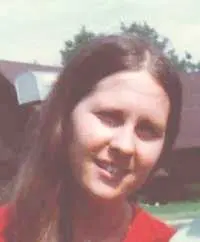
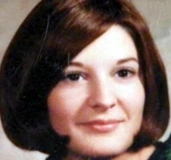
Sharon Hensley was 24 years old, a native of Bismarck, North Dakota, when she disappeared from Key West, Florida, in February 1973. The story her boyfriend told about where she had gone was strange enough on its own, a tale of burned identification and a spontaneous decision to sail around the world with strangers. It became far stranger decades later, once investigators realized that the man telling that story had also been the last person seen with two other women who vanished under his watch, one of whom he was eventually convicted of murdering more than half a century after her death.
A Boyfriend With a Story
By the early 1970s, Sharon was involved with a man named William Felix Vail, known to most people as Felix. Vail had already been married once before, to a woman named Mary Horton, who had drowned under circumstances he described as an accident back in 1962. By the time he was with Sharon, that earlier death had faded into the background as a tragic footnote rather than an open question, and Sharon, like everyone else in Vail's life at the time, had no particular reason to view him as dangerous.
Gone to Sea
According to Vail, Sharon met an Australian couple while the two of them were in Key West, and decided, seemingly on impulse, to join that couple on a voyage sailing around the world. He told Sharon's family that she had burned all of her identification documents before leaving, saying she wanted to become an entirely different person, a detail that, if true, suggests either an extraordinary personal reinvention or a story crafted specifically to explain why no trace of Sharon as herself would ever surface again. Vail's account of the Australian couple was notably inconsistent over the years. In some retellings he named them John and Vanessa. In others, the same couple became Frank and Sally. Sharon was never seen or heard from again after that February.
A Distressing Last Call
Sharon's own family disputed the idea that she had simply sailed off to reinvent herself. According to relatives, the last phone call they received from Sharon before she vanished was troubling rather than reassuring. Her mother later recalled Sharon's tone during that call as someone in genuine trouble, saying afterward that Sharon sounded like she was in deep trouble and crying out for help. That kind of memory, held onto for decades by a mother who never got another chance to speak with her daughter, sits uneasily next to Vail's version of a woman cheerfully abandoning her old life for adventure on the open sea.
The First Wife, Decades Earlier
To understand why investigators eventually circled back to Sharon's case with fresh suspicion, it helps to look first at what happened to Mary Horton Vail, Felix Vail's first wife. On October 28, 1962, Vail took Mary out on a boat on the Calcasieu River in Louisiana. According to his account at the time, Mary became entangled in fishing equipment and drowned accidentally. Investigators in 1962 largely accepted that explanation, and the case was closed without significant scrutiny. It would not stay closed forever. Mary's body had shown signs that did not sit comfortably with an accidental drowning, including a large bruise on her neck and, according to later forensic reexamination, indications that she had been forcibly held underwater. A scarf was found pushed several inches into her mouth. Vail had also taken out life insurance policies on Mary worth roughly 500,000 dollars in modern terms, with one of those policies having been issued and paid in full only months before she died.
A Second Wife, A Second Disappearance
Sharon Hensley was not the last woman to vanish from Felix Vail's life either. In 1984, Vail's second wife, Annette Craver Vail, whom he had married in 1983 when she was only 17 years old, disappeared as well. As with Sharon, Vail offered an explanation involving her voluntary departure, in various tellings claiming she had left him to go to Mexico. Annette has never been found, and like Sharon's case, hers has never resulted in criminal charges against Vail, despite the obvious pattern investigators eventually recognized connecting all three women.
A Pattern Too Consistent to Ignore
Taken individually, each of these three cases might have been written off, an accidental drowning, a young woman choosing to disappear into a new identity, a wife leaving for a new country. Taken together, spanning more than two decades and all connecting back to the same man as the last known person to see each woman alive, the pattern became difficult for investigators to dismiss. The FBI reportedly investigated Vail as a possible serial killer during 1993 and 1994, though that early scrutiny did not result in charges at the time.
A Journalist Reopens Old Wounds
The case against Vail gained new momentum in 2012, when investigative journalist Jerry Mitchell began publishing articles examining the connections between Mary's death and the disappearances of Sharon and Annette. Mitchell's reporting helped draw renewed attention to a set of cases that had largely gone cold, and his work is credited with contributing directly to the eventual reopening of the investigation into Mary Horton Vail's death.
An Arrest, Then a Conviction
In May 2013, Felix Vail was arrested in Comal County, Texas, and charged with murder in connection with Mary's death, more than fifty years after she drowned on that Louisiana river. The case moved slowly through the legal system, but in August 2016, a Louisiana jury needed only 33 minutes to convict Vail of second degree murder. Witnesses at trial described disturbing statements Vail had allegedly made over the years. A former neighbor, Wesley Turnage, testified that Vail once told him he had fixed Mary so that she would never have another child. Another acquaintance, Robert Fremont, testified that Vail had described, during a bicycle trip decades earlier, how he had struck Mary on the head and thrown her into the water. Vail's own son with Mary, Billy Vail, said before his own death from cancer that his father had once told him Mary would never bother anyone again, language Billy said he understood immediately as an admission of murder. Vail received a life sentence and was sent to the Louisiana State Penitentiary at Angola, in a case that has since been described as one of the oldest cold case murder convictions in American history.
Evidence the Jury Heard, But Charges That Never Came
During Vail's trial for Mary's murder, prosecutors were permitted to present evidence connected to both Sharon Hensley's disappearance and Annette Craver Vail's disappearance, using the pattern across all three women to support the case that Mary's death had been anything but an accident. Despite that evidence being presented to the jury, Vail has never been formally charged in either Sharon's case or Annette's, and both women remain officially classified as missing, their families left with a conviction connected to the same man but no legal resolution of their own.
Still Missing
More than fifty years after Sharon Hensley vanished from Key West with a story about sailing away to become someone new, she has never resurfaced, and no trace of her has ever been found. Her case is investigated by the Calcasieu Parish Sheriff's Office, the same Louisiana agency that eventually secured Felix Vail's conviction for Mary's murder, a connection that underscores just how tightly Sharon's disappearance remains bound to a man never held legally accountable for whatever happened to her, even after a jury found him guilty of doing exactly this kind of thing once before.
Sources
- The Charley Project: Sharon Hensley
- ABC News: Felix Vail Found Guilty of Murder in Wife's 1962 Death, While Disappearances of 2 Other Women Remain a Mystery
- ABC News: Reporter, Mom, P.I. Investigate What Really Happened to 3 Women and the Man Who Last Saw Them
- City Towner: The Chilling Case of Serial Killer William Felix Vail from Montpelier, Mississippi
- Bonnie's Blog of Crime: Suspected Serial Killer William Felix Vail
- KPLC: Mary Horton Vail Cold Case, Accident or murder?
- KPLC: Vail of Silence, Convicted murderer Felix Vail speaks from prison
- International Missing Persons Wiki: Sharon Hensley