Up in Smoke: The Sodder Children and the Fire Nobody Could Explain
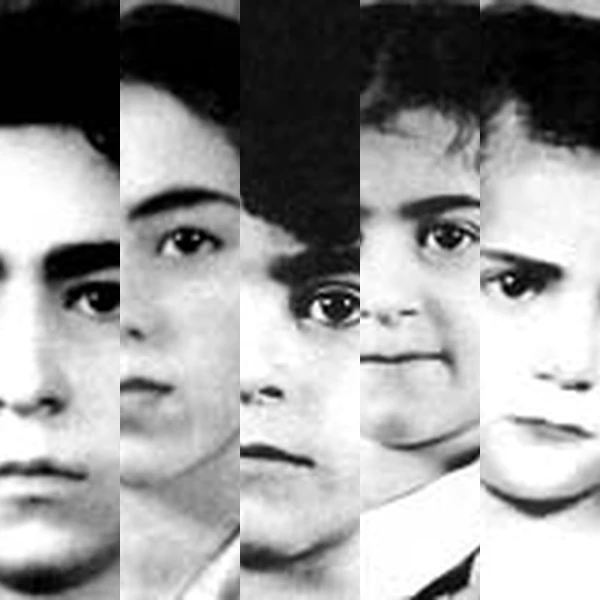
George Sodder had emigrated from Sardinia as a boy and built a solid, respectable life for himself in Fayetteville, West Virginia, running a trucking business and raising ten children with his wife Jennie, herself an Italian immigrant. George was not a quiet man about his politics. He spoke openly and often against Benito Mussolini, a stance that did not sit well with everyone in the local Italian immigrant community during the years surrounding the Second World War. That detail would come to matter a great deal to George and Jennie in the years after Christmas Eve 1945, the night their family home burned to the ground and five of their children, Maurice, fourteen, Martha, twelve, Louis, ten, Jennie, eight, and Betty, five, vanished as though the fire had simply erased them.
A Warm House, Then a Dark One
The family spent that Christmas Eve together as any family might, with the older daughter Marion surprising three of the younger children with toys earlier in the evening. Around ten o'clock, Jennie let the children stay up later than usual to enjoy their new gifts. At roughly 12:30 in the morning, the phone rang. Jennie answered to an unfamiliar woman's voice asking for a name she didn't recognize, laughing oddly in the background before the line went dead. She noticed, oddly, that the house lights were still on downstairs, which struck her as unusual for that hour. Around one o'clock, she heard something hit the roof with a loud bang followed by a rolling sound, though she thought little of it at the time. Not long after, she discovered flames rising near the fuse box and the phone line in George's home office.
George and Jennie woke the household as fast as they could. Six family members made it out alive: George, Jennie, their oldest daughter Marion, their three year old daughter Sylvia, and two of the older sons, John, twenty two, and George Jr., sixteen. But five of the children, the ones who had gone to sleep upstairs after their late Christmas Eve, Maurice, Martha, Louis, Jennie, and Betty, never came down. The staircase to the upper floor was already engulfed by the time anyone reached it. George tried climbing the outside wall to break a window and pull the children out that way, cutting his arm badly in the attempt and never managing to reach them. He and his sons ran for the ladder they normally kept propped against the house, the one they would have used to reach the second story windows directly. It was gone from where it always sat. They tried the rain barrel they kept for exactly this kind of emergency. It was frozen solid, useless. George ran to his own business trucks, hoping to drive one close enough to the house to climb onto the roof from the truck bed. Neither vehicle would start, despite both having run perfectly the day before. By the time the Fayetteville fire department arrived, the house had burned to the ground in well under an hour, and the children were gone.
A Convenient Explanation
The official investigation credited the fire to faulty wiring, and a coroner's ruling to that effect led to death certificates being issued for all five children on December 30, 1945, less than a week after the fire. George disputed this explanation immediately and specifically. He had recently had the house completely rewired, and the work had been inspected and approved. He also pointed out something that seemed to contradict an electrical fire entirely: the string of Christmas lights on the house had stayed lit even as the blaze spread, which should not have been possible if the wiring itself had shorted out and started the fire.
More troubling questions accumulated. The missing ladder was eventually found, not where it belonged, but tossed down an embankment roughly seventy five feet from the house. The phone line, it turned out, had been deliberately cut rather than simply damaged by fire, and whoever cut it would have needed to climb roughly fourteen feet up a utility pole to reach it. Fire Chief F.J. Morris told the family that his crew had found no bones anywhere in the wreckage, which he took as confirmation that the children had burned so completely nothing remained. Other accounts from that night suggest small remains actually were found and were quietly not disclosed to the grieving parents, a discrepancy that was never fully resolved either.
Jennie herself became one of the most persistent skeptics of the official account. She noted that ordinary household items, appliances and furniture, remained recognizable in the ash after the fire, which struck her as strange if the blaze had truly been hot enough and long enough to cremate five human bodies without leaving a trace. She read about a comparable house fire elsewhere that had killed seven people, in which investigators had recovered skeletal remains for every victim. She went so far as to burn animal bones herself as an informal experiment and found they never fully disintegrated, and she was told separately by a crematorium employee that human bone typically requires exposure to roughly 2,000 degrees Fahrenheit for a full two hours to be entirely consumed, conditions the Sodder house fire, burning for under forty five minutes, would not plausibly have reached.
Warnings Nobody Took Seriously at the Time
Only in hindsight did two earlier incidents from the fall of 1945 take on real weight. A stranger had shown up at the property that autumn asking about hauling work, and while there he wandered around to the back of the house, pointed at the home's two separate fuse boxes, and remarked to George that this setup was going to cause a fire someday. Around the same time, a life insurance salesman visited the family and tried to sell George a policy. When George turned him down, the man reportedly grew angry and told him his house would go up in smoke and that his children would be destroyed because of the dirty remarks George had been making about Mussolini.
A bus driver who happened to be passing the property that Christmas Eve later told the family he had seen someone throwing what looked like balls of fire at the house. In the brush near the property, young Sylvia found a small, dark green, rubber like object that George became convinced resembled a pineapple style incendiary device rather than anything that belonged in a residential yard. Taken together with the cut phone line and the missing ladder, these details pushed George and Jennie toward a theory that felt, to them, far more coherent than an accidental electrical fire: that the blaze had been deliberately set, quite possibly by figures connected to organized crime or to Mussolini sympathizers angered by George's politics, specifically to conceal the kidnapping of their five children rather than to kill them outright.
Billboards, the FBI, and a Box That Wasn't What It Claimed to Be
Convinced that officials had closed the case too quickly, George wrote directly to FBI Director J. Edgar Hoover, hoping the bureau would treat the disappearance as a potential interstate kidnapping. Hoover's personal reply was polite but final, stating that although he would like to be of service, the matter appeared to be of a local character and did not fall within the bureau's investigative jurisdiction. The FBI did eventually open its own file on the case, but closed it again roughly two years later without developing any solid leads.
Undeterred, the Sodders erected a large billboard along the roadside in Fayetteville sometime in the 1950s, displaying photographs of all five missing children and offering a reward, five thousand dollars initially, later doubled, for any credible information about what had happened to them. The billboard became a fixture of the town for decades, a physical monument to a mystery the family refused to let fade, remaining up until shortly after Jennie's own death in 1989.
Along the way, a private investigator named C.C. Tinsley uncovered something strange: Fire Chief Morris had privately buried a small metal box near the site containing what he claimed was a human heart recovered from the fire's ashes, information he had apparently withheld from the family rather than disclosing at the time. When George and Tinsley located and opened the box, a local funeral director who examined the contents identified them not as human remains at all, but as a piece of fresh beef liver that had never been exposed to fire, suggesting Morris may have fabricated the discovery, perhaps in a misguided attempt to give the grieving family some sense of closure.
What the Ground Gave Back
In August 1949, nearly four years after the fire, George arranged for a more thorough excavation of the site, supervised by pathologist Oscar Hunter. The dig turned up a handful of small bone fragments identified as human lumbar vertebrae, the first physical evidence resembling human remains recovered from the property since the fire. But when the fragments were sent to Smithsonian Institution physical anthropologist Marshall T. Newman for analysis, his conclusions undercut the finding rather than confirming it. Newman determined the vertebrae most likely belonged to someone between sixteen and twenty two years old, an age range that did not match any of the five missing children, who had ranged from five to fourteen. Just as significant, the bone fragments showed no evidence of ever having been exposed to fire at all. Newman's working theory was that the fragments had most likely arrived on the property embedded in the fill dirt George had used years earlier to cover the excavation site, meaning they may have had nothing to do with the fire or the missing children whatsoever.
A Photograph in the Mail
The single piece of evidence that did the most to keep the kidnapping theory alive arrived unannounced in the mail in 1967, more than two decades after the fire. Sent from Central City, Kentucky, the envelope contained a photograph of a young man in his mid twenties who bore, at least to the Sodder family's eyes, a striking resemblance to what their son Louis might have grown up to look like. Handwritten on the back of the photograph were the words Louis Sodder, along with the phrase I love brother Frankie, and a partially legible string reading Ilil boys A90132 or 35. The family had the image enlarged and displayed it prominently above their fireplace, alongside the long running billboard. They hired a private detective to trace the photograph's origin and the identity of the young man pictured, but the investigator never reported back with any findings, and his own whereabouts eventually became impossible to trace as well, leaving the photograph exactly where it started: a tantalizing, unverifiable thread.
It was far from the only lead the family chased over the years. One witness told them she had seen the missing children riding in a passing car on the night of the fire itself. Another claimed to have served breakfast to five children matching their description at a rest stop near Charleston the following morning, traveling with adults in a car bearing Florida plates. A hotel operator in Charleston reported seeing five children in the company of Italian speaking adults roughly a week after the fire. George personally traveled to St. Louis to investigate a claim that Martha was being kept in a convent there, and later, in 1967, followed a tip all the way to Houston, where two men denied being his missing sons, though George reportedly never fully shook his doubts about that encounter.
A Family That Never Stopped Looking
George Sodder died in 1969 still believing his children had been taken rather than killed. Jennie continued living in the family home for the rest of her own life, dressed in mourning black, tending a memorial garden she kept for her missing children, and maintaining the billboard until she died in 1989, at which point the weathered sign finally came down. Their youngest daughter Sylvia, who had been only three years old on the night of the fire and one of the six who escaped, grew up to become the family's most persistent modern advocate, telling interviewers that her clearest memory of that night was the escape itself. She promised her parents she would not let the story die, and she made good on that promise for the rest of her long life, keeping the case alive through newspaper interviews, television specials, and online forums including the amateur research community at Websleuths, until her own death in 2022.
Eighty Years Without an Answer
Opinions on what actually happened to the five Sodder children remain split even among people who have studied the case closely for years. Author George Bragg has pointed to the surviving brother John's original statement to police, in which John described physically trying to wake his younger siblings before the stairway became impassable, as evidence suggesting the children most likely did die in the fire despite everything else that doesn't quite add up. Bragg has also acknowledged the case's stubborn resistance to tidy conclusions, noting that logic points toward the children having burned in the fire even though the surrounding details refuse to fully cooperate with that explanation. Journalist Stacy Horn, revisiting the case for NPR around its sixtieth anniversary in 2005, reached a similar conclusion, that death in the fire remains the most plausible outcome, while still admitting there is enough genuine strangeness woven through the entire story that she would not be shocked if it someday turned out the children had not died there after all.
No body was ever conclusively identified. No kidnapper was ever named. No credible sighting was ever fully confirmed. What remains, eighty years on, is a fire that burned an entire house to the ground in under an hour, a ladder that moved itself, a phone line someone climbed a pole to cut, two trucks that inexplicably would not start on the one night their engines mattered most, and five children whose faces spent decades looking out from a roadside billboard in West Virginia, waiting for someone driving past to recognize them.
Sources
- The Charley Project: Maurice Antonio Sodder
- The Charley Project: Martha Lee Sodder
- The Charley Project: Louis Erico Sodder
- The Charley Project: Jennie Irene Sodder
- The Charley Project: Betty Dolly Sodder
- Wikipedia: Sodder children disappearance
- Smithsonian Magazine: What Happened to the Sodder Children, the Siblings Who Went Up in Smoke in a West Virginia House Fire?
- Legends of America: Missing Sodder Children in West Virginia