The Warning Letters She Wrote Before She Vanished: Alison Thresher
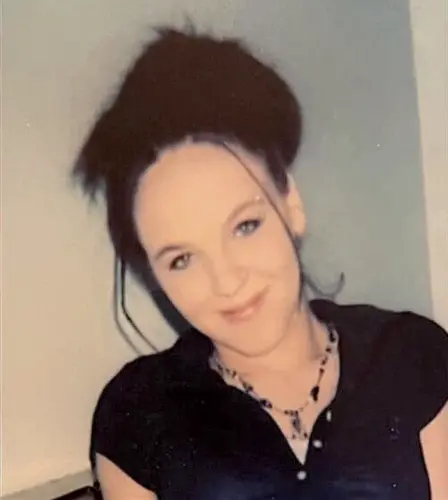
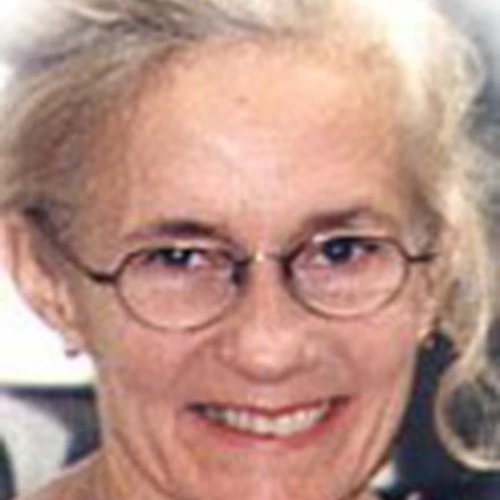
On the evening of May 23, 2000, Alison Goodwin Thresher had dinner with her parents in her hometown of Bethesda, Maryland, then returned to her apartment at the Sumner Highlands complex on Sangamore Road. She spoke with an acquaintance on the phone around ten that night. At midnight, she sent an email to her new employer. Alison, forty five years old, was scheduled to start work the following morning as a copyeditor for the Washington Post's website, a job that represented something of a fresh start after a difficult divorce. She never showed up. Her sister reported her missing on May 25, after the Post called the family to ask why Alison had not come in for two consecutive days.
Alison's copper colored 1997 Volvo turned up abandoned on Broad Street, roughly a mile from her apartment, near the C&O Canal in Glen Echo. Her wallet and her keys were both missing from inside it. A neighbor in her building later told police she had heard intense, prolonged sobbing coming from Alison's apartment sometime between three and four in the morning on May 24, along with the sound of footsteps, though no one at the time connected that sound to anything more than an ordinary late night disturbance. Police initially treated the case as a straightforward missing persons matter. That classification held for the better part of a year, until February 2001, when detectives formally reclassified Alison's disappearance as a presumed homicide, a decision that reflected a growing certainty that whatever had happened to her, it had not been voluntary.
A Mother Already Sounding the Alarm
What makes Alison's case unusually well documented, compared to many disappearances from this era, is that she had spent much of the year before she vanished putting her concerns about a specific person in writing. Beginning around 1999, Alison grew increasingly alarmed by what she described as an excessive emotional attachment developing between her ten year old daughter Hannah and Fernando Asturizaga, a Spanish teacher and coach at Friends Community School, where both of Alison's children were students. Asturizaga had also taken on babysitting duties for the family during the upheaval of Alison's divorce. Alison wrote directly to Asturizaga and separately to the school, documenting her concerns in letters and demanding that he stop spending unsupervised time alone with her daughter. At the time, none of this rose to the level of a criminal complaint. It would take a full decade before the true nature of what Alison had apparently sensed came fully to light.
A Sketch of a Different Man Entirely
In the months before she disappeared, police separately investigated a report that Alison had been seen near her apartment complex sometime in March or April of 2000 in the company of an unidentified man, described as possibly Hispanic and somewhere between forty eight and fifty years old, witnesses said the two had been seen holding hands and kissing. Investigators released a composite sketch of this man, hoping someone might recognize him, but the image never led anywhere concrete, and his identity, along with whatever relationship he may have had with Alison, has never been established. Notably, the age investigators assigned to this man in the composite does not match Fernando Asturizaga, who would have been only around thirty three years old in the spring of 2000, meaning the sketch represents a separate, still unresolved thread in the case rather than an early likeness of the man who would eventually be named a person of interest in her death.
Evidence of a Struggle, and a Cleanup
Investigators who examined Alison's apartment in the aftermath of her disappearance developed a working theory that she had been murdered inside her own home, and that whoever was responsible had made some effort afterward to clean the scene before her car was driven away and abandoned by the canal. That combination, physical evidence suggesting violence indoors paired with a deliberate, if imperfect, attempt to erase it, was part of what pushed detectives toward the homicide reclassification in 2001, even without a body, a suspect, or a confession to point to.
A Decade of Silence, Then a Disclosure
The break in the case did not come from forensics or from the composite sketch. It came from Alison's own daughter. In 2010, a decade after her mother disappeared, Hannah came forward to police and disclosed that Fernando Asturizaga had sexually abused her over a period beginning around 1999 and continuing into 2001, starting when he was thirty two years old and she was ten. The abuse had apparently continued for some time after Alison vanished, carried out by the same man Alison had spent her final year alive trying, through letters and direct confrontation, to keep away from her daughter. Hannah later told investigators that Asturizaga had not seemed particularly upset by her mother's disappearance at the time, and had even suggested to her that life would be easier now that Alison was gone, a detail that would take on considerably more weight once Asturizaga's name became publicly attached to the murder investigation itself.
Asturizaga was arrested and prosecuted for the abuse of Hannah, and in 2010 he was convicted on multiple counts, including second degree rape and child abuse. He received a sentence of more than 128 years in prison, later reported by some outlets as closer to 168 years once additional counts were factored in. Throughout the proceedings and afterward, he never spoke publicly about Alison's disappearance or offered any statement connecting himself to what had happened to her.
Named, and Gone Within Hours
Montgomery County detectives continued working the Thresher case quietly in the background even after Asturizaga's conviction on the unrelated abuse charges, and in 2016 they moved to formally reopen the investigation into Alison's death. On April 12, 2018, nearly eighteen years after Alison vanished, police publicly named Fernando Asturizaga a person of interest in her presumed murder, citing his documented relationship with the family, the letters Alison had written trying to separate him from her daughter, and the disturbing comment Hannah says he made to her shortly after Alison went missing. Hours after that announcement went public, a correctional officer found Asturizaga unresponsive in his cell at the Western Correctional Institution in Maryland. He was pronounced dead, and his death was ultimately ruled a suicide, closing off, permanently, any possibility that he would ever confirm or deny his involvement in Alison's death in his own words.
Searching Beltsville
The investigation did not end with Asturizaga's death. In July 2020, twenty years after Alison disappeared, Montgomery County police announced they had developed what they described as credible information indicating Alison had been murdered by Asturizaga and that her body had likely been buried somewhere within the roughly three hundred acres of the Beltsville Agricultural Research Center, a sprawling federal facility in Prince George's County, Maryland. Detectives conducted extensive searches across the property, working with the scale and terrain challenges that a site that size presents, but recovered no human remains during that effort. Police publicly asked hikers, researchers, and anyone with regular access to the facility to report anything unusual they might have noticed over the years, acknowledging that the search for Alison's remains was likely to depend, in the end, on exactly the kind of incidental tip that had helped move the case forward at earlier points in its history.
Still Unresolved
More than two decades after Alison Thresher disappeared the night before what should have been the first day of a new job, her body has never been found, and the man investigators believe killed her died before he ever had to answer for it in court. What remains is a case built almost entirely out of things Alison herself tried to warn people about while she was still alive, letters to a school, letters to the man himself, documented concern about a relationship everyone around her was slow to take as seriously as she did. Her daughter's own disclosure, offered a full decade after her mother vanished, ultimately supplied the piece investigators had been missing all along, even if it arrived too late to produce anything resembling a trial, a confession, or a recovered body to finally bring Alison home.
Sources
- The Charley Project: Alison Goodwin Thresher
- NBC Washington: Timeline: Alison Thresher's Disappearance
- Montgomery County Police: Detectives Investigating the 2000 Disappearance of Alison Thresher
- WTOP News: New information in search for Bethesda woman's body 20 years after murder, disappearance
- Tampa Free Press: Alison Thresher, The Mysterious Disappearance Of A Maryland Woman In May Of 2000
- Patch: No Remains Found In Bethesda Cold Case, Cops Ask Hikers For Help