A Divorce Trial That Never Happened: The Disappearance of Carol Kresge DeArment
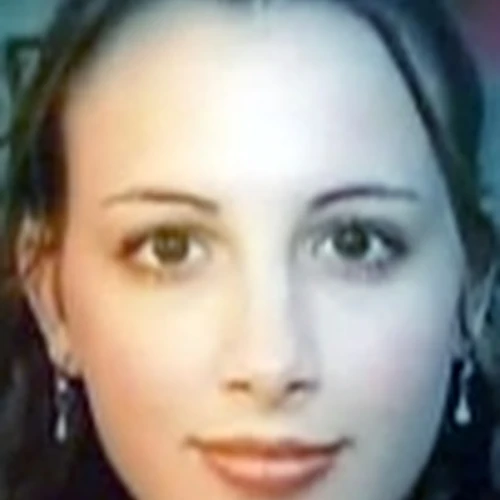
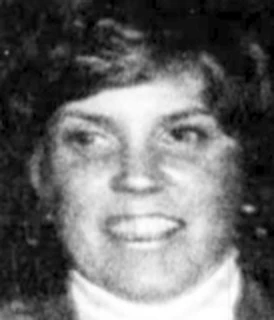
Carol Rowley Kresge DeArment was thirty six years old in October 1983, living in Troy, Michigan, a suburb north of Detroit. She stood five foot five and weighed a hundred twenty pounds, with light brown hair frosted with blonde tips at the time, blue eyes, and pierced ears. Carol was the great granddaughter of Sebastian Spering Kresge, the businessman whose name eventually became attached to the retail chain that grew into Kmart, but her own life bore little resemblance to that kind of wealth. She sold makeup part time and was taking a court reporting course at a local college, working toward an independent career of her own. Court records from her divorce case listed her personal net worth before marriage at only about three thousand dollars, with roughly four thousand dollars a year coming in from a family trust, figures that made clear whatever fortune existed further up her family tree had never really reached her.
Carol had three children with her husband, Donald DeArment, who was twenty one years older than she was. The couple had filed for divorce in February 1982, and after more than a year and a half of proceedings, their case was finally scheduled to go to trial in November 1983, only weeks away. On the night of October 26, 1983, Carol drove to her boyfriend's apartment in Farmington Hills, stayed for about two hours, and left sometime between 11:00 and 11:45 to drive herself home. She has never been seen again.
A Car in the Driveway With the Keys Still In It
When Carol failed to turn up the next day, her family found her 1981 Buick parked in her own driveway. The keys were still in the ignition. Her purse and her eyeglasses sat on the front seat, untouched. Inside her home, all of her clothing, her belongings, and her money remained exactly where they should have been. She had not packed a bag. She had not withdrawn cash. Most strikingly, she left no note for her three children, then eight, nine, and thirteen years old, a detail investigators and her own family found completely out of character for her. Every visible sign pointed to a woman who had fully intended to come home that night and simply never got the chance.
Carol was reported missing on October 27, 1983, the day after she vanished. The circumstances she had described in her own divorce filings gave investigators an immediate and unsettling place to start looking. In court documents connected to the case, Carol alleged that Donald had repeatedly struck her in the face and neck with his fists, and that he had sexually assaulted her after she began sleeping separately on the couch to get away from him. A neighbor later gave police a sweatshirt that had reportedly come from Donald's closet, one that was found to contain combat and hunting knives along with a machete hidden inside it. Police records, notably, contained no documentation of any prior assault reports connected to the marriage, and Carol's own mother would later suggest that her daughter was sometimes the one who escalated confrontations between the two of them, a detail that complicated the picture without erasing the far more serious allegations Carol herself had put in writing.
A Husband Worth Far More Than He Admitted
Donald DeArment owned four separate businesses, including industrial operations built around large furnaces, and he held a private pilot's license, a detail that would take on its own significance once investigators learned he had taken a solo flight not long after Carol disappeared. In the divorce paperwork he filed, Donald listed his own net worth at two hundred ninety seven thousand dollars, a figure that outside estimates placed far lower than what people close to the case actually believed his businesses were worth, with some assessments running as high as two to four million dollars. Investigators would later learn that a forensic financial audit connected to the divorce proceedings had been scheduled to take place right around the time Carol vanished, an audit that, had it gone forward as planned, might have exposed exactly how much money Donald stood to lose once the divorce was finalized and Carol's share of the marital estate was determined.
Troy police eventually recovered blood matching Carol's blood type both on a sofa inside the home and inside the trunk of Donald's 1978 Mercedes. Investigators came to believe that Donald had struck Carol, strangled or suffocated her during a confrontation, and placed her body in the trunk of his car, though her remains were never found and no charges were ever filed against him. The physical evidence, layered on top of the abuse allegations Carol had already made in open court weeks before her disappearance, made Donald the case's obvious and enduring prime suspect, even without an arrest ever following.
A Name That Made Headlines
Carol's connection to the Kresge family name meant that her disappearance drew far more press attention than most missing persons cases from that era ever received, with newspapers across Michigan running headlines describing her as a Kresge heiress even as her own family stressed that the label overstated her actual financial standing. Sebastian Kresge's estate, by the time it reached Carol's generation, was set to be divided among three surviving children and fifteen grandchildren, a distribution that left any individual share, including whatever eventually would have come to Carol, far more modest than the family name implied. Reporters covering the story in the days after her disappearance noted the contrast between the Kresge name recognition and the comparatively ordinary life Carol actually led, selling cosmetics part time and working toward a court reporting certificate while raising three children in a strained marriage.
That press attention kept Carol's case visible in a way many missing persons cases from the same period never achieved, with Michigan outlets following the story through the initial search, the prosecutor's public statements in 1984 that investigators believed she had been murdered, and eventually the 1993 hearing that led to her legal death declaration. It did not, in the end, produce any charges, any recovered remains, or any account of what happened to her beyond the theory investigators had settled on almost immediately.
A Deathbed Silence
In 1986, three years after Carol disappeared, Donald DeArment was dying of stomach cancer. He was fifty nine years old. The detective who had spent years working Carol's case went to Donald's bedside as his health failed, hoping that a man with nothing left to lose might finally explain what had happened to his wife. Donald refused to speak with him. He died shortly afterward, taking whatever knowledge he had of Carol's fate with him, and the investigation, already difficult, effectively stalled without its central suspect left alive to question, charge, or clear.
Carol Kresge DeArment was formally declared legally dead in April 1993, nearly a decade after she vanished. That legal declaration allowed her three children, by then grown, to finally collect on her estate, reportedly worth as much as two million dollars once the various trusts and holdings connected to her name were settled. It was a resolution of sorts, at least in the narrow legal sense that determines inheritance and closes an estate, but it answered none of the questions that had shadowed the case since the night Carol's car turned up empty in her own driveway. No body was ever recovered. No one was ever charged. The trial that was supposed to formally end Carol and Donald's marriage in November 1983 never took place, replaced instead by a missing persons case that outlived them both.
Carol would be in her late seventies today had she lived. What remains of her case is a set of circumstances that, taken individually, might each be explained away, a strained marriage, a contentious divorce, a wife who sometimes matched her husband's temper according to her own mother, but that together painted a picture disturbing enough for investigators to settle on Donald DeArment as their answer almost from the very beginning, even without ever being able to prove it in a courtroom. Carol Kresge DeArment's case remains open with the Troy Police Department, a name descended from one of Michigan's best known business fortunes, still missing more than four decades later, with no trial, no body, and no conviction to mark what actually happened to her that October night.
Sources
- The Charley Project: Carol Kresge DeArment
- Websleuths: MI, Carol De Arment, 36, Troy, 26 Oct 1983
- UPI Archives: Prosecutor, Police believe Kresge heiress murdered
- UPI Archives: Kresge heiress declared legally dead
- Newspapers.com: Kresge department-store heiress missing five days, Battle Creek Enquirer