Too Close to Home: The Disappearance of Ann Marie Burr
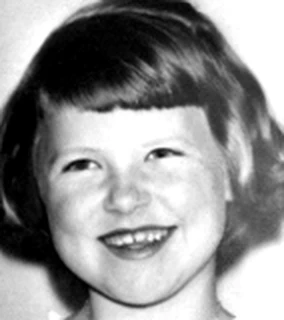
Ann Marie Burr was eight years old in the late summer of 1961, the oldest of four children born to Donald and Beverly Burr, a Catholic family living in the North End neighborhood of Tacoma, Washington. She had blonde hair and hazel eyes, stood about four foot two, and weighed thirty five pounds, with distinguishing red marks on her left hand and malformed fingernails from a fungal infection she had been treating. She had just finished second grade and was getting ready to start third that fall, and she had spent the previous two years taking piano lessons. On the night of August 30, 1961, Ann and her family went to bed around 8:00 in the evening at their home at 3009 North 14th Street. Ann shared an upstairs bedroom with her three year old sister, Mary, while her younger brother, Gregory, then five, and her sister Julie, seven, slept in the basement.
Sometime after midnight, Ann came into her parents' room because Mary was crying, and her mother, Beverly, soothed both girls and put them back to bed. At approximately 5:30 the next morning, Beverly discovered Mary alone in the room, still crying, with Ann nowhere to be found. A search of the house turned up a series of details that would come to define the case for the following six decades. The front door, which the family had locked and chained the night before, was found unlocked and standing slightly ajar. A living room window was open wider than the family normally left it, with a thread of red fabric caught in the frame. Grass from the lawn had been tracked onto the floor inside, and a garden bench that normally sat elsewhere on the property had been moved and positioned beneath that window, as though to serve as a step. Ann had left, or been taken, wearing nothing but a handmade, ankle length light blue nightgown decorated with a blue and white floral pattern, along with a small chain necklace bearing religious medals of Jesus Christ and the Virgin Mary and a silver identification bracelet. Nothing else in the house appeared to have been disturbed. A table of figurines sitting directly beside the open window remained untouched.
An Enormous Search With Almost Nothing to Show for It
Investigators found a faint footprint near the overturned garden bench, distorted by a heavy rainstorm that had passed through the area overnight, but still recognizable as coming from a Keds style sneaker in roughly a size six or seven, a detail that struck investigators as more consistent with a teenager than an adult. A similar partial print turned up near a basement window as well. Neighbors later told police that in the days before Ann disappeared, they had noticed someone peering into windows around the neighborhood, and the Burr family's dog had reportedly barked during the night, though no one connected that barking to anything unusual until it was already too late to matter.
The scale of the response that followed reflected just how seriously authorities treated the case from the very beginning. On August 31 alone, roughly a hundred soldiers from Fort Lewis and fifty members of the National Guard based at Camp Murray joined local police in searching more than seventy five square blocks of the surrounding neighborhood. Dive teams searched the waters of Commencement Bay. Investigators conducted more than fifteen hundred interviews within the case's first twelve days. Ann's parents both submitted to polygraph examinations on September 8, 1961, and both were found to be telling the truth. Ann's grandmother, Mrs. Roy Leach, posted an initial reward of a thousand dollars for information, later increasing it to five thousand.
Despite all of that effort, no arrest ever followed. Investigators looked hard at a man named Hugh Bion Morse, a thirty one year old former Marine who had been a suspect in the unrelated 1959 murder of nine year old Candy Rogers in Spokane, but nothing tied him conclusively to Ann's case. They also questioned a fifteen year old neighbor, Robert Bruzas, who failed an initial polygraph examination before passing a second one, attributing his earlier failure to nervousness. A third name, Ralph Everett Larkee, surfaced in connection with the separate kidnapping of a girl named Gay Lynn Stewart, but Larkee died by suicide in Portland during the winter of 1964 before investigators could pursue whatever connection he might have had to Ann's disappearance. A tip from Canada in June 1962 described a girl resembling Ann traveling with a couple in Portage la Prairie, Manitoba, who reportedly spoke to her a little too sharply to be her actual parents, and who was overheard mentioning Tacoma, but that lead, like all the others, ultimately went nowhere.
A Paperboy on Her Street
Among the young people living in the Burrs' neighborhood that summer was a fourteen year old named Theodore Robert Bundy, who delivered newspapers along a route that passed close to the Burr family's home. His great uncle taught music at the nearby University of Puget Sound, a campus Bundy visited often, located only a few blocks from Ann's house. Neighbors who knew him as a child later described him in unflattering terms, with one recalling him as a mean spirited kid who seemed to genuinely enjoy inflicting pain and fear on others, and there are accounts of Bundy building crude punji style traps as a child that ended up injuring at least one girl.
None of that, on its own, connected Bundy to what happened to Ann. It was only after his 1978 arrest in Florida, and his subsequent conviction and confessions to dozens of murders committed across multiple states throughout the 1970s, that investigators and journalists began seriously reexamining his childhood ties to the Burr case. When questioned directly about Ann, Bundy denied any involvement, telling investigators at one point that he simply would not have hurt a little girl. Decades earlier, in a 1961 letter written to the Burr family not long after Ann vanished, a teenage Bundy had specifically insisted that he did not wander the streets late at night and did not steal cars, statements seemingly meant to preempt suspicion before it had even fully formed around him.
The most haunting piece of the puzzle came later, near the very end of Bundy's life. In 1987, roughly two years before his execution, Bundy told crime writer and investigator Robert D. Keppel about certain murders he said he would never discuss, describing them as having occurred too close to home, too close to family, or involving victims who were very young. Ann Marie Burr fit all three of those descriptions simultaneously, an alignment that has struck investigators and true crime researchers alike as far too precise to be coincidental, even though Bundy never explicitly named her among his victims. Before his execution in Florida in January 1989, Bundy exchanged two letters directly with Ann's mother, Beverly, who later said he avoided her actual questions and instead steered the conversation toward the Green River Killer case and unrelated world events. Ann's father, Donald, told Ann Rule, the true crime writer and former acquaintance of Bundy's, that he believed he had once seen Bundy in a ditch on the University of Puget Sound campus on the very morning Ann disappeared, campus grounds where excavation work happened to be underway that same year, leading the Burr parents to privately theorize that their daughter's remains might have ended up buried somewhere within that construction site.
DNA That Couldn't Answer the Question
In 2011, fifty years after Ann disappeared and more than two decades after Bundy's execution, investigators compared crime scene evidence collected from the Burr residence against DNA samples connected to Bundy. The testing failed to produce a usable link in either direction, not because it ruled Bundy out, but because the degraded evidence from 1961 could not yield a DNA profile complete enough to compare meaningfully at all. That inconclusive result has left the Bundy theory exactly where it has sat for decades, a connection that fits an unsettling number of circumstantial details without ever being provable in the way DNA evidence in so many other cold cases eventually has been.
Donald Burr died in 2003 at the age of seventy seven. Beverly Burr died on September 13, 2008, of congestive heart failure, in the same city her daughter had vanished from forty seven years earlier. Neither parent lived to see any conclusive resolution to Ann's case. In July 1963, roughly two years after Ann disappeared, the Burrs adopted an infant daughter named Laura, folding new life into a family permanently shaped by the daughter they had lost. Ann's three surviving siblings have carried the case forward in the years since their parents' deaths, still hoping, as their mother and father did before them, for an answer that six decades of searching, interviews, polygraphs, and eventually DNA testing have never been able to provide.
Ann Marie Burr would be in her early seventies today had she lived. Her case remains formally open with the Tacoma Police Department, one of the very first disappearances now widely suspected to belong to a man who would go on to become one of the most notorious serial killers in American history, and one that, even with his name attached to it, has never been solved.
Sources
- The Charley Project: Ann Marie Burr
- Wikipedia: Disappearance of Ann Marie Burr
- All That's Interesting: Ann Marie Burr, the Missing Eight Year Old Who May Have Been Ted Bundy's First Victim
- FOX 13 Seattle: Little girl's disappearance in 1961 may have been at hands of infamous serial killer
- Medium: Ted Bundy's First Murder? Investigating the Tragic 1961 Disappearance of Ann Marie Burr