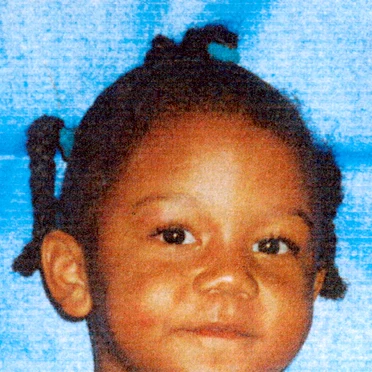
The Girl the System Forgot: What Happened to Rilya Wilson
For fifteen months, the state of Florida paid a woman named Geralyn Graham to care for a four-year-old girl who was not there. Nobody came looking. No one from the Department of Children and Families knocked on the door, or asked to see her, or noticed that the monthly visit reports being filed on her behalf were describing a child that hadn't been seen in over a year. The girl's name was Rilya Shenise Wilson, and by the time anyone in a position of authority realized she was missing, in April 2002, whatever had happened to her had already happened more than a year earlier, in a house nobody was checking, to a child the system had effectively stopped watching the moment it placed her there.
A Childhood Handed Off
Rilya was born in September 1996 to a mother, Gloria Wilson, whose struggles with addiction eventually led the state to terminate her parental rights. Rilya and her siblings were removed from Gloria's custody, and Rilya was placed in the care of a woman named Geralyn Graham, who was alternately described as a relative, a godmother, or simply a longtime family friend, depending on who was asked and when. Under Florida's foster care system, a placement like this was supposed to come with oversight: a caseworker assigned to the child, required monthly visits, documentation that the child was alive, safe, and where she was supposed to be.
The caseworker assigned to Rilya was a woman named Deborah Muskelly. For a period of time, Muskelly did make those visits and did file those reports. Then, at some point in the last months of 2000 or the very beginning of 2001, according to the timeline that would later emerge in court, that stopped being true, though the paperwork never reflected it. Muskelly kept filing reports describing visits with Rilya that, according to the case that would eventually be built against Graham, were not actually happening, because Rilya was no longer there to visit.
A Story That Made No Sense From the Start
Graham's account of what happened to Rilya, when she was finally asked, was that in January 2001, a Black woman claiming to work for DCF had come to the house saying she needed to take Rilya for a formal evaluation because of behavioral concerns. According to Graham, the woman spoke with a heavy accent, possibly African, and said that Muskelly already knew about the visit and had approved it. Rilya, Graham said, left with this unidentified woman and never came back. Graham later added that two more visitors had come by in February 2001 asking for toys to help Rilya adjust to her "new surroundings," implying the child was still alive and being cared for somewhere else.
None of it held up. DCF had no record of authorizing any such evaluation, and no employee matching that description existed. Investigators would later note that Graham changed her account more than once over the following years, at one point telling people that an unnamed Spanish woman had taken Rilya on a trip to New York or New Jersey with the intention of adopting her, and that this woman had returned the child briefly before the supposed DCF worker ever arrived. The stories multiplied and contradicted each other in ways that, on their own, would have been enough to raise serious concern in any properly functioning system. Florida's system, as it turned out, was not properly functioning at all.
Fifteen Months of Nothing
What makes Rilya's case different from most missing children's cases isn't just what happened to her. It's what didn't happen afterward. Nobody from DCF visited the home, verified her whereabouts, or noticed anything wrong for fifteen months. Graham continued to receive state payments for Rilya's care that entire time, money meant to support a child who was already gone. Graham would later claim she noticed the payments continuing after Rilya's disappearance and called Muskelly to ask about it, and that Muskelly told her to keep the money and that Rilya would be back soon. DCF had no record of any such conversation. At one point, Graham produced vaccination records suggesting Rilya had been taken to see a doctor months after she had already vanished. The physician whose name was on the records later said he had never actually seen the child on the date in question.
It was only in April 2002, when a different caseworker attempted a routine visit and could not locate Rilya at all, that the alarm was finally raised. DCF officially reported her missing on April 25, 2002. By then, Muskelly and her supervisor, Willie Harris, had both resigned from the department amid allegations that home visit records had been fabricated for an unknown number of children beyond just Rilya. Muskelly was ultimately charged with dozens of counts related to falsifying records but pleaded guilty to a single count of official misconduct, receiving five years of probation. She was never charged in connection with what happened to Rilya herself, because by the time investigators understood the scope of what had gone wrong, there was no clear evidence tying her to the disappearance beyond the paperwork she had faked.
A Woman With a Long History of Reinvention
As investigators dug into Geralyn Graham's background, a portrait emerged of someone who had spent decades constructing and reconstructing her own identity. She had reportedly used as many as forty-two different aliases over the years. She had a prior conviction for food stamp fraud in Tennessee and another for theft in Florida. She had filed a string of personal injury and discrimination lawsuits and had been the subject of numerous creditor and landlord disputes. Months before Rilya was placed in her care, a physician had reportedly diagnosed her with a psychotic condition resembling schizophrenia, a detail that, like so much else in this case, never seems to have made its way into the decision to place a four-year-old in her home.
Abuse, Confirmed by Someone Who Was There
The first real crack in the case came not from Graham but from another woman who had lived in the home and helped care for Rilya, Pamela Kendrick. In October 2002, both Graham and Kendrick were charged with fraud for continuing to collect more than $14,000 in state care payments for a child who was no longer in their custody. Both were convicted; Graham received prison time, Kendrick received probation. But the more damning charges came later. In August 2004, Graham was charged with kidnapping and three counts of child abuse, and Kendrick with two lesser abuse counts. Kendrick eventually pleaded guilty to neglecting and abusing Rilya, without admitting responsibility for the child's ultimate fate, and received 364 days in jail along with five years of probation.
Kendrick's testimony gave investigators, and later a jury, their clearest picture yet of what Rilya's life inside that house had actually looked like. She described both women spanking Rilya with switches, locking her inside a dog cage, confining her to a laundry room for extended periods, and at times handcuffing her to a bed. Kendrick maintained throughout that she did not know what had ultimately happened to Rilya, only that the abuse had been real and had been ongoing.
A Confession to a Cellmate
The murder charge that finally came in March 2005 rested heavily on the account of a woman named Robin Lunceford, who had shared a cell with Graham and testified that Graham had confessed to killing Rilya. According to Lunceford, Graham said she had killed the child because Rilya wanted to dress as Cleopatra for Halloween instead of the angel costume Graham had chosen for her, a refusal that Graham reportedly took as proof the child was "evil." Lunceford said Graham described burying Rilya's body in a ravine near a private lake. Investigators came to believe, based on this and other evidence, that Rilya had actually died sometime in December 2000, weeks before the story about the mysterious DCF worker was ever told, and more than a year before the state noticed she was gone.
Lunceford's credibility was far from clean. She had fifteen prior robbery convictions and was facing an additional armed robbery charge of her own at the time she came forward. She initially framed her decision to testify as a matter of conscience, but later pushed for a reduced sentence in exchange for her cooperation, at one point asking for as little as three years against a twenty-year offer from prosecutors. She eventually received a reduced sentence of ten years in March 2011 in exchange for her testimony, a deal that gave Graham's defense plenty of room to argue that Lunceford had every incentive to say whatever prosecutors needed to hear.
A Verdict That Answered Only Part of the Question
Graham's trial ran from December 2012 into January 2013. The jury convicted her of kidnapping and child abuse but could not reach a unanimous verdict on the murder charge, deadlocking eleven to one. The judge declared a mistrial on that count and sentenced Graham on the convictions that did stick: thirty years for kidnapping and twenty-five years for aggravated child abuse, with additional abuse-related sentences running concurrently, for a total of fifty-five years. Given her age at sentencing, in her late sixties, the practical effect was a life sentence regardless of what happened with the murder charge. Prosecutors initially indicated they intended to retry Graham on that count, but ultimately declined to pursue a second trial, leaving the question of exactly how and by whose hand Rilya died formally unresolved in the eyes of the law, even as investigators and prosecutors stated publicly that they believed Graham was responsible.
What the Case Changed
Rilya's disappearance became, almost immediately after it became public in 2002, a statewide scandal that went well beyond one caregiver's alleged crimes. The Florida Department of Children and Families secretary, Kathleen Kearney, resigned amid the fallout. The case exposed a pattern of caseworkers falsifying visit logs across the system, not just in Rilya's file, and led to new state laws criminalizing that kind of falsification directly. Florida overhauled how it tracked children in state custody, moved toward privatized case management contracts, and built new systems specifically meant to prevent a child from vanishing inside the paperwork the way Rilya had. Congress would later see a bill named in her honor, the Rilya Wilson Act, introduced with the goal of tightening federal oversight of state child welfare tracking nationally.
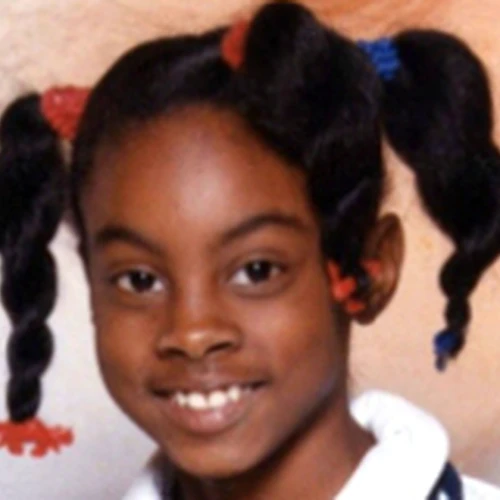
None of it brought her back. Rilya Wilson has never been found. There was no burial, no grave for her family to visit, only a photograph, endlessly reprinted, of a four-year-old with braided pigtails and a small, uncertain smile, held up at a trial for a crime that a jury could never quite agree had definitely happened, even as everyone in the courtroom seemed to already know that it had.
Sources
- The Charley Project — Rilya Shenise Wilson
- Wikipedia — Disappearance of Rilya Wilson
- NBC News — Caregiver charged with killing missing girl
- NBC News — Caregivers of missing girl charged with abuse
- NBC 6 South Florida — Judge Declares Mistrial on Geralyn Graham Murder Charge
- Congresswoman Frederica Wilson — Congresswoman Wilson Introduces Rilya Wilson Act
- Florida Child Advocate — A Decade Later, Missing Child Rilya Wilson a Lesson For Us All