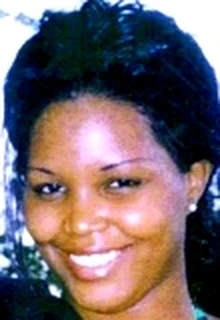
A Loaded Gun and a Broken Promise: The Disappearance of Shaquita Yolanda Bell
Shaquita Yolanda Bell was twenty three years old in June 1996, a mother of three young children living in Alexandria, Virginia. She was a Black woman, five foot six or five foot seven, weighing somewhere between a hundred fifty and a hundred seventy pounds, with black hair, brown eyes, pierced ears, and a tattoo on her left breast. Her youngest child's father was her ex-boyfriend, Michael Eric Dickerson, a relationship that by the summer of 1996 had already turned violent enough to draw the attention of police on more than one occasion.
A month before she disappeared, Shaquita reported to police that Dickerson had beaten her severely, an incident serious enough that he was charged with malicious wounding. After that assault, she moved out and went to stay with her grandmother in Alexandria, putting some distance between herself and Dickerson. It did not last. Three weeks later, Shaquita told police that Dickerson had confronted her again, this time holding a loaded nine millimeter handgun to her head and threatening her, an incident that resulted in a separate charge against him for unlawful possession of a firearm. Her mother, Jackie Winborne, later said she never fully understood the extent of what her daughter had been living through, though she had noticed the signs, describing sadness in Shaquita's face and dark circles under her eyes that told a story Shaquita herself was not yet ready to share out loud. Neighbors told investigators they had regularly heard screaming and violent confrontations coming from wherever the couple was staying together.
An Errand That Never Ended
On June 27, 1996, despite everything that had already happened between them, Shaquita left her family's home on Raymond Street in Alexandria and got into Dickerson's gray 1987 Cadillac Fleetwood, a car distinctive enough for its tinted windows that people in the neighborhood recognized it on sight. She was supposed to be taking two children to a doctor's appointment that day. At around 2:00 in the afternoon, she called home to say she would be back shortly. She never returned, and she has never been seen again.
When Shaquita failed to come home, Dickerson gave her mother a series of accounts that did not hold together. He first claimed that Shaquita had gotten out of his car on Minnesota Avenue in Washington, D.C. during an argument between them. Later, he offered a different version, saying she had called a cab or that someone else had picked her up from wherever they had been. Even Dickerson's own father reportedly told the family to call the police and prepare for the worst, a grim piece of advice from a man who apparently understood better than anyone what his son might be capable of. Dickerson himself went into hiding for five days after Shaquita's disappearance before eventually resurfacing. Her family spent the following four and a half months distributing missing person flyers around the region, searching for any sign of her.
A Witness Silenced Before He Could Testify
The investigation's most significant break, and its most disturbing turn, came through a man named Jonathan "Jody" Shields, a friend of Dickerson's. Investigators recovered Shaquita's purse from inside Shields's vehicle, a discovery that led them directly to him. Shields told police that Dickerson had confessed to killing Shaquita in Washington, D.C. and had asked for his help disposing of her body, which Shields said he had personally seen wrapped in a blanket in Dickerson's yard, with Dickerson allegedly telling him the body had ultimately been buried somewhere in Prince George's County, Maryland.
Shields agreed to testify about what he knew before a grand jury. He was murdered the day before he was scheduled to appear. The timing of his death, arriving at the exact moment his testimony could have moved the case toward prosecution, effectively silenced the one witness whose firsthand account most directly connected Dickerson to what had happened to Shaquita, and the case, already difficult, stalled without him.
A Confession, Twelve Years Later
The case remained unresolved for more than a decade, with Shaquita's mother returning to police headquarters near the anniversary of her daughter's disappearance year after year, pressing investigators not to let the case go cold. Jackie Winborne and her husband, Thomas, conducted searches of their own in the years the case sat open, at times digging with garden shovels in locations they believed might hold their daughter's remains, refusing to simply wait for an official resolution that was not coming.
In 2008, twelve years after Shaquita vanished, Michael Dickerson finally pleaded guilty to second degree murder in her death, admitting that he had shot her in Washington, D.C. on June 27, 1996. The plea agreement he struck with prosecutors was, by any measure, favorable to him. In exchange for his guilty plea and his cooperation in trying to locate her remains, Dickerson received a sentence of fifteen years without the possibility of parole, and prosecutors agreed not to charge him with a separate killing he admitted to during the same proceedings, the earlier shooting death of a man named Sean Thomas, who Dickerson said had tried to rob him during a drug deal in the Anacostia neighborhood years before. Dickerson shot Thomas as he lay wounded on the ground after the botched robbery attempt, a killing that, under the terms of his plea deal, he would never be prosecuted for.
Dickerson led investigators to a wooded area in Prince George's County where he claimed to have buried Shaquita's body, wrapped in a rug, but excavation of the site turned up no remains. Then Metropolitan Police Chief Cathy Lanier acknowledged publicly that the search would continue, telling reporters investigators were still looking, though no further recovery ever followed. Shaquita Bell's case became just the third prosecution in the history of the District of Columbia in which a murder conviction was obtained without the victim's body ever being found, a distinction that reflects both how rare that kind of prosecution is and how strong the combined weight of Shaquita's own prior police reports, Dickerson's shifting stories, and his eventual guilty plea ultimately proved to be, even in the complete absence of physical remains.
A Mother Who Kept Fighting
Jackie Winborne spent sixteen years pursuing answers about her daughter's fate before Dickerson's guilty plea finally confirmed what she had believed from the very beginning. In January 2016, years after that plea, Winborne was diagnosed with PeComa, a rare form of cancer for which doctors told her no standard treatment existed. She did not respond to that diagnosis by giving up. Asked about facing yet another fight after everything she had already been through, she said simply that she had fought for sixteen years to find out what happened to her daughter, and that she saw no reason not to fight just as hard for herself. A former teacher named Ruth Brannigan, whose own connection to the family ran through Winborne's granddaughter, organized a fundraising campaign to help Winborne access experimental treatment options unavailable through conventional care.
Shaquita Yolanda Bell would be in her early fifties today had she lived. Her case stands as a stark illustration of how often the warning signs in a fatal domestic violence case are visible well before the final act, two separate police reports, a documented history of beatings and threats with a loaded weapon, neighbors who heard the violence through the walls, all of it present in the record months before Shaquita got into that Cadillac for what should have been a routine errand and never came home.
Sources
- The Charley Project: Shaquita Yolanda Bell
- OFFICER Magazine: What Happened to Shaquita Bell?
- Washington Examiner: Shaquita Bell's killer deals himself a light sentence
- NBC4 Washington: Mother of 1996 Murder Victim Shaquita Bell Diagnosed With Cancer
- NewsOne: Shaquita Yolanda Bell, Domestic Violence Murders