Two Dollars for Cigarettes: The Disappearance of Audrey Nerenberg
Audrey Lyn Nerenberg was eighteen years old on July 15, 1977, when she told her mother she was walking two blocks from their home on Ryder Street in the Canarsie section of Brooklyn to buy a pack of cigarettes. She had two dollars in her pocket, no identification, and none of her medication with her. It was one of the hottest days on record in New York that summer. Audrey never returned, and in the nearly five decades since, no confirmed trace of her has ever surfaced.
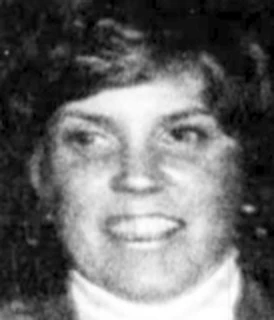
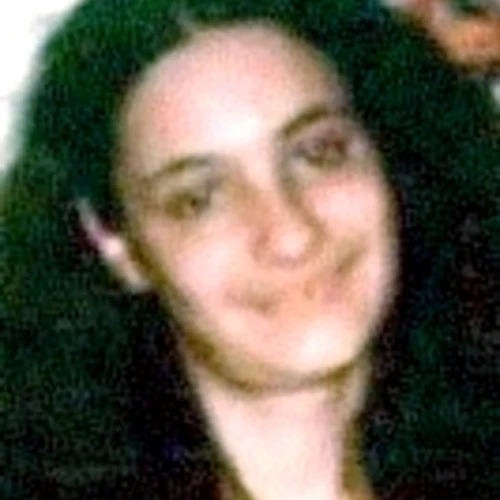
Audrey stood between 5'4" and 5'5" and weighed about 115 pounds, with light brown curly hair that fell past her shoulders, brown eyes, and freckles scattered across her nose, cheeks, shoulders, and hands. She had a distinctive gap between her upper front teeth, the kind of small physical detail that made her easy to pick out of a crowd and that investigators have leaned on ever since in hopes it might someday help someone recognize her. She was last seen wearing cutoff dungaree shorts, a blue tube top, and a pair of open toe clear plastic shoes.
A Life Already Marked by Illness
At fifteen, Audrey had been diagnosed with hebephrenic schizophrenia, a form of the illness associated with disorganized thinking and behavior, and by the time she disappeared she was taking large daily doses of Thorazine, a powerful antipsychotic medication common in psychiatric treatment during that era. Because of her condition, those who knew her described her as functioning at roughly the cognitive level of a fourteen year old. Between 1974 and 1977, she had been hospitalized for periods at several psychiatric facilities across New York City, and at the time she vanished, she was an outpatient at Kingsboro Psychiatric Center in Brooklyn. She left the house that afternoon without her medication, a detail her family has pointed to over the years as one of the most frightening aspects of her disappearance, since a sudden, unmanaged absence of Thorazine could have left her disoriented, confused, or vulnerable in ways an unmedicated stranger walking the same streets would not have been.
A Trip to Staten Island the Day Before
The day before she disappeared, Audrey had gone with her family to Staten Island to see a movie. It was an ordinary outing, the kind of family trip that would otherwise have faded entirely from memory, except that the theater they visited sat near a stretch of wooded property that would, in later years, become associated with one of the era's most disturbing predators. Investigators looking back at Audrey's case have noted the timing and proximity with real unease, though they have been careful to stress that no direct evidence has ever tied that connection to what actually happened to her the following afternoon in Brooklyn.
A Call for Ransom, Then Silence
Hours after Audrey walked out for cigarettes and failed to come home, her father received a phone call from someone claiming responsibility for her disappearance. The caller instructed him to gather all the money he possibly could in exchange for her safe return. Audrey's family contacted authorities, and FBI agents came to the house to help manage the situation, setting up to trace or respond to any follow up contact. The caller never phoned back. After roughly three hours without further communication, the agents left, and no additional contact from anyone claiming to hold Audrey was ever received again. Whether the call had come from someone who genuinely had Audrey, or from an opportunist exploiting a missing teenager's family for money that never had to be paid, was never established, and the family was left with a threat that led nowhere.
A Name That Surfaces in the Background
In the years since Audrey vanished, her case has occasionally been mentioned alongside Andre Rand, a former custodian at the old Willowbrook State School on Staten Island who became one of the most notorious suspected serial predators in New York City history. Rand, who lived for a period in a makeshift camp on the abandoned Willowbrook property, was eventually convicted in 1988 of the first degree kidnapping of twelve year old Jennifer Schweiger, whose body had been found buried in a shallow grave near that same property, though a jury deadlocked on the accompanying murder charge. In 2004, he was separately convicted of the 1983 kidnapping of seven year old Holly Ann Hughes, receiving twenty five years for that abduction as well, though he was never charged with her presumed murder due to insufficient evidence. Rand's name became so closely associated with a string of unexplained child disappearances around Staten Island during this period that he inspired the urban legend of Cropsey, a boogeyman story local children told each other for years before it turned out a real man matching much of the mythology had genuinely been operating in the area. Investigators have looked at whether Rand could have had any connection to Audrey's case specifically, given her family's visit to Staten Island the day before she vanished, but no evidence has ever placed him anywhere near Audrey or tied him to her disappearance in any concrete way. He remains, at most, a name investigators could not fully rule out rather than a suspect they were ever able to build a case against in her specific disappearance.
Other Explanations, None Confirmed
Investigators have pursued several alternative theories over the decades since Audrey disappeared, though none has produced anything resembling proof. One possibility examined early on was that Audrey, disoriented without her medication, may have become confused and attempted to make her own way back to Staten Island, retracing the family trip from the day before in a state of mind that made the actual logistics of that journey unrealistic for her to complete safely alone. Police also looked into whether she might have eventually been admitted to a psychiatric facility somewhere as an unidentified patient, a Jane Doe whose true identity was never connected back to her missing persons file, though no hospital records were ever found to support that theory either. Audrey's parents held onto another possibility for years, the thought that she might have been taken in and effectively adopted by another family who gave her an entirely new name and identity, allowing her to have lived out an ordinary life somewhere without ever being aware of, or able to return to, the family who never stopped looking for her. No Social Security activity under Audrey's name has been recorded since 1977, a detail that neither confirms nor forecloses any of these possibilities, since a woman living for decades under an assumed identity would naturally leave no trace under her birth name at all.
Still Waiting
More than forty five years after Audrey Nerenberg walked two blocks from her Brooklyn home and never returned, her case remains open, still listed with the National Center for Missing and Exploited Children and the New York State Police, still built around the same handful of physical details, brown curly hair, a gap toothed smile, a scatter of freckles, that made up the last confirmed description anyone ever gave of her. The ransom call that arrived hours after she vanished promised an explanation that never came. The trip to Staten Island the day before her disappearance sits in the record as an unsettling coincidence rather than a solved connection. What remains, decades later, is a family that never received a second phone call, a police file that never closed, and a woman who would now be well into her sixties, out there somewhere or nowhere at all, still unaccounted for since the summer afternoon she left home with two dollars for a pack of cigarettes.
Sources
- The Charley Project: Audrey Lyn Nerenberg
- The Resource Center For Cold Case Missing Children's Cases: Audrey Lyn Nerenberg
- National Center for Missing & Exploited Children: Audrey Lyn Nerenberg
- New York State Police: Missing, Nerenberg, Audrey Lyn
- All That's Interesting: The Haunting Story Of Andre Rand, The Real-Life Cropsey Killer Who Stalked Staten Island