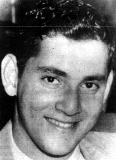
One Day Before His Eighteenth Birthday: The Kidnapping of Danny Goldman
Daniel Jess Goldman, known to everyone as Danny, was 17 years old, one day away from his eighteenth birthday, when he was abducted from his family's home in Surfside, Florida, in the predawn hours of March 28, 1966. He was a senior at Miami Beach Senior High School with a passion for electronics, planning to register with the Selective Service alongside his mother the very next day as part of the ordinary rite of passage that came with turning eighteen in that era. Instead, a stranger walked into his family's home before sunrise, bound his parents, and drove off with Danny in his own car. He was never seen again. It would take fifty five years, and the persistence of Danny's own childhood friends refusing to let his case fade into permanent obscurity, before investigators finally identified who was responsible.
A Family Built on Hard Work
Danny's father, Aaron Goldman, was a prominent builder and contractor in the South Florida area, while his mother, Sally, worked as an interior designer. The family lived comfortably in Surfside, a small coastal town just north of Miami Beach, and Danny, an only child, was by all accounts a normal, well liked teenager with an interest in electronics and an ordinary senior year ahead of him.
An Intruder Before Dawn
At approximately 4:30 in the morning on March 28, 1966, an unknown intruder entered the Goldman home through an unlocked sliding glass patio door. The man, described as a heavyset Caucasian male in his fifties, moved through the house expecting to find 10,000 dollars in cash on hand. When that money was not readily available, he adjusted his plan on the spot. He bound Aaron and Sally Goldman's hands, then woke Danny and took him from the house entirely, driving off in Danny's own white Nash Rambler.
A Ransom That Never Came
Before leaving, the intruder made his demands explicit, telling the Goldmans, in words later recorded by investigators, that he was going to hold Danny as security for the money, that he had originally wanted 10,000 dollars but that with the help he would now need the price had doubled, and that if the family did not get the money together that same night, the price would double again the following day. The Goldmans, desperate and terrified, prepared the ransom money as instructed. The promised phone call with delivery instructions never came. Danny's car was found abandoned in a nearby parking lot within hours, and from that point forward, there was simply nothing. No further contact, no body, no trace of Danny himself.
A Glove Fragment and a Dead End
Investigators at the scene recovered a small but potentially significant piece of physical evidence, a fingertip fragment from a Sterling brand surgical glove, a product that at the time was manufactured and sold exclusively in Canada. It was the kind of clue that seemed promising on its face but ultimately led nowhere, and the case, like so many others from that era, gradually went cold as the years passed without any further developments.
A Suspicious Coincidence With the FBI
One detail that drew the attention of investigators both at the time and decades later involved Aaron Goldman's own recent dealings with federal authorities. Aaron was a shareholder in Five Points National Bank, and in the weeks before Danny's kidnapping, he had complained about the conduct of the bank's directors, prompting an FBI interview just days before his son was taken. Three months after Danny's abduction, nineteen directors and officers connected to that same bank were indicted on federal fraud charges. Investigators at the time explored the possibility that Danny's kidnapping had been an act of retaliation connected to this banking investigation, though they were never able to substantiate a direct connection.
A Detective's Own Troubles
Adding another layer of unease to the original investigation, Sergeant David Helman, the officer assigned to Danny's case, found himself facing corruption charges of his own just seven months after Danny disappeared. In 1970, Helman was called to testify against another Miami-Dade police officer in a separate corruption trial and chose to invoke his Fifth Amendment right against self incrimination in response to 49 separate questions put to him, a detail that has fueled decades of speculation about whether the original investigation into Danny's disappearance had been compromised from close to its very beginning.
Childhood Friends Who Wouldn't Let Go
The case sat largely dormant for decades until 2012, when a group of five people connected to Surfside, including Harvey Lisker, David and Joseph Graubart, Anthony Blate, and former Surfside mayor Paul Novack, decided to reopen it themselves. These were people who had grown up alongside Danny, and their efforts included launching a website dedicated to the case in hopes of generating public attention and new leads, alongside conducting their own independent research into what had happened. Their work led them to focus on a specific theory. Paul Novack came to believe that a man named Joe "Chicken" Cacciatore, who was around 50 years old in 1966 and matched the general description given of the kidnapper, had been involved in Danny's abduction. Cacciatore was known as an accomplished burglar and thief with connections to organized crime, and was a cousin of Miami mob boss Santo Trafficante Jr. According to the theory these volunteer investigators developed, Cacciatore had learned about money potentially kept in the Goldman household through another criminal named Charles Lloyd, whose own daughter was reportedly dating Danny at the time, giving the criminal underworld an unexpected line of insight into the family's finances.
A Fingerprint, Finally Tested
The renewed public attention generated by this volunteer effort eventually connected with the Miami-Dade County Cold Case Squad, which took a fresh look at physical evidence that had sat in storage for decades. In 2020, investigators tested an old fingerprint recovered from the original case files, a piece of evidence that ultimately led them, after roughly two more years of work, to identify a man named George Defeis as Danny's actual abductor. Defeis matched the original physical description given by Aaron Goldman and was separately identified through his distinctive gait, the result of a physical disability, a detail that several witnesses recalled from the original investigation. Defeis was likewise connected to organized crime circles in South Florida during this period. Investigators concluded that Danny was killed within days of being taken, and that Defeis, aided by Joe Cacciatore, transported his body by boat and disposed of it in the Atlantic Ocean, an ending that would explain why no trace of Danny was ever found despite decades of searching.
A Case Closed, Too Late for Everyone Who Waited
George Defeis died in a nursing home in 1980, decades before investigators ever connected his name to Danny's disappearance, meaning he faced no charges and no accountability of any kind for what he was ultimately determined to have done. Danny's own parents did not live to see the case resolved either. Aaron Goldman died in 2010, and Sally Goldman died earlier in 2012, the very year the volunteer investigation that would eventually crack the case first began, meaning neither parent ever learned what had actually happened to their only son on the morning before his eighteenth birthday. On December 28, 2021, more than fifty five years after Danny was taken from his family's home, Miami-Dade Police officially declared the case solved, an outcome made possible almost entirely through the sustained, decades long effort of a small group of people who had simply grown up alongside Danny and refused to let his disappearance stay a mystery.
What Remains
Danny Goldman's remains have never been recovered, lost somewhere in the Atlantic Ocean according to the account investigators ultimately pieced together. His case stands as a rare example of a fifty five year old cold case solved not primarily through new forensic technology, though a retested fingerprint did play its part, but through the sheer persistence of ordinary people determined to bring some measure of closure to a friend who vanished from their small town on the last ordinary morning of his childhood.
Sources
- The Charley Project: Daniel Jess Goldman
- Grunge: The Bizarre Case Of Danny Goldman's Kidnapping
- NBC 6 South Florida: Group of Surfside Investigators Help Solve 55-Year-Old Cold Case
- NBC 6 South Florida: Detectives Take Another Look at 1966 Surfside Kidnapping Cold Case
- Oxygen: Daniel Jess Goldman's Kidnapping, Murder Solved In Miami
- The Florida Bar: Florida lawyer and team of investigative sleuths lead police to solve a 55-year-old murder case
- The Cold Case Files of Danny Goldman
- Flashback Miami: Danny Goldman Kidnapping, Cold Case