You Have Humiliated Me Beyond Belief: The Four Victims of Robert Weeks
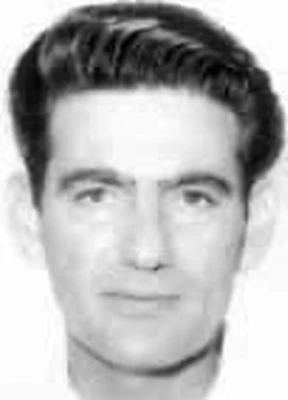
James Anthony Shaw was forty one years old on the night he disappeared, a business associate working in Las Vegas, Nevada, standing six foot two and walking with a noticeable limp, the result of a childhood bout with polio that had left his left leg an inch and a half shorter than his right. On May 4, 1971, Shaw left Whittlesea Car Rentals at 11:30 at night, at the corner of Tropicana Boulevard and Paradise Road, heading for a home that was nearby and that he had every reason to expect to reach without incident. He never arrived. Sometime between midnight and 1:30 the following morning, a Las Vegas patrol officer found Shaw's beige Ford Galaxie abandoned in an alley west of Maryland Parkway. The car was bloodstained. James Shaw himself was gone, and has never been seen again.
Investigators looking into Shaw's disappearance quickly learned that he had gotten into an argument earlier that same day with a business associate named Robert Weeks. It would be years before anyone fully understood just how significant that single detail actually was, because James Anthony Shaw was not the first person connected to Robert Weeks to vanish without a trace, and he would not be the last.
A Marriage That Ended in Disappearance
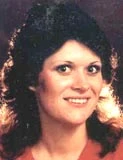
Three years before Shaw vanished, in April 1968, Robert Weeks's own wife, Patricia, known to those close to her as Pat, disappeared from Las Vegas shortly after their divorce was finalized. Patricia, thirty four years old at the time, had been granted custody of their four young children in the divorce, and her abandoned vehicle was later discovered sitting in a parking lot. When investigators asked Robert Weeks what he thought had happened to his ex-wife, he offered an answer that was almost dismissive in its detachment: she had either had a nervous breakdown, he said, or she was probably dead. At the time, with no body, no witnesses, and no obvious crime scene, there was little investigators could do beyond noting Weeks's own indifference and moving on.
A Girlfriend Who Wanted Out
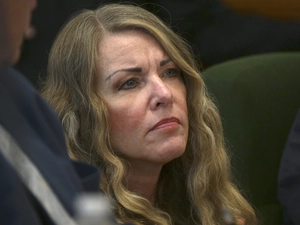
The pattern repeated itself again in October 1980, twelve years after Patricia vanished, when a real estate agent named Cynthia Jabour disappeared from Las Vegas. Jabour, forty seven, had been in a relationship with Robert Weeks for roughly six years by that point, and had confided in friends that she intended to end things with him, describing his behavior as increasingly controlling and jealous. She was last seen at 10:30 that evening in the lobby of Weeks's own condominium, where the two had a dinner date planned. Two days later, a concerned friend found her apartment sitting empty, with no signs of struggle and nothing obviously missing. Her car was later located abandoned in the parking lot of Caesar's Palace, alongside expensive clothing and a forty seven thousand dollar securities account that had gone entirely untouched, financial details that made a voluntary disappearance seem increasingly unlikely. When police questioned Weeks, he claimed Jabour had simply canceled their dinner plans that night. He then avoided a scheduled polygraph examination entirely, leaving for Tijuana and eventually Chile on a passport issued by Libya, and did not return to the United States for three years.
A Third Woman, a Second Broken Date
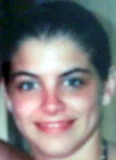
The pattern held a third time in April 1986, when a San Diego nurse named Carol Ann Riley vanished after a shift at Scripps Clinic, where a coworker last saw her following a clinic conference and she spoke with her boss around 5:30 that evening. Riley, forty two, had a dinner date scheduled that same night with a man she knew as Robert Howard Smith, a name Robert Weeks had adopted as one of several aliases he used over the years. She had planned to use that dinner specifically to end their relationship, since she was already involved with another man, a doctor in Colorado she intended to marry. Her car turned up days later, abandoned in a San Diego hotel parking lot, echoing almost exactly the pattern established with Jabour six years earlier: a woman planning to leave Weeks, a scheduled date, and then nothing.
Caught by a Television Broadcast
For years, investigators in Nevada and beyond had pieced together the disturbing common thread running through Patricia Weeks's, James Shaw's, and Cynthia Jabour's disappearances, all of them connected directly to Robert Weeks, yet none of it had translated into an arrest, largely because Weeks himself had simply vanished from view, moving under assumed identities including Robert Howard Smith and Charles F. Stolzenberg. The break finally came in 1987, when Weeks's case was featured on the television program Unsolved Mysteries. The broadcast generated a flood of viewer tips from across the country, and among them were neighbors in Tucson, Arizona, who recognized the man living among them under the name Charles F. Stolzenberg. Weeks was arrested there in April 1987, initially on embezzlement charges, before investigators began building the far more serious case connected to his growing list of missing former partners.
A Diary That Told Its Own Story
At trial, prosecutors built their case almost entirely on circumstantial evidence, since none of the missing women's or James Shaw's remains had ever been recovered. That evidence included testimony from Patricia's own children, who described witnessing their father beat their mother during the marriage, along with two separate restraining orders Patricia had obtained against Weeks before her disappearance. Perhaps the most damning piece of evidence came from Weeks's own diary, in which he had written about Cynthia Jabour with a rage that left little room for interpretation: you have humiliated me beyond belief, he wrote. I will even the score. Additional witnesses described a consistent pattern of controlling, jealous, and possessive behavior that echoed across every relationship Weeks had ever been part of.
In April 1988, a jury convicted Robert Weeks of murdering both Patricia Weeks and Cynthia Jabour, a verdict remarkable for a reason beyond the crimes themselves: it marked the first time in Nevada history that someone had been convicted of murder without the victim's body ever being recovered. He received a sentence of life in prison without the possibility of parole. In 1990, the Nevada Supreme Court upheld that sentence on appeal, rejecting Weeks's argument that a conviction without recovered remains couldn't stand. He was never charged in connection with either James Shaw's or Carol Riley's disappearances, despite investigators' clear belief that he was responsible for both. Robert Weeks died in prison on September 20, 1996, having never revealed what had actually happened to any of his four victims, or where their remains might be found. Investigators have speculated, given his documented interest in mining, that he may have disposed of some or all of them in abandoned mine shafts scattered across the Nevada desert, though that theory has never been confirmed.
A Rancher's Discovery, Decades Later
For nearly four decades, all four of Weeks's presumed victims remained entirely unrecovered. That changed in July 2025, when forensic scientists finally confirmed, through dental records and clothing analysis, that skeletal remains discovered in 1987 near Lake Mead's Bonelli Landing belonged to Carol Ann Riley. A rancher had originally found a human skull on the ground back in 1987, leading to the discovery of a shallow grave containing additional remains wrapped in a yellow blanket, remains that sat unidentified in evidence for thirty eight years before modern forensic techniques finally connected them to Riley specifically. Complicating the identification further, the skeleton itself had actually been cremated back in 2016, meaning investigators had to rely entirely on preserved dental records and associated clothing from the original 1987 recovery to make the eventual match. Riley remains, as of that identification, the only one of Weeks's four presumed victims whose remains have ever been conclusively located and confirmed.
Three Families Still Waiting
Patricia Weeks, James Anthony Shaw, and Cynthia Jabour remain missing to this day, their families left with a conviction that confirmed two of their deaths in the eyes of the law decades ago, but never with an actual location to visit or remains to bury. Robert Weeks took whatever knowledge he possessed about all four disappearances with him when he died in 1996, and the eventual identification of Carol Riley's remains in 2025, while a genuine breakthrough after thirty eight years, has served mainly to underscore just how much of this case remains permanently unresolved for the three families still waiting behind her.
Sources
- The Charley Project: James Anthony Shaw
- The Charley Project: Patricia Weeks
- The Charley Project: Cynthia R. Jabour
- The Charley Project: Carol Ann Riley
- Las Vegas Review-Journal: Lake Mead remains found in 1987 have link to Nevada murder
- City Towner: Robert Dean Weeks, Nevada's First Convicted Murderer Without A Body
- FOX 5 Las Vegas: Remains found at Lake Mead in 1980s identified as nurse from San Diego
- Unsolved Mysteries Wiki: Robert Weeks