The Twins Nobody Reported Missing: Ivon and Inisha Fowler
On June 20, 2016, a Penn Hills, Pennsylvania police detective and caseworkers from Allegheny County's Department of Children, Youth and Families arrived at a home on Bryant Street carrying an order to remove all of Patricia Fowler's children from her custody. They expected to find six kids. They found four. When asked where the other two were, seventeen-year-old twins named Ivon and Inisha, Patricia Fowler said they had gone to live with relatives down south. It would be the first of at least four different explanations she offered in the months that followed, and by the time investigators finished untangling her story, they had concluded that nobody outside the immediate family had laid eyes on either twin in roughly a decade.
Ivon and Inisha were born October 23, 1998, and were seven years old on September 11, 2006, the date Charley Project records list as their disappearance, though the truth of that date is itself uncertain. Family members told investigators they had not actually seen the twins since 2002 or 2003, when the children were still toddlers, meaning the gap between when anyone can reliably say they last saw Ivon and Inisha alive and when their absence was finally noticed by anyone with the authority to act on it may have stretched to well over a decade. Two separate landlords who rented properties to Patricia Fowler between 2006 and 2015 told police plainly that the twins had never lived at those addresses at all.
A Burn That Should Have Raised Alarms Years Earlier
The clearest warning sign in the twins' short recorded history came in November 2000, when two-year-old Ivon suffered severe scalding burns covering close to half his body. Patricia did not call for an ambulance until the following day. Child welfare authorities became involved at that point, but the children were only removed from her care temporarily before eventually being returned. In the years afterward, county caseworkers appear to have stayed in contact with the family primarily over school attendance problems rather than anything connected to Ivon's injuries or the children's overall welfare, and no enrollment records were ever found showing that either twin had actually been enrolled in school under their own names during the years they were supposedly still living at home.
One caseworker who had contact with the family in 2006 later admitted uncertainty about whether the boy present in the home that year was actually Ivon at all, noting that the child did not appear to carry the scarring that should have marked him permanently after burns covering that much of his body. If that caseworker's instinct was correct, it would mean whoever authorities were checking in on by 2006 was not Ivon Fowler at all, a possibility that only deepens how far back the twins' actual disappearance may reach.
A Story That Changed Every Time She Told It
Once Penn Hills detective Leo Johe began digging into Patricia's initial explanation that the twins were living with relatives in the South, he found no evidence to support it. Brought in for further questioning, Patricia's account shifted. At one point, according to Johe, she said she had sold them. A few minutes later, she changed her mind and walked the statement back. Investigators pressed further, and Patricia eventually offered a considerably more detailed version, claiming she had met a man named Mike at a bar, who introduced her to a woman named Barbara. Barbara, in this telling, visited the children a handful of times before ultimately purchasing them outright for two thousand dollars apiece, four thousand dollars total. Patricia also invoked a family friend named Sheryl Willis at various points, claiming Willis had taken the twins first to North Carolina and later to Georgia. None of these accounts, the sale to Barbara, the trip south with Sheryl Willis, or the original story about unnamed relatives, were ever corroborated by any independent evidence.
Patricia's eighteen-year-old son Datwon Fowler, the twins' older half-brother, complicated the investigation further by sending false messages through Facebook and text impersonating Ivon, telling police the twins were living safely in Atlanta in an apparent effort to get investigators to back off. Datwon's father, Datwon Lyons, described himself to reporters in blunt terms as a bipolar alcoholic who had never held a real job for more than a few weeks and who had made money as a low level drug dealer, adding a further layer of instability to the family picture surrounding the twins during the years in question. One police officer involved in the case later said he believed the twins were likely dead, pointing to comments Datwon had made years earlier describing the twins as being sick, though investigators acknowledged they lacked the evidence to say so with certainty.
Collecting Assistance for Children No One Could Find
Throughout the years the twins were unaccounted for, Patricia continued receiving public assistance payments tied to Ivon and Inisha as though they were still living in her home. That detail, more than almost any other, gave prosecutors a concrete charge to build a case around even without ever establishing what had actually happened to the children themselves. In July 2017, Patricia pleaded guilty to charges connected to fraudulently collecting roughly fifty seven thousand dollars in public assistance on the twins' behalf, along with charges of endangering the welfare of a child and making unsworn false statements to investigators. A judge had already dismissed several of the more serious charges against her the previous May, citing insufficient evidence. She was sentenced to four years of probation and ordered to repay the fifty seven thousand dollars. Datwon's charges connected to the false impersonation messages were ultimately dropped altogether.
Patricia Fowler was not, in the end, charged with anything related to causing the twins' disappearance itself, only with lying about it and profiting from their continued absence financially. She has never wavered from insisting that Ivon and Inisha are alive somewhere, a position her own mother, the twins' grandmother, echoed years later when reporters asked her directly what had happened, telling them only that she had turned the matter over to God, unable or unwilling to offer any concrete account of her own.
Still Looking
Two years after the case first broke, Penn Hills police confirmed the investigation remained open, with Detective Johe telling reporters the department still received leads periodically and was still actively looking into them. The FBI assisted both Penn Hills and Allegheny County police at points during the inquiry, and investigators eventually released age progressed images of what Ivon and Inisha might look like as adults, hoping someone somewhere might recognize the young man and young woman they would have grown into. No credible sighting has ever surfaced. Ivon would carry visible scarring across roughly half his body from the burns he suffered as a toddler, a physical detail investigators have specifically asked the public to watch for, given how permanent and identifiable that kind of injury tends to remain regardless of how many years pass or how much a person's face otherwise changes with age.
What actually happened to Ivon and Inisha Fowler somewhere in the gap between their toddler years and 2016 remains entirely unknown. No bodies have been found. No sale to any woman named Barbara has ever been substantiated. No relative in North Carolina, South Carolina, or Georgia has ever come forward with the twins in tow. What exists instead is a timeline built almost entirely out of absence, missing school records, landlords who never saw them, a caseworker who questioned whether the child in front of them was even the right one, and a mother whose story changed every single time someone asked her to repeat it.
Four Children in the House, Two Missing From the Record
Part of what makes the case so unsettling is the ordinariness of the household investigators walked into that June day. Patricia Fowler was, by all appearances, simply a mother of six raising her family in a rented home outside Pittsburgh, and the four children who were actually removed from her custody in 2016 had no apparent connection to whatever became of their older twin siblings. Investigators later learned that officials should have been tracking six children under that roof for years, yet nothing in the ordinary machinery of school enrollment, medical visits, or neighborhood familiarity ever flagged that two of them were missing from the picture entirely. Patricia herself was described by people who knew her as isolated, without steady employment, hobbies, or much of a social circle beyond her immediate family, the kind of quiet self-containment that can make it easy for a household's internal reality to go unexamined by anyone on the outside for years at a stretch.
What They Would Look Like Now
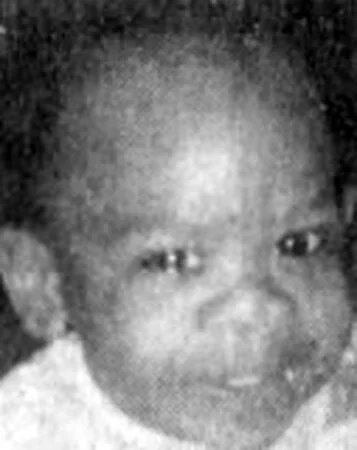
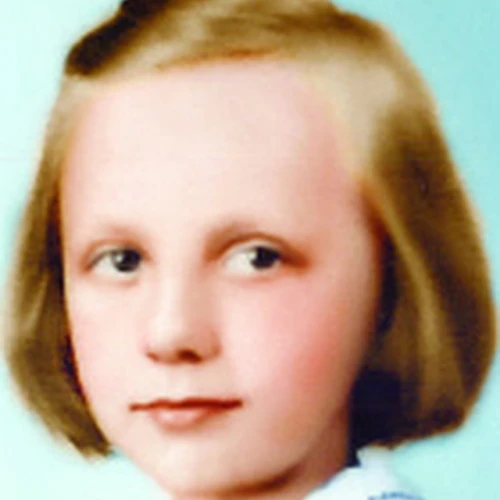
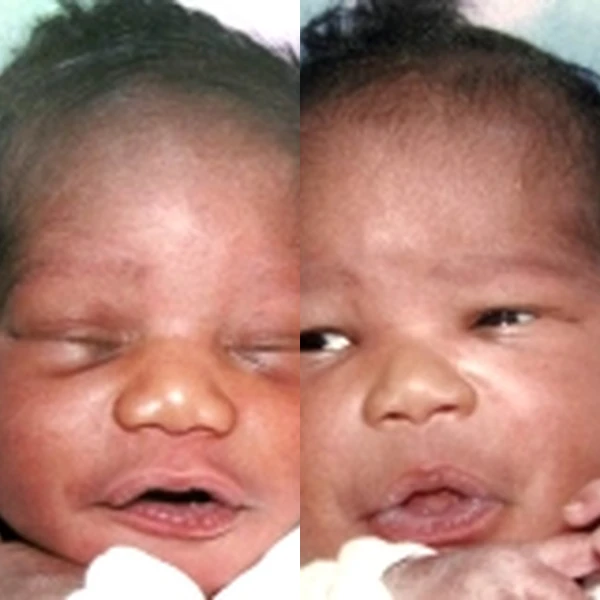
Because Ivon and Inisha vanished as small children, investigators eventually turned to forensic age progression to give the public something more useful to search for than photographs of toddlers who would, by the 2010s, have grown into young adults. The renderings released alongside the case show a young Black man and young Black woman in their late teens, based on projections built from the twins' childhood features and their parents' appearance. Ivon's case carries one additional identifying marker that investigators have repeatedly emphasized: the scarring left across roughly half his body by the scalding burns he suffered at age two would likely still be visible and distinctive today, regardless of how much his face may have changed with age. That physical detail remains one of the few concrete, permanent facts investigators can say with confidence about either twin, in a case otherwise built almost entirely on things nobody can verify.
A Case True Crime Audiences Keep Returning To
The Fowler twins' disappearance has drawn continued attention well past its initial news cycle, revisited by outlets and true crime podcasts including an episode of the long-running series Trail Went Cold, which framed the case around the same central, unanswered question that has defined it from the beginning: investigators have never found evidence proving Patricia harmed her children, yet they have likewise never been able to pin down how, when, or even approximately where Ivon and Inisha actually went missing. That absence of a fixed starting point, a single moment investigators can point to and say this is when it happened, is part of what has kept the case circulating in public memory long after Patricia Fowler's probation sentence quietly closed the only legal chapter the case has ever had.
Sources
- The Charley Project: Ivon D. Fowler
- The Charley Project: Inisha V. Fowler
- Pittsburgh Post-Gazette: The perplexing story of missing twin children that still lacks an ending
- Pittsburgh Post-Gazette: Judge dismisses four charges against Penn Hills mother of missing twins
- WPXI: Investigators still searching 2 years after Penn Hills twins reported missing
- Fox News: Mother of twins who've been missing 10 years gets probation
- CBS News Pittsburgh: Investigators release photo of missing twins from Penn Hills
- Vocal Media: Twins reported missing a decade after anyone can remember seeing them