Three Days for a Dog: The Disappearance of William 'Billy' Smolinski Jr.
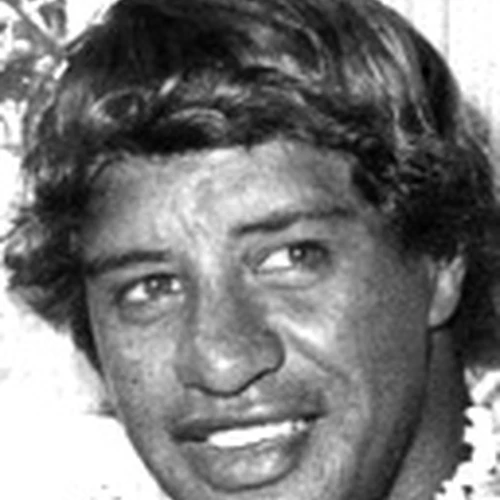
William Paul Smolinski Jr., known to nearly everyone as Billy, was thirty one years old in August 2004, living near the 100 block of Holly Street in Waterbury, Connecticut, and working as a tow truck driver. He stood between five foot eleven and six feet tall, weighed around two hundred pounds, with light brown hair and blue eyes, a pierced left ear, a blue cross tattoo outlined in orange on his left shoulder, and a cross tattoo bearing the name Pruitt on his right forearm. In the months before he vanished, Billy had been in a relationship with a woman named Madeleine Gleason for about a year, a relationship that ended shortly before his disappearance.
On the afternoon of August 24, 2004, sometime between 3:30 and 3:45, Billy went to a neighbor's house and asked them to look after his German Shepherd, explaining that he would be leaving for three days to see about a car. He never gave the neighbor a set of keys to access his own home to care for the dog properly, an odd omission for someone genuinely planning to be away for several days. He never returned. Everything Billy owned remained behind at his residence, including his white Ford pickup truck, a late 1970s or early 1980s model, sitting with his wallet and keys still inside it. His bank accounts and Social Security number have shown no activity whatsoever in all the years since, the kind of total, permanent silence that points overwhelmingly toward foul play rather than a man who simply walked away from his own life.
A Confession That Led Nowhere
Investigators developed strong suspicions early on involving Shaun Karpiuk, the son of Billy's former girlfriend Madeleine Gleason, and a man named Chad Hanson, who had reportedly been riding in a car with two other men around the time Billy disappeared. Karpiuk, a former high school football player, became a central figure in the theories investigators developed about what had happened to Billy, though he died of a heroin overdose in January 2005, just five months after Billy vanished, at a gas station in Waterbury, taking whatever he actually knew with him.
Chad Hanson eventually told police a detailed account implicating Karpiuk directly, claiming that Karpiuk had killed Billy with a roofing hammer and that Hanson himself had helped bury the body afterward, wrapped in carpet. Multiple witnesses separately reported that Hanson had bragged about the killing to other people over the years. Acting on Hanson's account, investigators launched a series of expensive, extensive searches at different points, digging in Seymour in 2008, in the Naugatuck State Forest in 2010, and in Oxford in 2011, that last search alone stretching across ten days and costing more than a hundred thousand dollars. None of these efforts turned up any trace of Billy's remains. In 2013, prosecutors charged Hanson with making false statements to police, and he pleaded guilty, receiving a sentence of four and a half years in prison. He has continued to maintain his own innocence regarding Billy's actual disappearance, even after admitting the statements that sent multiple search teams digging through Connecticut forests based on information that never panned out.
A Family Sued for Searching
Billy's disappearance took an unusual legal turn when his mother, Janice, and his sister, Paula Bell, found themselves the subject of a lawsuit rather than simply grieving families running a search effort. Madeleine Gleason sued both women in 2006, alleging that they had harassed and defamed her by distributing missing persons flyers along her bus route and in places she frequented, flyers that Gleason said effectively accused her of involvement in Billy's disappearance. The case worked its way through Connecticut's court system for years, at one point resulting in a judgment against the Smolinski family, before an appellate court ultimately overturned that award, a legal battle that added years of additional strain onto a family already searching for their missing son without any resolution in sight.
A Law Named After Him
What sets Billy Smolinski's case apart from most other unsolved disappearances is the tangible, lasting institutional change it eventually produced. While searching for their son, Janice and Bill Smolinski Sr. encountered exactly the kind of systemic failures that frustrate so many families of the missing: incomplete, uncoordinated federal databases that made it difficult for investigators in one jurisdiction to connect their son's case with information that might exist elsewhere in the country. Rather than simply accepting those obstacles, the Smolinskis worked with Connecticut lawmakers, beginning with then Congressman Chris Murphy in 2009, to draft legislation meant to fix the specific gaps they had personally run into.
That legislation, known as Billy's Law and formally titled the Help Find the Missing Act, connected the National Missing Persons and Unidentified Persons System, known as NamUs, directly with the FBI's National Crime Information Center, streamlined how local law enforcement agencies report missing persons cases, required that missing children reports be entered into NamUs, and directed the Department of Justice to establish clearer national guidelines for handling missing persons cases going forward. After years of advocacy, the bill passed with bipartisan support, and President Biden signed it into law on December 28, 2022, eighteen years after Billy vanished. Senator Murphy, reflecting on the Smolinskis' role in getting the legislation passed, credited their determination with helping ensure that thousands of other families dealing with a missing loved one would not have to face the same obstacles the Smolinskis had spent nearly two decades fighting through. Janice Smolinski, for her part, said simply that she hoped other families would get a chance to realize there was hope.
Still Searching, Twenty Years Later
Billy's case remains open with the Waterbury Police Department, and his family has never stopped actively searching for him. In August 2024, on the twentieth anniversary of his disappearance, Janice Smolinski posted publicly asking community members to stay alert during flood recovery efforts happening around the same time, noting that some of the areas affected by recent flooding overlapped with locations investigators had searched years earlier, and that erosion or storm damage might expose something searches had missed. Marissa Wright, a volunteer who has spent more than a decade helping search for Billy, said that even after twenty years, the loss still feels as fresh to the family as it did the day he vanished.
Billy Smolinski would be in his early fifties today had he lived. Instead, his case remains unsolved two decades on, a missing tow truck driver whose family turned an unbearable, unresolved search into federal law, even as the one thing they have wanted most this entire time, bringing their son home, has continued to elude them.
Anyone with information about William Paul Smolinski Jr.'s disappearance is asked to contact the Waterbury Police Department at 203-574-6941.
Sources
- The Charley Project: William Paul Smolinski Jr.
- NBC Connecticut: Family makes renewed plea as Billy Smolinski missing person case marks 20 years
- Senator Chris Murphy: Biden Signs Law Inspired by Family's Two-Decade Search for Missing Waterbury Man
- Newsweek: Billy Smolinski, Gone Since 2004, Is Part of a 'Silent Mass Disaster'
- FOX61: Court overturns award against missing man Billy Smolinski's relatives
- Dark Downeast: The Disappearance of William "Billy" Smolinski Jr. (Connecticut)