He Took Off His Life Jacket to Paddle Faster: Eddie Aikau
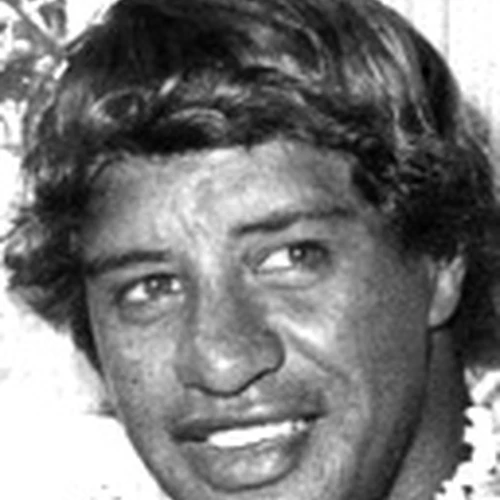
Edward Ryan Makua Hanai Aikau, known to nearly everyone simply as Eddie, was born May 4, 1946, in Kahului, Maui, to Solomon and Henrietta Aikau, a family that traced its lineage back to Hewahewa, the high priest who served under King Kamehameha I. Eddie grew up with five siblings, and the family made a habit of regular surfing excursions at Kahului while he was still a child, an early exposure that would go on to shape essentially the entire rest of his life. When the Aikaus relocated to Oahu in 1959, thirteen year old Eddie found himself surrounded by the North Shore's legendary breaks, and he took to the water immediately and permanently. He was, by every account, capable academically, yet he chose to leave high school early in order to work at a Dole Food Company pineapple cannery, a decision made specifically so he could save enough money to buy his first real surfboard and free up his mornings for surfing before shifts.
Waimea Bay's First Line of Defense
Eddie's reputation in the water grew quickly and organically, built initially on informal rescues and mediation among the North Shore's surfing community rather than any official title. By 1967, he had impressed professional surfers enough at Waimea Bay, a break famous for waves that regularly exceed thirty feet, that his name began circulating as someone genuinely exceptional even by the standards of that community. In 1968, the City and County of Honolulu made him the first official lifeguard assigned to patrol the North Shore beaches stretching between Sunset and Haleiwa, an appointment that required an exception to standard hiring rules since Eddie did not hold a high school diploma. It did not matter. Over the following decade, Eddie Aikau rescued more than five hundred swimmers from waters that killed far less experienced watermen with regularity, and remarkably, no one ever drowned during a shift when Eddie was on duty, a claim that held up across his entire tenure despite the sheer volume and severity of rescues he performed. Many of those rescues were never even formally logged. In 1971, he was named Lifeguard of the Year, and in 1977 he won the Duke Kahanamoku Invitational Surfing Championship, cementing him as both a working class hero to the local community and a legitimate competitive talent within professional surfing. It was from this reputation, a lifeguard who would paddle out into conditions that made other capable watermen hesitate, that the phrase Eddie Would Go first emerged among his peers.
Joining the Hokule'a
In 1978, the Polynesian Voyaging Society organized an ambitious expedition intended to physically recreate the ancient migratory route believed to connect Hawaii and Tahiti, a journey of roughly twenty five hundred miles undertaken aboard a double hulled traditional voyaging canoe called the Hokule'a, built specifically to demonstrate that Polynesian wayfinding techniques could genuinely accomplish long distance ocean navigation without modern instruments. Eddie, then thirty one years old and already a cultural icon in his own right, volunteered as crew for the voyage's maiden departure, joining a mission that carried real weight for a broader movement of Hawaiian cultural revival happening throughout the 1970s. The Hokule'a left the islands on the evening of March 16, 1978, departing around 7:00 p.m. into what would quickly become a genuinely dangerous passage.
A Hull Failure in the Dark
Not long into the voyage, the Hokule'a developed a leak in one of its two hulls while navigating the Kaiwi Channel, one of the most notoriously rough stretches of open water anywhere in the Hawaiian Islands, known among sailors for punishing wind and current conditions even under relatively ordinary circumstances. As conditions worsened and water continued entering the compromised hull, a wave eventually struck the canoe with enough force to flip it over completely, stranding the entire crew in heavy seas roughly twelve miles south of the island of Molokai, with the nearest reachable land, the island of Lanai, sitting an estimated twelve to twenty miles further out across open, unprotected ocean.
A Volunteer, a Surfboard, and a Decision to Go Faster
With no reliable way to summon help directly from the capsized canoe itself, the crew debated their options and ultimately agreed that someone would need to paddle toward Lanai in an attempt to reach help before conditions or exposure overcame the rest of them. Eddie, given his extraordinary experience and comfort in exactly this kind of dangerous open ocean environment, was the obvious choice, and he agreed to go. Crew members equipped him as best they could under the circumstances, providing a strobe light, some oranges, and a life jacket before he set out alone on his surfboard into the dark, roiling channel. At some point during that attempt, Eddie made a decision that would come to define the entire tragedy that followed. He removed his own life jacket, judging correctly or not that it was slowing his paddling efficiency at a moment when speed genuinely mattered more than almost anything else, and continued on toward Lanai without it.
He was last seen by his own crewmates riding his board off into the distance, growing smaller against the dark water until he disappeared from view entirely. He never reached Lanai, and he was never seen again by anyone.
Rescued Crew, a Missing Hero
Hours after Eddie paddled away, the remaining Hokule'a crew members were spotted and rescued by the United States Coast Guard Cutter Cape Corwin, having survived their ordeal clinging to the overturned canoe through the worst of the night. Word of Eddie's disappearance triggered what would become the largest air and sea search operation in the recorded history of the Hawaiian Islands, an extraordinary mobilization of resources reflecting both the general danger any lost mariner represented and the specific, immense cultural weight Eddie Aikau already carried across the islands even before this final act. That search, despite its scale and duration, never located Eddie or any trace of what had happened to him after he vanished into the Kaiwi Channel. He was formally presumed drowned, and his body has never been recovered in the decades since.
A Legacy Built Entirely on the Choice He Made
What transformed Eddie Aikau from a widely respected local lifeguard into a genuine, enduring cultural icon across Hawaii was not merely the decade of lifesaving work that preceded his final voyage, but the specific nature of his death itself, a man already famous for entering dangerous water on behalf of others, doing so one final time on behalf of an entire ship's crew, in conditions that ultimately cost him his own life. The surfing community formalized that legacy in 1985 with the creation of an invitational big wave surfing competition at Waimea Bay held in his memory, an event that only actually takes place in years when swells reach a minimum of twenty feet, a fitting standard given the man it honors. Eddie's own younger brother, Clyde Aikau, went on to win that competition himself in 1986, adding a deeply personal thread to an event that has since become one of the most prestigious and rarely held competitions in professional big wave surfing. The phrase Eddie Would Go, already circulating informally among North Shore surfers before 1978, took on considerably deeper resonance after his death, evolving into a broader cultural shorthand across Hawaii for exactly the kind of selfless risk taking Eddie's entire adult life had come to represent.
A Story That Continues to Reach New Audiences
Eddie's story has continued finding new audiences well beyond the surfing world specifically. In 2013, ESPN produced a 30 for 30 documentary titled Hawaiian: The Legend of Eddie Aikau, which went on to win an Emmy Award and introduced his life and disappearance to viewers with no particular connection to surf culture at all. In 2019, on what would have been his seventy third birthday, Google commemorated Eddie with its own featured Doodle, a small but telling sign of how thoroughly his story had crossed over from regional Hawaiian legend into something closer to broader American cultural memory. A 1998 stage play titled Eddie Would Go had already explored his life and death for theater audiences years before either of those developments, underscoring just how many different creative mediums have found something worth returning to in his story over the decades since he vanished.
Gone, but Never Actually Lost to History
More than four and a half decades after Eddie Aikau paddled his surfboard into the darkness of the Kaiwi Channel and never came back, his disappearance remains one of the rare missing persons cases that functions simultaneously as an unsolved tragedy and as one of the most celebrated acts of courage in modern Hawaiian history. No search ever recovered his body, and no additional evidence has ever emerged in the years since to add any further detail to what actually happened to him after his crewmates lost sight of him on that surfboard. What has endured instead is the specific, deliberate choice he made in his final hours, removing the one piece of safety equipment that might have kept him afloat longer, on the calculation that speed mattered more, in service of saving people he had spent his entire adult life already dedicated to saving.
Sources
- The Charley Project: Edward Ryan Makua Hanai Aikau
- Wikipedia: Eddie Aikau
- The Inertia: Examining The Death of Eddie Aikau (Eddie Would Go)
- Surfer: How Legendary Lifeguard and Surfer Eddie Aikau Became a Hawaiian Icon
- Duke Kahanamoku Foundation: Eddie Aikau, Hawaii Waterman Hall of Fame 2010