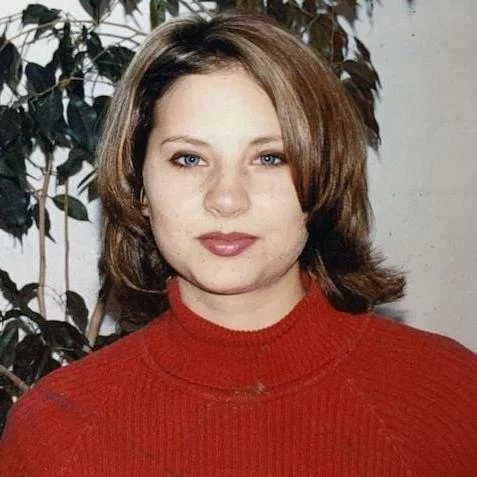
The Barbecue She Never Came Back From: The Disappearance of Donna Mae Jokumsen
Donna Mae Jokumsen, born Donna Mae Douglas, was twenty two years old in July 1987, living in Chandler, Arizona, a suburb of Phoenix, with her husband, Kevin Dale Jokumsen, and their two young sons, ages one and three. Donna stood between five foot eleven and six feet tall, weighed between a hundred eighty and a hundred ninety pounds, with brown hair and brown eyes, a scar on her abdomen, and a tattoo on her shoulder. She and Kevin, twenty three at the time, had both grown up in Enumclaw, Washington, where allegations of domestic violence against Kevin had already been filed with local police before the young family ever relocated to Arizona.
On July 3, 1987, Donna called her father back in Enumclaw and told him she intended to leave Kevin and bring their two sons home to Washington to get away from him. Two days later, on July 4, a friend saw Donna with a split lip and marks on her neck, and Donna told that friend directly that she planned to leave her husband. The following day, July 5, Donna attended a friend's barbecue, telling people there that she intended to go home afterward, pack belongings for herself and her sons, and return to spend the night before setting off on the drive back to Washington. She never returned to the barbecue, and she never made that drive. Donna has never been seen or heard from again.
A Husband Who Never Called Police
Donna's own mother, growing concerned when her daughter failed to arrive in Washington as planned, contacted Chandler police on July 11, nearly a week after Donna vanished. When officers went to the family's home, they found Kevin there with the two boys, still living in the house, having never himself reported his wife missing despite nearly a week having passed since she supposedly left for a barbecue and never came home. Donna's blue Chevrolet Chevelle was eventually located, cleaned and washed, an unusual detail for a car its owner had supposedly driven away in voluntarily and then abandoned somewhere.
Kevin submitted to a polygraph examination during the initial investigation and failed it. In the weeks following Donna's disappearance, he pawned her jewelry, an action investigators would later view as strikingly inconsistent with the behavior of a husband who genuinely believed his wife might still be alive and could return for her own belongings. Despite all of this, without a body and without enough evidence at the time to bring formal charges, the case settled into the frustrating category of an unresolved missing persons file, with Kevin as the clear, central suspect but no charges ever filed against him.
A Cold Case Reopened
The case sat that way for decades, until Chandler detectives conducted a formal cold case review in 2013, more than a quarter century after Donna vanished. Detective Seth Tyler, who worked that review, stated plainly that there was no evidence to suggest Donna Mae was still alive, and the department's renewed examination of the case concluded that Kevin was responsible for his wife's death. That conclusion set the stage for what would eventually become formal charges, though it still took several more years to reach a grand jury. In August 2017, thirty years after Donna disappeared, a grand jury indicted Kevin on charges of second degree murder, and he was arrested in King County, Washington, not far from where the couple had originally grown up together.
A Trial That Never Reached a Jury Verdict
Kevin's trial finally got underway roughly two years after his indictment. Prosecutors built their case around the documented history of domestic violence between Kevin and Donna, including the three separate incidents reported to Enumclaw police in the mid 1980s, along with Donna's own statements to friends in the days immediately before she disappeared, her split lip, the marks on her neck, and her clearly stated intention to leave him for good. Prosecutors also pointed to Kevin's failed polygraph, his decision never to report Donna missing himself, and his choice to pawn her jewelry shortly after she vanished, all circumstantial pieces meant to build toward a picture of a man who knew his wife was never coming back because he was the one responsible for that fact.
On October 29, Maricopa County Superior Court Judge Ronda Fisk granted a defense motion for a directed verdict, effectively ruling that the prosecution had not presented sufficient evidence for the case to even proceed to jury deliberation, and acquitted Kevin Jokumsen on the spot. He was released from custody almost immediately. Because an acquittal carries specific, powerful legal protections, the State of Arizona had no ability to appeal Judge Fisk's ruling, and Kevin could never be tried again for the same alleged crime under the constitutional protection against double jeopardy, closing the case for what has been described as the third and final time in its long history.
A Family Divided by the Outcome
The acquittal produced starkly different reactions from the two families connected to the case. Arizona prosecutors publicly disagreed with the ruling, maintaining that sufficient evidence had existed to let the case proceed to a jury rather than being cut short by the judge before deliberations ever began. Kevin's own mother, Jeanne Jokumsen, offered a very different assessment, telling reporters simply that thank God, the truth had come out, a statement reflecting her family's long standing belief in Kevin's innocence throughout more than three decades of suspicion directed at him.
Donna's own family has never had the resolution that even a guilty verdict, let alone an actual recovery of her remains, might have offered them. More than three decades after she attended a Fourth of July weekend barbecue and never came home to finish packing for herself and her two young sons, Donna Mae Jokumsen remains missing, her case formally closed by an acquittal that leaves no further legal avenue for prosecution, regardless of whatever additional evidence might ever surface in the future.
The legal mechanism that ended Kevin's prosecution, a directed verdict issued by a judge before the case ever reached a jury, is a relatively rare outcome in criminal trials, reserved for situations where a judge determines that even viewing the prosecution's evidence in the most favorable possible light, no reasonable jury could convict based on what had been presented. In Donna's case, that meant more than three decades of accumulated circumstantial evidence, the documented abuse, the failed polygraph, the pawned jewelry, the washed car, and a husband who never once picked up the phone to report his own wife missing, was still not enough, in Judge Fisk's assessment, to clear the specific legal threshold required to let a Maricopa County jury even weigh in on the question.
That outcome has left Donna's case in an unusual position among cold cases generally. Most unsolved disappearances remain open in the hope that new evidence, a body, a confession, a forensic breakthrough, might eventually allow prosecutors to bring charges for the first time. Donna's case has already gone further than that and then been legally foreclosed from ever going further again, regardless of what might still surface. Kevin Jokumsen cannot be retried for Donna's murder no matter what future evidence emerges, a legal reality that has left investigators with essentially nowhere left to take the case even if new information about what happened to her were to come to light tomorrow.
Anyone with information about Donna Mae Jokumsen's disappearance is asked to contact the Chandler Police Department at 480-782-4445.
Sources
- The Charley Project: Donna Mae Jokumsen
- Courier-Herald: Suspect in 1987 cold case acquitted, not enough evidence
- Courier-Herald: Arizona 'cold case' centers on former Enumclaw couple
- Courier-Herald: Jokumsen cold case trial scheduled to begin