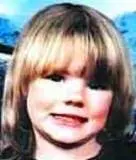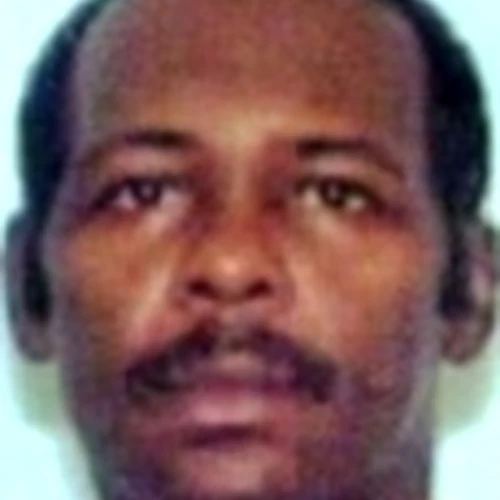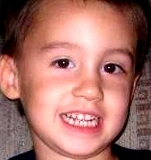
The Weekend Visit That Never Ended: The Disappearance of Tyler Payne
Tyler Christopher Payne was four years old, and the last confirmed place he ever lived was a closet inside a Tucson, Arizona apartment, where he and his three-year-old sister Ariana were confined for months, fed less and less, and eventually fed nothing at all, until both children were dead. Their father did not report them missing or seek help. He hid their bodies in a rented storage unit instead, where a maintenance worker discovered Ariana's remains almost a year later. Tyler's body was never found. Investigators believe it ended up in a southeast Tucson landfill, lost among tons of ordinary trash, and it has never been recovered.
A Weekend That Was Never Supposed to Last
Tyler and Ariana's parents, Christopher Mathew Payne and Jamie Marie Hallam, had married in 2002 and separated after about a year. Hallam retained full legal custody of both children. Christopher had an existing criminal record involving domestic violence along with drug and alcohol related charges, and by 2006 he reportedly owed close to $19,000 in unpaid child support. Despite that history, in late January 2006 Hallam agreed to let Christopher take Tyler and Ariana for what was meant to be an ordinary weekend visit at the apartment he shared with his girlfriend, Reina Irene Gonzales, at the Portofino Apartments on West 36th Street.
The weekend never ended. Christopher kept manufacturing reasons to extend the children's stay, one excuse after another, until he simply stopped answering Hallam's phone calls altogether. By March, with her own children effectively being withheld from her despite her holding sole legal custody, Hallam turned to the system that was supposed to protect exactly this kind of situation: she contacted authorities and Arizona's Child Protective Services for help getting Tyler and Ariana back.
A System That Failed Them Twice
What should have been a straightforward custody enforcement matter instead became a case study in institutional failure. A CPS caseworker named Cindy Graupmann was assigned to the situation, and rather than supporting Hallam's valid custody rights, she told police and others that Hallam was under investigation and being uncooperative, a claim that misrepresented an earlier, separate CPS inquiry into unfounded allegations of methamphetamine use and neglect against Hallam, allegations that had already been investigated and were not substantiated. Graupmann went further, encouraging Christopher Payne to pursue temporary custody of the children himself, despite never having met him in person, never running a criminal background check that would have surfaced his history of domestic violence and substance abuse charges, and never requiring him to submit to any drug testing.
With that framing in place, Tucson police took no meaningful action to enforce Hallam's existing custody order or return her children to her care. A mother with full legal custody documents in hand was, in effect, told to stand down while her children remained in the home of a man with a documented history of violence and addiction. Those children would not survive the year.
The Signs Along the Way
There were warning signs visible to people around the family well before anyone understood how serious the situation had become. A relative named Terry White visited around Easter 2006 and later described a household in visible disarray: toys scattered everywhere, Ariana looking dirty and scrawny with unkempt hair, and a general unhappiness in the child that stuck with White afterward. It was a jarring contrast to what Christopher had told relatives previously, that Ariana was such a healthy eater she would get up in the middle of the night hunting for potato chips. By the summer, a witness named Carolina Calderon reported seeing four-year-old Tyler with large, visible bruises across his cheek and arms, describing him as looking very sad. None of these individual observations, on their own, triggered the kind of intervention that might have saved the children's lives.
The Closet
According to testimony and later court findings, the real horror began in earnest in late June 2006, when Christopher Payne started confining Tyler and Ariana to a closet in the apartment while he was away, rather than allowing them free movement through their own home. At first, he fed them sandwiches once a day. Within about a month, according to the accounts later given in court, he stopped feeding them entirely, along with denying them regular access to a bathroom or fresh air. Reina Gonzales, who would later testify against Christopher as part of her own plea agreement, described the children being kept in that closet continuously once the confinement began in earnest.
The physical evidence recovered from the apartment after the fact painted an almost unbearable picture of what those final weeks were like. Investigators found blood on the walls and floorboards of the closet. They found an opening in the closet wall that had been stuffed with feces and human hair. They found patches of dried body fluids on the surrounding carpet. A roommate in the home later told investigators she had heard noises coming from the bedroom closet during this period, sounds that, in hindsight, marked two small children slowly dying only feet away from the rest of the household's daily life.
Two Deaths, Weeks Apart
Ariana died first, sometime in August 2006, according to the timeline established at trial. Rather than seeking help or reporting what had happened, Christopher Payne put her body into a duffel bag and placed it back inside the same closet, alongside her still-living brother. Tyler died roughly a week later, having been left in that closet with no food, no adult intervention, and by then, his sister's body beside him. In mid-September, Christopher moved both children's remains into a blue storage tote and transported it to a rented storage unit, where it would sit undiscovered for months.
Discovery
The concealment held until February 2007, when Christopher fell behind on the storage unit's rental fees. Workers clearing out the abandoned unit came across the tote and, disturbed by the smell coming from it, ultimately called police after throwing it into a garbage bin. On February 17 and 18, 2007, investigators recovered Ariana's remains from inside the tub. Her body was so severely decomposed that a formal autopsy in the traditional sense could not be performed, but examiners were still able to identify twelve broken ribs, a broken vertebra, a broken forearm, a fractured jaw, and a broken shoulder blade among her remains, injuries in various stages of healing that told their own story of sustained, repeated abuse rather than a single incident.
Tyler's remains were never in the tub at all. Investigators came to believe that his body had, at some point during the disposal process, fallen out or become separated from the container and ended up mixed into the regular trash stream, ultimately buried somewhere within the Los Reales Landfill in southeast Tucson, one of the largest active landfills in the region. Searches of the facility were conducted but never succeeded in locating his remains, and to this day Tyler Christopher Payne remains classified as an endangered missing child even though authorities have no doubt about what happened to him.
Justice, Partial and Delayed
Reina Gonzales was the first to face legal consequences, pleading guilty in 2008 to two counts of second-degree murder in exchange for a 22-year sentence and her cooperation testifying against Christopher Payne. Her testimony described in granular detail the escalation from sandwiches to nothing at all, providing prosecutors with the timeline they needed to build their case against the children's father.
Christopher Payne's own account of what happened shifted multiple times as investigators closed in. He initially denied having seen the children at all, then claimed they were with their mother, before eventually admitting that they had died in his home. His explanation for their deaths was that Tyler and Ariana had effectively starved themselves to death, a claim he framed as a kind of deliberate self-destruction after learning they would not be returned to their mother. Prosecutors offered a far more damning explanation, that Payne's heroin addiction had led him to prioritize funding his own drug use over feeding his children, a theory supported by the fact that his own biological son from the relationship remained well-nourished throughout the same period the other two children were starving in the closet.
In March 2009, a jury convicted Christopher Mathew Payne of two counts of first-degree murder, three counts of child abuse, and two counts of concealment or abandonment of a body. He was sentenced to death and has remained on death row in Arizona in the years since, still awaiting execution as appeals continue through the courts.
What Came After
The case's aftermath extended well beyond the criminal courtroom. Jamie Hallam pursued civil litigation against both Child Protective Services and the Tucson Police Department, arguing that the failures of both agencies, from Graupmann's misrepresentations to police inaction in the face of valid custody paperwork, directly contributed to her children's deaths. CPS ultimately acknowledged mishandling the case and settled with Hallam for one million dollars. Her separate lawsuit against the police department was dismissed in October 2010, leaving that portion of institutional accountability formally unresolved even as the CPS settlement stood as a tacit admission that the system built to protect Tyler and Ariana had failed them at nearly every available opportunity.
Ariana was eventually laid to rest. Tyler never was. Somewhere within the Los Reales Landfill, or long since compacted and buried beneath decades of subsequent waste, are the remains of a four-year-old boy with a small freckle on his foot and a speech impediment, whose entire disappearance was never really a mystery to anyone once the truth came out, only a tragedy that arrived far too late to matter and left nothing behind to bring home.
Sources
- The Charley Project: Tyler Christopher Payne
- FindLaw: State v. Payne (Arizona Supreme Court, 2013)
- Tucson.com: Payne gets death penalty for starving his children
- Tucson.com: Christopher Payne found guilty of killing his children
- Tucson.com: Relative details her last memory of Ariana Payne
- Tucson.com: CPS worker suspected child neglect
- Tucson.com: Judge dismisses suit against TPD in deaths of 2 kids
- DoeNetwork: 5757DMAZ - Tyler Christopher Payne