Six Weeks a Bride: The Disappearance of Mary Shotwell Little
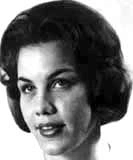
Mary Shotwell Little had been a married woman for exactly six weeks when she disappeared from a shopping center parking lot in Atlanta, Georgia, on the night of October 14, 1965. She was 25 years old, a bank secretary with an ordinary and, by every outward account, happy life, and she had spent that evening doing nothing more unusual than eating dinner with a coworker and running a few errands before her husband returned from a business trip. When her car was found the next morning, still parked at Lenox Square, it contained her neatly folded undergarments, a knife-cut stocking, smears and speckles of blood on the interior and the steering wheel, and roughly forty miles on the odometer that no one has ever been able to account for. Mary herself was gone, and sixty years later, she still is.
A New Bride With a Secret Admirer
Mary worked as a secretary at Citizens and Southern Bank, known locally as C&S Bank, in Atlanta, and had recently married a bank examiner named Roy Little. Their wedding had taken place only six weeks before she vanished, and by every account available, the marriage was a happy one. In the days leading up to her disappearance, Mary had planned a small welcome-home party for Roy, who was away completing a work training program and expected back the following day.
Underneath that seemingly settled new-marriage domesticity, however, sat something stranger. In the weeks before she disappeared, Mary had been receiving unsettling phone calls at work from an unidentified man, calls that visibly disturbed her. During at least one of these calls, she was overheard telling the caller, "I'm a married woman now. You can come over to my house any time you like, but I can't come over there," a statement that suggested an ongoing relationship or acquaintance with someone she felt obligated to manage carefully now that she had a husband. She had also received a dozen roses from a secret admirer, a gift she reportedly kept hidden from Roy. She never told anyone who this admirer was, and investigators were never able to identify him.
The Last Ordinary Evening
On the evening of October 14, Mary met a coworker for dinner at the Piccadilly Cafeteria inside the Lenox Square Shopping Center in Atlanta's Buckhead neighborhood. The two women ate together and then spent several hours shopping afterward, an unremarkable evening by any measure. Around 8:00 p.m., Mary said goodbye to her coworker and walked out to her car alone, a metallic pearl gray 1965 Mercury Comet, parked in the shopping center's lot. That was the last confirmed sighting of Mary Shotwell Little.
When she failed to show up for work the next morning and hadn't called in sick, her boss, Gene Rackley, grew concerned enough to mention it to the coworker Mary had eaten dinner with the night before. The two of them contacted security at Lenox Square and asked them to check the parking lot for her car. It was still there, exactly where she had left it.
What Was Inside the Car
What officers found inside Mary's Comet turned an ordinary missing persons report into something far darker almost immediately. Her undergarments were found neatly folded inside the vehicle, an oddly composed detail set against everything else investigators discovered alongside them: a bra and a stocking that had been cut, apparently with a knife, lying on the floorboard, and blood, both smeared across the steering wheel and speckled elsewhere throughout the car's interior and exterior. An unidentified fingerprint was recovered from the blood on the steering wheel, one that was never matched to Mary, to her husband, or to anyone else investigators were able to identify. The car itself had accumulated roughly forty to forty one unaccounted-for miles since Roy Little's own careful mileage log had last tracked it, and its Georgia license plate, investigators later determined, had at some point been swapped with a plate belonging to a stolen vehicle. A dusting of red dirt coated portions of the car as well, the kind associated with unpaved rural roads rather than the paved parking lots and streets of Atlanta's Buckhead district.
A witness separately reported having seen a man with a distinctive brown crew cut attempting to approach a different woman in the same parking lot only minutes before Mary is believed to have walked out to her own car, a detail that has never been conclusively tied to her case but has never been fully ruled out either.
The Trail to North Carolina
The most concrete lead investigators ever developed came from Mary's gasoline credit card, which was used twice the following day, October 15, in North Carolina, first in Charlotte, Mary's own hometown, during the early morning hours, and then again roughly twelve hours later in Raleigh. The signatures on both transactions appeared, to those who examined them, to resemble Mary's own handwriting. Gas station attendants at one or both locations later recalled a woman matching her description accompanied by one or two unshaven, middle-aged men, and described the woman as bloodstained and appearing to have a minor injury to her head, with her companions seemingly tending to the wound. The travel time between Charlotte and Raleigh, however, made the reported timeline of both stops difficult to reconcile, raising the possibility that more than one person, or more than one vehicle, was involved in whatever journey the card's use was documenting.
Ransom Calls, Prison Confessions, and a Bank's Secrets
In the aftermath, a handful of leads promised resolution and then collapsed under scrutiny. An anonymous caller at one point demanded $20,000 for Mary's safe return, directing Roy Little to leave the money at an overpass inside Pisgah National Forest in North Carolina. When an FBI agent went to the location instead, he found nothing but a blank piece of paper, and the caller never made contact again, a pattern consistent with an opportunistic hoax rather than a genuine ransom scheme.
Years later, an inmate serving a life sentence at a Georgia state prison claimed to know two men who had been paid $5,000 each to abduct Mary and take her to a house in Mount Holly, North Carolina, where he alleged she was murdered. The FBI at the time considered the account uncredible, though cold case investigators revisiting the file in later decades have reportedly given the claim more serious reconsideration than it originally received.
Roy Little himself came under early scrutiny, in the way spouses in these cases often do. He declined to take a polygraph test and struck some investigators as strangely unconcerned given the circumstances. But he had a solid alibi placing him out of town during the disappearance itself, and investigators were never able to identify any credible motive connecting him to whatever happened to his new wife. He was ultimately ruled out as a suspect, though questions about his demeanor in the investigation's early days have persisted in retellings of the case ever since.
A separate, stranger thread involved C&S Bank itself. Around the time of Mary's disappearance, the bank had reportedly hired a former FBI agent to look into allegations involving sexual harassment and prostitution connected to bank employees. Some accounts have suggested Mary may have had knowledge relevant to that internal investigation, though her own boss denied she had any direct involvement in it. Whether that thread had any real bearing on her disappearance has never been established one way or the other.
The Woman Who Took Her Job
Perhaps the single strangest coda to Mary's case involves Diane Shields, the woman who took over Mary's position at the bank after her disappearance. On May 19, 1967, roughly a year and a half later, Diane Shields was found murdered, her body discovered inside the trunk of her own car, suffocated with a scarf and pages torn from a phone book stuffed against her face. Her best friend later claimed that Diane had been quietly working with police in an undercover capacity connected to the ongoing investigation into what happened to Mary, though no official police records have ever surfaced to confirm that claim. Whether Diane Shields's murder was connected to Mary Shotwell Little's disappearance, coincidental, or something else entirely has never been resolved, and it remains one of the case's most unsettling unanswered threads.
Sixty Years and Counting
Mary Shotwell Little's case has never produced an arrest, a confirmed sighting, or a set of recovered remains. Adding to the case's frustrations over the decades, Mary's original police file itself reportedly went missing at some point in the years following her disappearance, complicating efforts by later generations of investigators and journalists to fully reconstruct the earliest stages of the case from primary records. Her mother spent the rest of her own life still searching for answers about her daughter's fate.
In November 2025, sixty years after Mary vanished, a documentary titled The Vanishing: The 60 Year Unsolved Disappearance of Mary Shotwell Little premiered in Atlanta, produced by Monument Motion Picture LLC and drawing on archival material, new reporting, and firsthand testimony in an attempt to bring fresh attention to a case that has never stopped generating theories even as it has never come close to being solved. Producer Steve Kendrick described the effort as an attempt to treat Mary's story as more than a historical footnote, saying that when cases like hers go cold, it isn't only evidence that goes missing, but accountability itself. Six decades after she walked out of a cafeteria and across a parking lot toward her car, that accountability still has not arrived.
Sources
- The Charley Project: Mary Shotwell Little
- Atlanta News First: Documentary to highlight Atlanta's most infamous missing persons case from 60 years ago
- MRU: Unsolved Mystery: The Chilling Disappearance Of Mary Shotwell Little
- Medium, Of Misdeeds and Mysteries: The New Bride that Vanished
- UNCG University Libraries: What Happened to Mary? The Disappearance of Mary Shotwell Little, Woman's College Alumna
- Finished Pages: The Disappearance of Mary Shotwell Little
- International Missing Persons Wiki: Mary Shotwell Little
- Buckhead.net: Mary Shotwell Little
- Monument Multi-Media: Cold Case Atlanta, Mary Shotwell Little