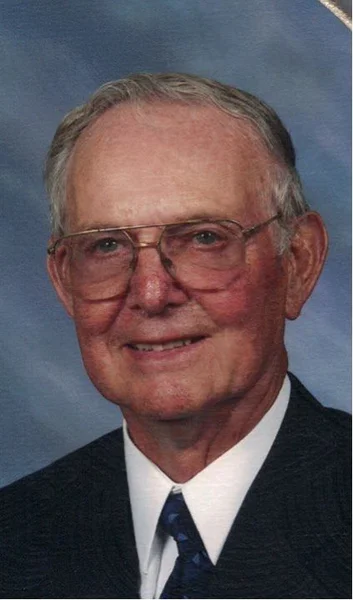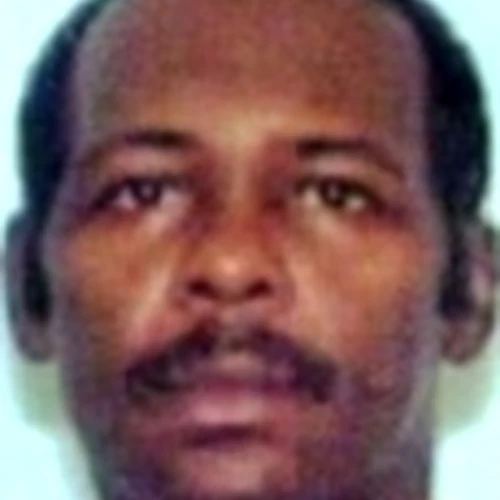
Racially Motivated: Mickey Wright Sr.
Mickey Wright Sr. was born August 10, 1954, in Chicago, Illinois, and by 2001 had settled into a quiet, dependable life in Memphis, Tennessee, working as a code enforcement officer for the Shelby County Office of Construction Code Enforcement. He was forty six years old, insulin dependent as a diabetic, and known by those who knew him as a mild mannered, hardworking homebody and family man. He wore reading glasses, carried a Seiko watch with a blue face and brown leather band, and by all accounts approached his job, inspecting properties and issuing citations across Memphis, with the same steady reliability he brought to the rest of his life.
An Ordinary Citation That Turned Fatal
On April 17, 2001, Wright was working his usual route along Lamar Avenue in Memphis when he stopped at a car lot to issue a citation, a routine piece of municipal enforcement work he had likely performed hundreds of times before without incident. He never returned to his office that day to submit his daily log or turn in his assigned Ford Ranger pickup truck, license plate GT4191. His continued absence set off an investigation that, within days, made clear something had gone seriously wrong rather than Wright simply having taken an unplanned detour.
Two days later, on April 19, a jogger discovered Wright's Code Enforcement identification, his badge, and several other personal items in a creek in Olive Branch, Mississippi, just across the state line from Memphis. On April 27, investigators located Wright's company truck in a rural wheatfield in Marshall County, Mississippi, completely burned and destroyed. His wallet turned up separately in a nearby ditch. Wright himself was gone entirely, and despite the mounting physical evidence of foul play scattered across two states, he would not be heard from again.
Three Years Before a Name
The investigation into Wright's disappearance stretched on for more than three years without producing a named suspect, an unusually long gap given how much physical evidence investigators had already recovered within the first ten days alone. That changed in July 2004, when police arrested Dale V. Mardis after receiving a tip connecting him to the case. Mardis, who owned several commercial properties around Memphis, turned out to have a direct and specific connection to Wright's final known movements, since the car lot where Wright had gone to issue his citation on April 17 leased its property directly from Mardis himself. Investigators also learned that in the period following Wright's disappearance, Mardis had appeared publicly with black eyes and broken ribs, injuries he never offered any consistent explanation for, details that only deepened suspicion once his name entered the investigation formally.
A Confession Involving a Steel Drum
Facing trial, Mardis ultimately entered a plea in April 2007, just days before proceedings were set to begin, pleading no contest to second degree murder in Wright's death and receiving a fifteen year sentence in state court. As part of the process that followed, Mardis confessed to the specific mechanics of what he had done to Wright's body after killing him, describing how he had dismembered the remains, burned them inside a fifty five gallon drum, and disposed of what was left by placing pieces into junked automobiles that were subsequently sent through a crusher, a systematic, almost industrial method of body disposal that reflected considerable deliberate effort to ensure nothing would ever be recovered. That effort succeeded. Wright's remains have never been found.
A Federal Hate Crime Charge
The state conviction and fifteen year sentence, while significant, did not represent the end of the case. Federal prosecutors subsequently pursued Mardis separately under civil rights statutes, with the Department of Justice classifying Wright's killing specifically as a racially motivated hate crime, reflecting the fact that Mardis, who is white, had shot and killed Wright, who was Black, under circumstances federal investigators determined were driven by racial animus rather than any dispute connected purely to the citation Wright had issued that day. In March 2011, Mardis pleaded no contest in federal court to the civil rights charges connected to Wright's murder and received a life sentence with no possibility of parole. U.S. District Judge Bernice Donald, addressing Mardis directly during sentencing, described his conduct as abhorrent, characterizing the entire course of his actions as almost macabre.
A Second Murder No One Had Connected to Him
The federal sentencing hearing produced a genuinely shocking additional revelation. Prosecutors disclosed that Mardis had separately confessed to an entirely different murder, one that had occurred three years before Wright's death and that investigators had never previously connected to him at all. In June 1998, Dr. Henry Ackerman, a white physician from Baltimore, Maryland, had traveled to Memphis specifically to purchase a truck from Mardis, the two men having known each other previously through gun shows. According to Mardis's own account, an argument broke out between them over an unpaid debt, and Mardis beat Ackerman to death with a hammer. He then disposed of Ackerman's body using the same method he would later use on Wright three years afterward, burning the remains inside a fifty five gallon drum in Mississippi. Mardis agreed to plead guilty to first degree murder in Ackerman's case as well, adding an additional life sentence in state court on top of the federal sentence he had already received for killing Wright.
A Son's Reckoning on National Television
Wright's death carried its own painful afterlife within his own family for years following the conviction. His son, known professionally as the music producer and personality Memphitz, spoke publicly about his father's murder during an appearance on the reality series Marriage Bootcamp, describing directly how growing up in what he characterized as a racist environment in Memphis had already shaped him before learning that a member of the Ku Klux Klan had killed his own father specifically because of his race. He described the lasting effect of that knowledge on his own temperament, stating candidly that the combination of his upbringing and his father's death had left him with an extremely short fuse. As part of a therapeutic exercise during that same television appearance, Memphitz took part in a role played confrontation with a counselor standing in for his father's killer, working through the process of attempting to reach some form of forgiveness for what had happened to his father more than two decades earlier.
A Body Deliberately Erased
What makes Wright's case particularly difficult, even compared to other unsolved or eventually solved homicides lacking physical remains, is the sheer deliberateness behind the method Mardis used to ensure nothing would ever be recovered. Burning remains inside a sealed drum and then distributing the resulting material across multiple vehicles destined for a crusher represents a considerably more calculated disposal method than simply burying or hiding a body, reflecting someone actively working to defeat any future forensic recovery effort rather than merely trying to buy himself time immediately after a killing. That same method, confirmed through Mardis's own later confession, had already worked once before, on Dr. Ackerman in 1998, without arousing any suspicion connecting Mardis to that earlier death until his own words finally tied the two killings together at his federal sentencing more than a decade afterward.
Justice Secured, a Family Still Without a Grave
Mickey Wright Sr.'s case ultimately produced about as complete a legal resolution as a no body homicide case can realistically achieve, a confessed killer, a documented racial motive formally prosecuted as a federal hate crime, a life sentence with no parole eligibility, and even the unexpected surfacing of an entirely separate confessed murder from years earlier. What it could never produce was Wright's actual remains, leaving his family, including a son who eventually had to work through that loss in the most public possible setting, without the basic physical closure of a grave to visit, more than two decades after Mickey Wright Sr. left his office one April morning to write a routine citation and never came home again.
Sources
- The Charley Project: Mickey Wright Sr.
- Action News 5: Man convicted of code enforcement murder admits to second killing
- Deseret News: Memphis man gets life term in code officer killing
- Baltimore Sun: Mystery of missing man solved after 13 years
- Yahoo Entertainment: Memphitz Opens Up About The Brutal Murder Of His Father By A KKK Member