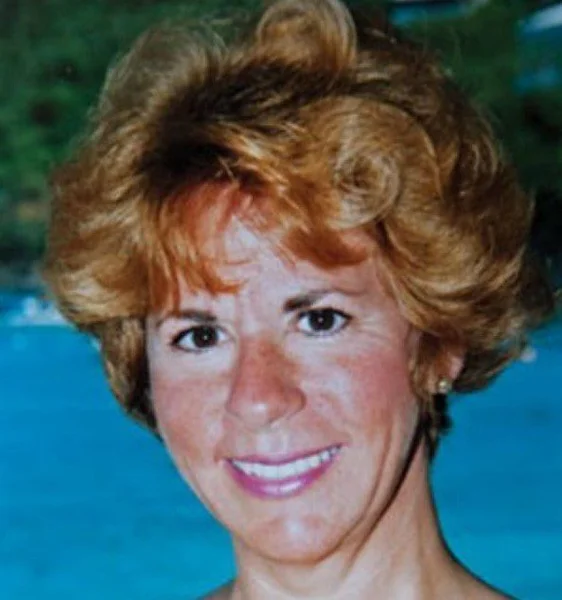
This Is the Area: The Murder of Tyler Thomas
Tyler Marie Thomas, known to friends and family as Ty, was 19 years old and a freshman at Peru State College when she disappeared from the small southeastern Nebraska town of Peru on the night of December 3, 2010. She had spent the evening at an off campus party before an argument with her best friend led to her being asked to leave, and what followed was a walk home through freezing temperatures that ended with her vanishing entirely, dressed in nothing warmer than a long sleeved shirt and a pair of sweatpants. It would take nearly a decade before the man responsible for her death faced a jury, and even then, his own defense attorneys would attempt to redirect blame toward a dead man they claimed had confessed to another woman entirely.
A Party That Ended in an Argument
On the night of December 3, 2010, Tyler attended an off campus party where she became intoxicated and got into an argument with her best friend, a conflict serious enough that she was ultimately asked to leave. In the aftermath, she texted a friend saying that she did not know where she was, a message that would later stand as one of the last known communications anyone received from her. Despite temperatures well below freezing that night, Tyler was wearing only a teal long sleeved shirt and dark green sweatpants, clothing entirely inadequate for the conditions, as she made her way on foot in the general direction of her dormitory near 5th and Nebraska Streets, close to the town's water tower.
Reported Missing Within Hours
Tyler's disappearance was reported to authorities at 3:00 a.m., roughly ninety minutes after her last known contact with anyone, a relatively quick response that nonetheless failed to prevent whatever happened to her in the interim. Despite the involvement of local and state investigators in the search that followed, no trace of Tyler was ever found in the days, months, or years afterward.
A Person of Interest With a Documented History
Investigators identified Joshua Keadle, a fellow Peru State College student, as a person of interest relatively early in the case, and Keadle would eventually admit to having been with Tyler in the hours before she disappeared. What made Keadle's connection to the case especially alarming, once it came to light, was the fact that campus officials had already been warned about him well before Tyler ever went missing. Shortly before her disappearance, Peru State's own director of campus security had specifically asked college administrators to expel Keadle after two separate female students accused him of verbal sexual harassment. Those warnings went unheeded, and Keadle remained enrolled at the college at the time Tyler vanished.
A History That Extended Beyond Peru State
Keadle's pattern of alleged misconduct toward women was not confined to Peru State or to Tyler's case. In 2012, he was sentenced to 15 to 20 years in prison for first degree sexual assault of a 15 year old girl in Fremont, Nebraska, an assault that had occurred back in 2008 while Keadle was a student at Midland University. Keadle did not deny being present in the apartment where the girl told police she woke to him having sex with her, nor did he dispute that she was 15 years old while he was 27 at the time. His defense in that case rested entirely on a claim that no actual penetration had occurred, with Keadle himself testifying that he had wanted to have sex with the girl but had been unable to due to erectile dysfunction. A separate sexual assault allegation against Keadle in Nemaha County was ultimately dismissed by prosecutors after the accuser's own Facebook posts made clear that the encounter in question had been consensual.
Charges, Years Later
It was not until 2017, seven years after Tyler disappeared, that prosecutors formally charged Joshua Keadle with murder in connection with her death. The case moved slowly toward trial, finally reaching a Nebraska courtroom in 2020, a full decade after Tyler had last been seen alive.
A Family's Failed Lawsuit Against the College
Well before Keadle's criminal trial concluded, Tyler's mother, LaTanya Thomas, pursued a separate civil lawsuit against Peru State College itself, arguing that the school should have done more to protect her daughter given the sexual harassment complaints already filed against Keadle before Tyler's disappearance. The lawsuit alleged that college officials had been negligent in failing to adequately investigate Keadle's background and in failing to discharge him or otherwise prevent him from remaining enrolled once it was known he posed a danger to female students on campus. A federal judge ultimately dismissed the case, ruling that LaTanya Thomas had failed to prove the college acted with the specific legal standard of deliberate indifference required to sustain the claim, even as the judge's own ruling acknowledged that Peru State officials may well have been negligent in how they handled the situation. The ruling was later upheld by Nebraska's highest court.
A Trial Built on Circumstance
Prosecutors alleged at trial that Tyler had been killed at a boat ramp area along the Missouri River east of Peru and that her body had subsequently been dumped into the river itself, a theory that would explain why no remains were ever recovered despite years of searching. The state formally issued a death certificate for Tyler in 2013, years before Keadle's eventual trial, a legal acknowledgment of her presumed death that nonetheless left the actual circumstances of it unresolved for years longer.
A Defense That Pointed Elsewhere
Keadle's defense attorneys did not simply argue that the state's evidence was insufficient. They introduced an alternate theory entirely, claiming that a man they identified as a sex trafficker, rather than Keadle, had actually killed Tyler. According to this theory, the alleged trafficker had told a young woman that he and two other men were responsible for Tyler's death, and had taken this same young woman to a remote boat dock along the Missouri River, where he sexually assaulted her and told her that this was the area where Tyler's body had been buried. The defense further argued that investigators had committed serious procedural errors, specifically alleging that when a detective sought a search warrant in December 2016 to reexamine Keadle's Ford Explorer, he failed to disclose to the judge that this alternate suspect theory had already been presented to investigators nine months earlier, an omission Keadle's attorneys characterized as either a deliberate falsehood or, at minimum, a reckless disregard for the truth that undermined the probable cause needed to justify the search. Investigators who testified at trial pushed back directly on this theory, stating that the young woman who had relayed the alleged confession was not considered a credible source. Complicating matters further, the man identified as the alleged trafficker had died in 2017, meaning he was never available to confirm or deny the story attributed to him. Keadle's defense separately floated the possibility that Tyler might have taken her own life, an alternate theory a defense pathologist supported with testimony specifically addressing hypothermia as a potential cause of death.
A Verdict, Then a Sentence
Despite the alternate theories raised by the defense, the jury convicted Joshua Keadle of second degree murder, a lesser charge than the first degree murder count prosecutors had originally sought. In July 2020, Keadle was sentenced to 71 years in prison, a term set to run consecutively to the sentence he was already serving for the earlier sexual assault conviction, meaning the combined sentences would keep him incarcerated for the remainder of his natural life in any realistic scenario. Keadle appealed his conviction, and Nebraska's Supreme Court ultimately affirmed both the conviction and the sentence, denying his request for a new trial.
Still Missing
More than a decade and a half after Tyler Marie Thomas walked away from a party into freezing Nebraska temperatures and vanished entirely, her remains have never been recovered from the Missouri River or anywhere else. Her case stands as a difficult reminder of warnings that went unheeded, since campus security had already flagged Joshua Keadle for expulsion before Tyler ever crossed paths with him that December night, and of how thoroughly a case built without a body can still be contested, right down to competing theories blaming a dead sex trafficker or suggesting Tyler had taken her own life, even after a jury had already reached its verdict.
Sources
- The Charley Project: Tyler Marie Thomas
- Nebraska Attorney General: Keadle Found Guilty of Second-Degree Murder
- Lincoln Journal Star: Keadle found guilty of second-degree murder
- KSNB Local 4: Joshua Keadle sentenced to 71 years for 2010 murder of Peru student
- Lincoln Journal Star: Keadle's attorneys raise alternate theory that Ty Thomas was killed by sex trafficker
- Nebraska Public Media: Nebraska Supreme Court denies request for new trial for man convicted in 2010 murder of Peru State classmate
- Courthouse News Service: Mom Blames College for Presumed Killing
- Lincoln Journal Star: Judge sides with Peru State in Ty Thomas wrongful death lawsuit