Thirty Confessions and No Body: The Disappearance of Tiffany Papesh
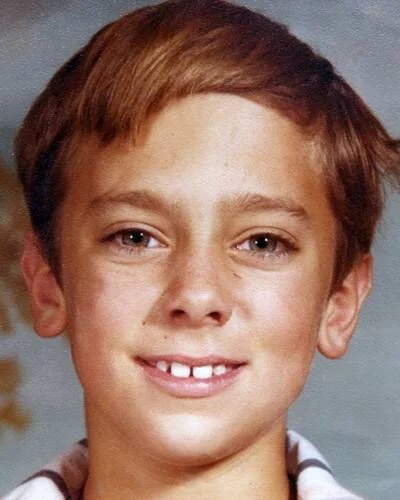
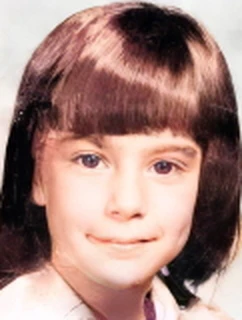
Tiffany Jennifer Papesh was eight years old on June 13, 1980, living with her father, Frank, and stepmother, Debbie, in Maple Heights, Ohio, a suburb on the southeastern edge of Cleveland. She was a white girl with brown hair and blue eyes, standing four feet tall and weighing fifty eight pounds, with a gap between her upper front teeth, facial dimples, pierced ears, a scar on her right knee, and a previously fractured collarbone. That afternoon, with the family planning to leave on a camping trip later that evening, Frank and Debbie sent Tiffany out to a nearby convenience store, the Convenient Food Mart, to pick up a package of hamburger buns. She was wearing shorts, a red and blue t shirt that read Let's face it, I'm cute, and blue sneakers. Tiffany bought the buns and left the store at approximately 2:45 that afternoon. Her home was only half a block away. She never made it back.
By 3:00, when Tiffany had not returned, her family began searching the immediate area, and Frank attempted to file a missing persons report with police soon after, only to be told the standard procedure at the time required waiting twenty four hours before a formal report could be taken, a delay that cost the investigation its earliest and most valuable hours. A witness at the store later told investigators about a woman who had been standing near Tiffany in line, someone in her late forties or fifties, around five foot four and roughly a hundred sixty pounds, with short dark hair, who appeared to let Tiffany go ahead of her and who left the store around the same time Tiffany did. Investigators wanted very much to identify and speak with that woman. They never did.
A Father and Stepmother Cleared, and a Long Silence
Frank Papesh had been at work at the time his daughter disappeared and was cleared as a suspect early in the investigation. Debbie, Tiffany's stepmother, took and passed a polygraph examination and was similarly ruled out. With the immediate family eliminated and the woman from the convenience store never identified, the case settled into the kind of prolonged uncertainty that so many child disappearances from that era eventually did, worked steadily by Maple Heights police and later by the Cuyahoga County Sheriff's Office, without ever producing a break large enough to bring the case to any kind of resolution.
That changed, or at least appeared to change, in 1983, when a man incarcerated in Texas named Brandon Lee Flagner, born Chico Virgilio Tenorio, wrote a letter to Cleveland television station WEWS confessing to abducting, sexually assaulting, shooting, and dismembering Tiffany. Flagner, who had been paroled from an earlier sentence only about three months before Tiffany vanished and had an extensive criminal record stretching back years, described a version of events in which he had taken her to a wooded area, shot her in the head after she resisted his advances, and then disposed of her remains at multiple locations around Ohio. Investigators were struck by one particular detail in his account, a reference to a scar on Tiffany's knee, information that had not been made public at the time and that Flagner, in theory, should have had no way of knowing unless he had actually seen her.
Thirty Confessions
What followed complicated the picture considerably. Over time, Flagner produced somewhere in the neighborhood of thirty separate confessions related to Tiffany's case, and the details across those confessions frequently contradicted one another, sometimes in significant ways. Frank Papesh remained deeply skeptical of Flagner from very early on, a skepticism apparently reinforced by an unsettling detail from days after Tiffany's disappearance, when Flagner had reportedly approached the Papesh family directly, offering to help search for Tiffany and, separately, to sell them commemorative t shirts connected to her case, behavior that struck Frank as far more consistent with someone seeking attention or profit than someone haunted by an actual crime.
Despite those inconsistencies and despite Frank's own doubts, a Cuyahoga County grand jury indicted Flagner in 1984 on charges of kidnapping and aggravated murder, based substantially on his own confessions rather than on any physical evidence connecting him to Tiffany. No body was ever recovered. No weapon was ever recovered. No clothing belonging to Tiffany was found at any of the locations Flagner described. At trial in 1985, prosecutors called witnesses connected to other assaults Flagner had committed in order to establish a pattern of violent behavior, and in June of that year, a jury convicted him on two counts of aggravated murder and one count of kidnapping. He was sentenced to life in prison plus an additional twenty five years, with parole eligibility not arriving until 2019.
A Recantation and a Timecard
In September 1984, before his trial had even concluded, Flagner recanted his confessions, telling authorities he had fabricated the entire story in order to avoid an early release from his prior Texas prison sentence and to gain access to a sex offender treatment program he believed would benefit him. His attorney argued during trial that Flagner suffered from a pattern of confessing to crimes he had not committed, driven by a kind of compulsive fantasy rather than genuine guilt, an argument that ultimately did not prevent his conviction but that has continued to inform how the case is understood by many who have studied it since.
The most concrete evidence undermining the case against Flagner came from his own employment records. At the time Tiffany disappeared, Flagner was working at a factory called Sta-Co in Creston, Ohio, a location investigators later determined to be somewhere between forty and fifty six miles from Maple Heights depending on the route calculated. His timecard showed he remained on the production line until approximately twenty minutes before Tiffany left the convenience store, a window investigators and outside observers alike have argued would have made it essentially impossible for him to travel that distance, abduct her, and be back at any location consistent with his later movements. That timecard evidence, combined with the total absence of physical evidence and the sheer number of contradictory confessions Flagner ultimately produced, has led investigators working the case in more recent years, along with Tiffany's own family, to conclude that Flagner was very likely not the man who took her, whatever role his letter to WEWS ended up playing in his own conviction. He was denied parole in August 2019 and remains in prison.
Other Names That Surfaced
With serious doubt cast on Flagner's guilt, investigators over the years have looked at other men whose known crimes bore some resemblance to what happened to Tiffany. One was Robert Anthony Buell, a convicted serial killer responsible for the 1982 murder of eleven year old Krista Harrison and, through later DNA evidence, linked to the 1981 death of ten year old Tina Harmon. Buell's victims were roughly Tiffany's age, and his pattern of targeting young girls made him a natural person of interest, though no physical evidence has ever tied him specifically to her case. Another name connected to the file is Ted Lamborgine, a man associated with the unsolved series of killings attributed to the so called Oakland County Child Killer in Michigan during the 1970s. Lamborgine relocated to Parma Heights, Ohio, a short drive from Maple Heights, around the general period Tiffany disappeared, and some who have studied the case have noted broad similarities between her disappearance and the pattern of the Oakland County cases. As with Buell, no evidence has definitively connected Lamborgine to what happened to Tiffany, and both men remain, like Flagner himself, unresolved possibilities rather than confirmed answers.
A Father's Long Fight
In the years following his daughter's disappearance, Frank Papesh became a visible advocate for criminal justice reform, founding an organization called People for Justice aimed at pushing for harsher sentencing in kidnapping cases and at one point advocating for the reinstatement of capital punishment in circumstances he believed fit cases like his daughter's. He spent much of the rest of his life keeping Tiffany's case in the public eye, giving interviews, working with reporters, and pressing law enforcement not to let the file go cold even as the years accumulated without resolution. Frank has since passed away without ever learning what actually happened to his daughter.
Ohio has never issued a death certificate for Tiffany, a bureaucratic fact that reflects just how unresolved her case legally remains more than four decades later. No remains connected to her have ever been found, no location has ever been confirmed, and the one man convicted in connection with her disappearance is now widely believed, by the very investigators who once built a case against him and by Tiffany's own surviving family, to have had nothing to do with it. Tiffany would be in her early fifties today had she lived. What is left of her case is not a solved mystery wearing the disguise of an unsolved one, but something rarer and more uncomfortable, a conviction that exists on the books alongside a near consensus, among the people closest to the case, that it answered the wrong question entirely.
Sources
- The Charley Project: Tiffany Jennifer Papesh
- The Resource Center for Cold Case Missing Children's Cases: Tiffany Jennifer Papesh
- The Clermont Sun: The 1980 disappearance of Tiffany Papesh
- Vocal Media: The 1980 disappearance of Tiffany Papesh
- NamUs: Missing Person MP1861