I Belong in the Water: The Disappearance of Ylenia Carrisi
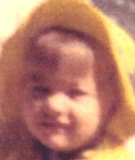
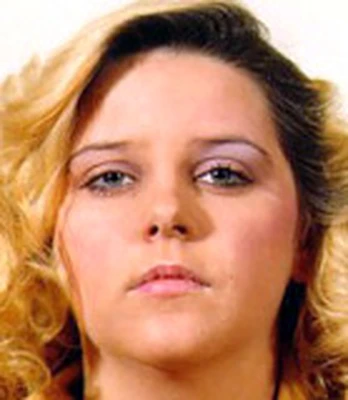
Ylenia Maria Sole Carrisi was born November 29, 1970, in Rome, Italy, the eldest daughter of Albano Carrisi and Romina Power, a husband and wife duo who were, at the time, among the most famous entertainers in Italy, a pairing so culturally significant that they were sometimes described as Italy's own version of Sonny and Cher. Her lineage extended even further into international fame on her mother's side. Ylenia's maternal grandparents were the American film actor Tyrone Power and the Mexican actress Linda Christian, meaning Ylenia had grown up as the direct descendant of Hollywood royalty on one side of her family and Italian entertainment royalty on the other. She had already appeared alongside her parents in the 1983 film Champagne in paradiso, and in 1989 she worked as a letter turner on La Ruota della Fortuna, the Italian adaptation of Wheel of Fortune, a role that made her a recognizable, minor celebrity across Italy in her own right, quite apart from her famous parents.
A Brilliant Student Who Wanted to Write
Ylenia studied literature at King's College London, where she reportedly earned the highest marks in her entire year, and she had ambitions of becoming a novelist rather than continuing in the entertainment world her family was so closely associated with. After finishing her studies, she set off on an extended period of solo travel, moving through various countries with what were described as minimal possessions, the kind of deliberately unencumbered journey a young writer might undertake in search of material and experience rather than comfort. She spent months in Belize before departing on December 26, 1993, taking a bus north toward New Orleans, Louisiana. Her brother Yari attempted to surprise her with a visit to Belize on December 27, only to discover she had already left the day before, missing her by less than twenty four hours.
Immersing Herself in a City She Barely Knew
Once in New Orleans, Ylenia did not behave like a typical tourist passing through. She immersed herself directly in the city's street culture, spending time with local musicians and homeless individuals, painting, and documenting the people she met as research for a book she was apparently planning to write. She had, by that point, traveled extensively through Florida, Belize, and Mexico, and her parents had visited her in the region earlier in 1993 before returning home to Italy, leaving Ylenia to continue her travels largely on her own. By the final days of December, she had checked into the LeDale Hotel in New Orleans, where she was staying alongside a fifty four year old street musician named Alexander Masakela, a man with a documented history of drug use and prior allegations of sexual violence.
The Last Confirmed Sighting
Ylenia's parents last heard from her on New Year's Day, January 1, 1994. She was last seen in person on January 6, wandering through the French Quarter wearing a floral print dress and a waist length white jacket. Her parents did not report her missing until January 18, nearly two weeks after that last confirmed sighting, a delay that likely reflected both the distance separating them from their daughter and her own established pattern of extended, largely unsupervised travel.
When investigators eventually searched the room Ylenia had been staying in at the LeDale Hotel, they found the vast majority of her belongings still there, untouched: her passport, her backpack, her clothing, her camera, her luggage, and the notebooks she had apparently been using to document her time in the city. Alexander Masakela, meanwhile, attempted to cash several of Ylenia's own traveler's checks after she disappeared, checks that were unsigned, and was evicted from the hotel once that attempt came to light. He was arrested on January 31, though not directly in connection with Ylenia's disappearance, but rather on an unrelated allegation of rape. He was ultimately released due to insufficient evidence, and no charges connecting him to what actually happened to Ylenia were ever filed.
A Woman in the River Who Said She Belonged There
The single most significant piece of investigative evidence in the entire case came from a security guard working near the Aquarium of the Americas along the Mississippi riverfront, who reported witnessing a woman jump into the river at approximately 11:30 p.m. on January 6, the very night Ylenia was last seen. According to the guard's account, the woman said, I belong in the water anyway, before diving in and swimming vigorously, covering roughly a hundred yards before beginning to struggle against the current and the wake thrown off by passing boats. She reportedly screamed for help before ultimately sinking beneath the surface. The woman's general physical description matched Ylenia's, and her clothing, while not identical to what Ylenia had last been seen wearing, was broadly similar enough that many New Orleans investigators came to believe this was, in fact, Ylenia Carrisi in her final moments alive.
Coast Guard search efforts along the river in the aftermath of that report failed to recover any body, and no trace evidence connecting the incident definitively to Ylenia has ever surfaced. Investigators have theorized that if it was her, her remains may have eventually been swept out of the Mississippi entirely and carried into the Gulf of Mexico, a body of water vast enough that recovery under those circumstances would be essentially impossible.
A Family Divided Across Two Decades
In the years following Ylenia's disappearance, an anonymous caller told authorities in 1996 that she remained alive, one of numerous unconfirmed reported sightings that surfaced over the following decades across the United States, Italy, and elsewhere in Europe, none of which were ever substantiated. Her parents, particularly her mother Romina Power, held onto the belief for years that Ylenia was still alive somewhere, possibly being held against her will in New Orleans, a conviction that shaped much of the family's public statements and continued advocacy in the case long after investigators had privately concluded the river account likely represented her actual fate.
That divide within the family eventually gave way to a formal legal reckoning. In January 2013, nearly two decades after Ylenia vanished, her father Albano filed a formal request to have her declared legally dead, a request Italian authorities approved in December 2014. Even with that legal declaration in place, Ylenia's mother has continued to maintain her belief that her daughter survived, a difference of conviction between two parents that has never fully resolved even as the case itself passed from an active missing persons investigation into a matter of settled legal record.
A Case That Refuses to Fully Close
More than three decades after Ylenia Carrisi walked through the French Quarter for what would become the last confirmed sighting anyone has ever reported, her case remains listed as officially unsolved with the New Orleans Police Department, even with a legal declaration of death now on record in Italy. The security guard's account of a woman diving into the Mississippi River, announcing that she belonged in the water before disappearing beneath its surface, remains the closest thing to an actual eyewitness account of what happened to her that January night, an ending that is neither fully confirmed nor ever definitively ruled out, leaving a young writer with an extraordinary family lineage and a promising literary ambition permanently suspended between a river in Louisiana and a family in Italy still divided, even now, about whether she is actually gone.
Sources
- The Charley Project: Ylenia Maria Sole Carrisi
- Wikipedia: Ylenia Carrisi
- UPI Archives: Daughter of Italian entertainers missing in New Orleans
- Mass News: New Orleans' Haunting Echo, The Disappearance of Ylenia Carrisi
- Crimina Mundi: Ylenia Carrisi And The Shattered American Dream