Legs on the Lounge Chair: The Disappearance of Amy Lynn Bradley
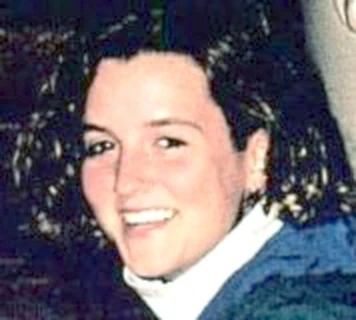
Amy Lynn Bradley was twenty three years old in March 1998, a recent graduate of Longwood University in Virginia, where she had played basketball on a full scholarship and earned a degree in sports psychology. She stood five foot seven, weighed a hundred fifteen pounds, and had brown hair, green eyes, multiple piercings in her ears and navel, and a small collection of tattoos, including a baby Tasmanian devil on her left shoulder, a green and blue gecko wrapped around her navel, a Japanese symbol on her right ankle, and a stylized sun on her lower back. She had grown up in Chesterfield County, Virginia, graduated from L.C. Bird High School, and had recently come out to her family as bisexual, a fact her father, Ron, later described by saying simply that it was Amy's life, not necessarily what they would have chosen for her, but hers, and that they loved her unconditionally regardless. She had cut back her hours at Ruth's Chris Steak House and was preparing to start a new job in computer consulting when her father, an insurance executive, won an all expenses paid family cruise through his employer.
On March 21, 1998, Amy boarded Royal Caribbean's Rhapsody of the Seas with her parents and her younger brother, Brad, sailing out of Puerto Rico toward a string of Caribbean ports that included Curaçao. Amy had reportedly been nervous about the trip beforehand, owing to a fear of heights, but she was glad Brad would be along with her. On the night of March 23, the two siblings stayed up late at a disco party on the ship's ninth deck, dancing and drinking with the ship's calypso band, Blue Orchid. Amy spent much of that night dancing closely with one of the band's members, a man known by the nickname Yellow, whose real name was Alister Douglas, a fact captured on video by one of the ship's photographers. Douglas would later tell investigators he left the party around 1:00 in the morning.
A Sleeping Figure on the Balcony
Brad returned to the cabin he shared with Amy at around 3:35 that morning, with Amy arriving roughly five minutes behind him. The siblings sat together on their cabin's balcony talking for a while before Brad went to sleep, leaving Amy still awake outside. At some point between 5:15 and 5:30, their father, Ron, woke up and looked out to see what he believed was Amy asleep on a balcony lounge chair, later telling reporters he could see her legs stretched out from the hips down. Three other witnesses aboard the ship would later report seeing Amy on the upper deck sometime between 5:30 and 5:45 that morning in the company of Alister Douglas, who was said to have handed her a drink containing a dark liquid. By 6:00 a.m., when the family checked again, Amy was gone. Her sandals remained in the cabin. Her cigarettes and lighter, along with roughly a hundred dollars and her room key, were not.
The family alerted crew members almost immediately, but were told it was too early in the morning to make a ship wide announcement. That announcement did not come until 7:50 a.m., nearly two hours after Amy had last been reliably seen, and by that point a significant number of passengers had already begun disembarking at the ship's Curaçao port of call, effectively scattering any chance of a contained, immediate search. Crew members conducted a search of the ship between roughly 12:15 and 1:00 that afternoon and found no trace of her. According to Brad, Alister Douglas approached him shortly afterward and said he was sorry to hear about his sister, a comment Brad found deeply unsettling given that no shipwide announcement about Amy's disappearance had been made at that point. The FBI later interviewed Douglas and gave him a polygraph test, which a Royal Caribbean spokesperson said he passed. Douglas has consistently denied any involvement in whatever happened to Amy.
A Search That Found Nothing
The Dutch Caribbean Coast Guard launched a four day aerial and sea search around the waters near Curaçao, using three helicopters and a radar equipped plane, while Royal Caribbean separately chartered a boat to continue looking well after the official search wound down. None of it produced any sign of Amy. Investigators were quick to rule out an accidental fall or a jump from the ship, pointing to the fact that Amy was an experienced swimmer and a former trained lifeguard, someone who, even in the water at night, would have had real odds of surviving and signaling for help. They also considered and ultimately dismissed the possibility that she had voluntarily disappeared, noting that she had a new job waiting for her back home and no apparent reason to walk away from her own life. FBI Special Agent James Weber summarized the state of the investigation years later by saying simply that they had pursued every angle, foul play, suicide, an accident, and had basically gotten nowhere.
A String of Strangers Who Say They Saw Her
What makes Amy Bradley's case so unusual, and so painful for her family, is not the absence of leads but the sheer number of people who have come forward over the years insisting they encountered her alive, sometimes providing details that seemed to line up unnervingly well with who she was. Within a day of her disappearance, a taxi driver in Curaçao claimed to have seen a barefoot young woman fitting Amy's description running through a parking lot, frantically looking for a phone, and said he later recognized her eyes from the reward posters that went up soon afterward. In August 1998, five months after Amy vanished, two Canadian tourists reported seeing a woman matching her description on a beach called Playa Porto Marie, accompanied by two men, one of whom reportedly resembled Alister Douglas. The woman was said to have the same tattoos as Amy, including the Tasmanian devil and the sun on her lower back. One of the tourists, David Carmichael, has said in the years since that he remains one hundred percent certain the woman he saw was Amy.
In January 1999, a United States Navy petty officer named William Hefner told the family that a woman in a brothel in Curaçao had approached him, identified herself by name as Amy Bradley, and asked for help, telling him she had left the ship looking for drugs and had since become trapped there. Hefner did not report the encounter right away, citing concerns about his career, and did not contact the Bradley family until 2002. By the time the FBI investigated, the building he described had burned down, leaving nothing to corroborate his account. In April 2003, witnesses in San Francisco reported seeing a woman matching Amy's description watching a street musician in the company of two men, who reportedly grabbed her and hurried away once they realized she had been recognized, the woman casting what witnesses described as a pleading look behind her as she was pulled off. In March 2005, a woman in Bridgetown, Barbados told a witness in a department store restroom that her name was Amy and asked whether they could stop and see the children, a comment that has never been fully explained, before several men escorted her away.
Later that same year, the Bradley family received a set of sexually explicit photographs from an anonymous tipster, taken from a Caribbean based adult website and showing a woman using the name Jas, who appeared distraught and who seemed, in several of the images, to be deliberately concealing distinguishing marks on her body, including the exact spot where Amy's Tasmanian devil tattoo would have been. A facial comparison expert working with the family believed the woman was Amy. The FBI was ultimately unable to determine whether the photographs had been altered. Amy's parents discussed those images publicly during an appearance on the Dr. Phil show in November 2005, raising the possibility that their daughter had been trafficked into sexual slavery somewhere in the Caribbean, a theory that has remained the most widely discussed explanation for her disappearance ever since.
A Scam Layered on Top of a Tragedy
Adding another layer of cruelty to the case, a man named Frank Jones contacted the Bradley family sometime around the fall of 1999, claiming to be a former United States Army Special Forces officer capable of mounting a rescue operation. Jones described Amy as being held by armed men in Colombia inside a barbed wire compound, and impressed the family with details that seemed to confirm he had real knowledge of her, including an accurate description of her tattoos and even a lullaby her mother had once sung to her as a child. Over the following months, the Bradleys sent Jones roughly two hundred ten thousand dollars toward the promised rescue that never came. Federal prosecutors eventually charged Jones with defrauding the family and a missing children's organization out of a combined total exceeding two hundred thousand dollars. He pleaded guilty to mail fraud and was sentenced to five years in prison.
Twelve Years, Then a Legal Declaration
In November 2010, a human jawbone washed ashore on a beach in Aruba, and investigators initially wondered whether it might belong to Natalee Holloway, another young American woman who had vanished in the region years earlier. DNA testing ruled out that connection, and although the bone was believed to have belonged to a Caucasian woman, no testing was ever conducted to compare it against Amy's profile. On March 24, 2010, exactly twelve years to the day after she disappeared, a court formally declared Amy Lynn Bradley legally dead, a declaration made in the complete absence of any recovered remains or confirmed account of what had actually happened to her.
The case has remained a fixture of American true crime coverage in the years since, featured on Unsolved Mysteries, America's Most Wanted, and Disappeared, along with numerous true crime podcasts. In July 2025, Netflix released a three part documentary series titled Amy Bradley Is Missing, which revisited the case in detail and was later nominated for a GLAAD Media Award recognizing its handling of Amy's identity as a bisexual woman within the broader story. That same month, podcast host Ethan Klein announced a one million dollar reward for information leading to answers in the case, joining reward offers that already existed from both the FBI and the Bradley family themselves.
Amy Lynn Bradley has now been missing for more than twenty seven years. Whatever combination of chance, cruelty, and silence took her from that cruise ship balcony in the early morning hours of March 24, 1998, it has resisted every search plane, every polygraph, every reward offer, and every stranger who has stepped forward over the decades insisting, each in their own way, that they saw her face again somewhere in the Caribbean and could do nothing to bring her home.
Sources
- The Charley Project: Amy Lynn Bradley
- Wikipedia: Disappearance of Amy Lynn Bradley
- The Tab: A full timeline of how Amy Bradley went missing from a Caribbean cruise in 1998
- Fox News: Amy Bradley case hinges on somebody remembering, cruise ship vanishing, expert says
- A&E: What Happened to Amy Lynn Bradley?
- All That's Interesting: The Mysterious Case of Amy Lynn Bradley, the 23 Year Old Who Vanished from a Cruise Ship
- The National Desk: Missing for 25 years, FBI searching for woman who disappeared on family vacation in 1998