A Hammer, a Hair Clip, and a Body Never Found: Rosemary Calandriello
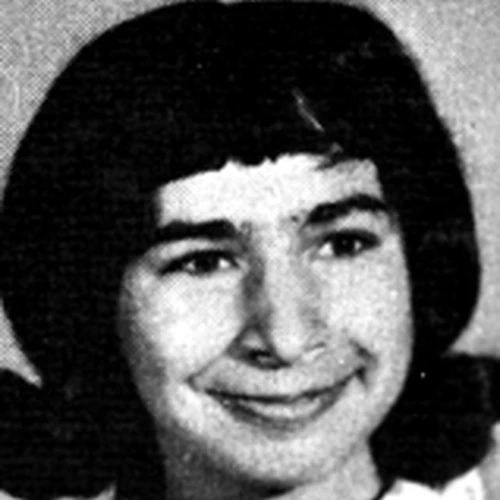
Rosemary K. Calandriello was seventeen years old, the youngest of four children and the only one still living at home with her parents in Atlantic Highlands, New Jersey. She was, by every account collected after her disappearance, a genuinely sheltered girl. Her father's declining health had left him unable to work, and Rosemary had taken on a share of the household responsibilities herself, doing the grocery shopping and handling bills for the family. She was not allowed out at night alone, was frightened of the dark, and had only recently gone on her very first date. Her parents were confident, when investigators later asked, that she would never have run away, that doing so would have been entirely out of character for a girl whose entire life revolved around school, her Scout troop, and her family.
On the evening of August 25, 1969, at six o'clock, Rosemary's mother handed her two dollars and sent her to a store just two blocks from their home on Center Avenue, asking her to pick up milk and ice pops for the family's dinner. It should have taken Rosemary only a few minutes to walk there and back. She never returned. Her mother reported her missing to police roughly two hours later, once it became clear something had gone seriously wrong with what should have been the simplest of errands.
Four Classmates and a Black and White Convertible
The break in the case came almost immediately, though it would take years to fully develop into anything resembling justice. Four of Rosemary's high school classmates independently reported seeing her that evening riding in a beat up black and white Ford Galaxy convertible, seated next to an older male stranger none of them recognized. Curious, the boys followed the car for several blocks before losing track of it, a decision that, however innocent in the moment, gave investigators their first and ultimately most important lead in the case. Working from the boys' combined descriptions, police assembled a composite sketch of the driver and released it publicly, hoping someone in the community might recognize him.
Someone did. A local woman came forward and identified the man in the sketch as Robert Zarinsky, a name she knew personally because Zarinsky had repeatedly offered rides and alcohol to her own twelve year old daughter and the girl's friend, an unrelated but deeply troubling pattern of behavior that made her recognize him instantly once she saw the sketch circulating.
A Car Full of Evidence
Once investigators focused on Zarinsky and searched his vehicle, what they found went well beyond circumstantial suspicion. Inside the car, police recovered one of Rosemary's hair clips, along with a pair of blue women's underwear that her own mother later identified as belonging to her daughter. Most disturbing of all, they found a ball peen hammer with skin, dried blood, and hair still stuck to its head, a piece of evidence that would ultimately connect Zarinsky not just to Rosemary's disappearance but to an entirely separate murder as well, since forensic analysis eventually linked blonde hair recovered from that same hammer to a different victim, Linda Balabanow, whose own killing remained unsolved and would go on to be tied to Zarinsky as well.
Despite the strength of this physical evidence, prosecutors initially could only make a relatively minor charge stick, arresting Zarinsky on counts of contributing to the delinquency of a minor, tied to his documented pattern of offering alcohol and rides to underage girls rather than anything related to Rosemary directly. It would take until 1974, five years after Rosemary vanished, before Zarinsky was formally charged with her murder, built largely on the circumstantial but compelling combination of the eyewitness identification and the physical evidence recovered from his car.
The First Murder Conviction in New Jersey Without a Body
Zarinsky went to trial and was convicted of Rosemary's murder in 1975, receiving a sentence of ninety eight years. The conviction carried genuine legal significance well beyond Rosemary's own case. It marked the first time in New Jersey history that a person had been convicted of murder in a case where the victim's body had never actually been recovered, a landmark that reflected just how thoroughly circumstantial and physical evidence, absent a body or a confession, had managed to convince a jury of Zarinsky's guilt beyond a reasonable doubt.
Zarinsky himself maintained his innocence for years afterward, denying any involvement in Rosemary's disappearance at all. That denial eventually cracked, though not into anything resembling a full confession. At a parole hearing years into his sentence, in 1988, Zarinsky offered an entirely new and self serving account, claiming that Rosemary's death had actually been an accident, that he had backed his car over her at what he described as a lover's lane location. That version directly contradicted nearly two decades of flat denial that he had ever even met her, undermining his own credibility even as it represented the closest thing to an admission investigators would ever get from him. His account of what happened to her body afterward proved similarly unreliable and shifting. At different points he claimed to have buried her somewhere in northwest New Jersey, and separately claimed he had disposed of her body in the Atlantic Ocean instead. While incarcerated, he also reportedly bragged to a fellow inmate that no one would ever find Rosemary's remains, a boast that has, so far, proven entirely accurate. Her body has never been recovered.
A Pattern That Extended Far Beyond One Victim
As investigators continued examining Zarinsky's history in the years and decades following his conviction, a considerably darker pattern began to emerge. DNA evidence announced in 2016 formally linked him to the 1965 murder of eighteen year old Mary Agnes Klinsky, who had been raped and beaten to death near Telegraph Hill Park in Holmdel, New Jersey, years before Rosemary ever encountered him. In 2008, DNA evidence also led to his indictment for the 1968 murder of Jane Durrua, a case that never reached trial only because Zarinsky died before proceedings could move forward. Investigators additionally considered him a prime suspect in a cluster of other unsolved New Jersey murders spanning roughly 1969 through 1974, including the killings of Doreen Carlucci, Joanne Delardo, and Ann Logan, along with the Linda Balabanow case already tied to him through the hammer evidence recovered from his own car. Zarinsky's own sister told investigators at one point that she believed he was responsible for as many as ten homicides in total, a figure that, if accurate, would place him among the more prolific undiscovered serial killers to have operated in the region during that era. He was separately tried and acquitted in 2001 for the unrelated 1958 shooting death of a Rahway police officer named Charles Bernoskie, a case connected to an entirely different set of allegations spanning back even further into his history.
Robert Zarinsky died in custody on November 28, 2008, at South Woods State Prison, succumbing to pulmonary fibrosis at the age of sixty eight, still awaiting trial for Jane Durrua's murder and never having faced formal charges for the majority of killings investigators had come to associate with him over the years.
Fifty Years Without a Grave
Rosemary Calandriello's family received something most families of the disappeared never do: an actual conviction, a named and identified killer, and a court's formal legal recognition that their daughter had been murdered rather than simply lost to an unresolved mystery. What they never received, and what Zarinsky's own shifting and ultimately boastful statements ensured they likely never will, is Rosemary's actual body, a place to visit, a grave to tend, any physical closure beyond the legal kind a courtroom can provide. More than fifty years after she walked two blocks from her own front door to buy milk and ice pops, Rosemary remains missing in the most literal sense even though the man responsible for her death was identified, tried, convicted, and has since died himself, having taken the one piece of information her family still wants most, exactly where he left her, with him to his own grave.
Sources
- The Charley Project: Rosemary K. Calandriello
- Wikipedia: Robert Zarinsky
- Ash Mysteries: Solved, Rosemary Calandriello
- The Doe Network: 2422DFNJ, Rosemary K. Calandriello