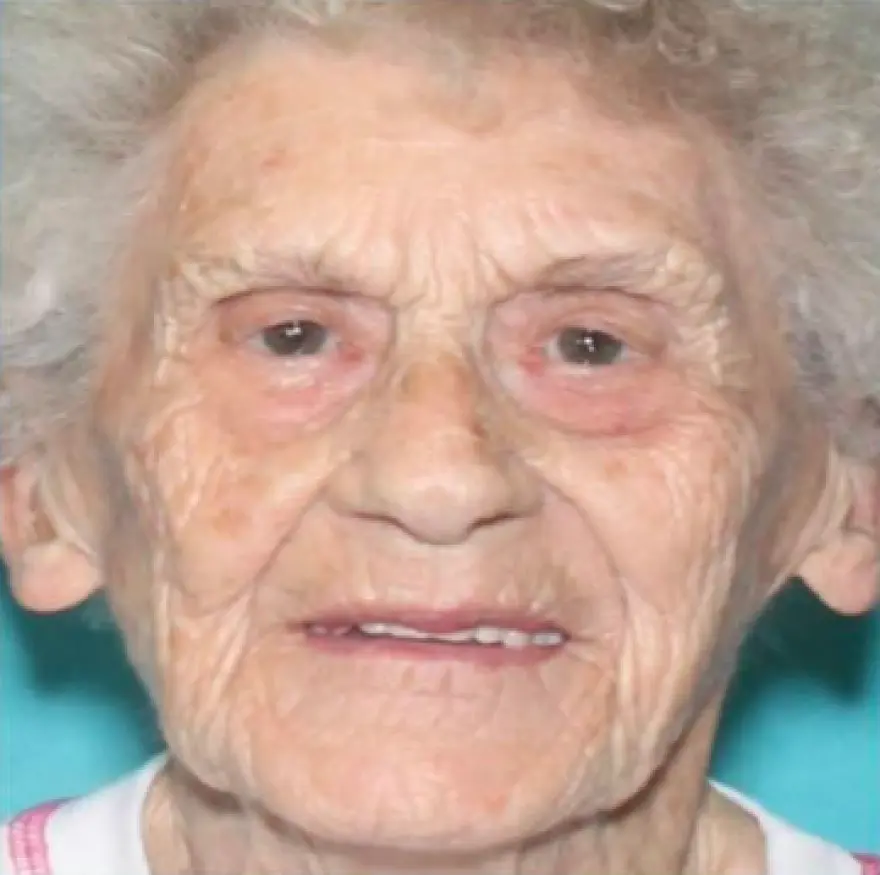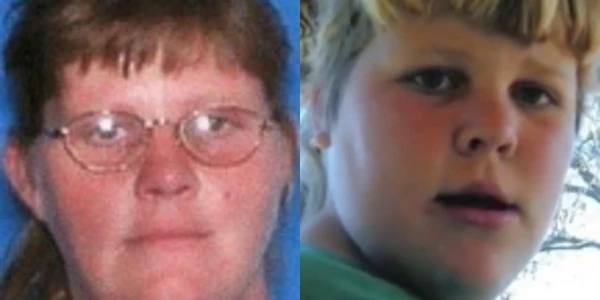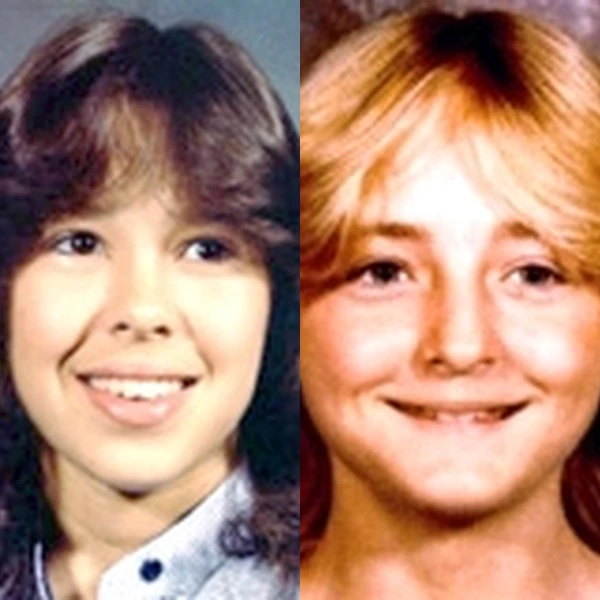
Two Bodies, One Bloody Mat, No Convictions: Cinda Pallett and Charlotte Kinsey
Cinda Leann Pallett and Charlotte June Kinsey were both thirteen years old and close friends when they went to the Oklahoma State Fairgrounds in Oklahoma City together on September 26, 1981. Sometime that afternoon, the two girls were approached with what must have seemed like an exciting opportunity for two teenagers looking to make some extra money: a job unloading plush toys from a truck, offered by a man who told them he worked for the carnival. Around five o'clock that evening, Charlotte called her mother to ask permission, explaining the job and mentioning the girls were planning to spend that night together afterward at Cinda's house. Her mother agreed, on one condition, that the girls call home again by nine o'clock to check in. Witnesses reported seeing both girls at the fairgrounds around 5:30 that evening. Nine o'clock came and went with no phone call. Neither girl has been seen since.
A Truck Stop and Two Teenage Boys
Investigators eventually pieced together that the man who offered the girls the job drove them, along with two teenage boys who had also apparently been recruited for the same work, to a truck stop along Interstate 40. At some point during that stop, the man drove away again, this time with only Cinda and Charlotte in the back seat of his car. The two boys were left behind. Whatever happened after that point has never been fully established, but neither Cinda nor Charlotte was ever seen again after the car pulled away from that truck stop.
Witnesses who had interacted with the man that day, including the two boys briefly in his company, helped investigators build a detailed physical description. He appeared to be somewhere between 35 and 50 years old, standing an imposing six foot one to six foot three and weighing somewhere between 200 and 250 pounds, with dark hair, a mustache, and a full beard streaked with gray. He wore wire rimmed glasses, a straw cowboy hat, and cowboy style clothing, along with a digital watch. His car was distinctive as well, a tan two door 1980 or 1981 Pontiac Grand Prix with a half vinyl roof and South Dakota license plates, a combination specific enough that investigators felt confident it would eventually lead them somewhere.
A Name and a Rented Car
It took investigators time, but the description and vehicle eventually led them to Royal Russell Long, a 36 year old carnival drifter and part time long haul truck driver living in Tuttle, Oklahoma. Long matched the composite sketch built from witness descriptions closely enough to draw immediate attention, and further digging connected him to a Pontiac Grand Prix matching the description given by witnesses, a car investigators eventually located, rented, sitting in El Paso, Texas.
What they found inside that car when they finally processed it forensically was substantial. Thirteen individual scalp hairs recovered from the trunk were matched to Cinda specifically, along with animal hairs consistent with pets known to belong to her family, three dogs and a cat. A separate strand of blonde hair was found caught on the corner of the trunk's floor mat, potentially connected to Charlotte, though investigators were never able to confirm that match with the forensic tools available at the time. Beyond the hair evidence, the trunk mat itself carried a bloody boot print along with additional bloodstains, and a forensic expert who examined the overall bleeding pattern told investigators it was consistent with either one larger body having been placed in the trunk, or two smaller bodies positioned together, curled against one another in the confined space. DNA testing did not yet exist in any practical forensic sense in the mid 1980s, leaving investigators to build their case entirely around blood typing, hair comparison, and pattern analysis rather than anything approaching the certainty modern genetic testing might have offered.
A separate piece of physical evidence, a badge bearing the false name Donald Michael Corey, was also recovered and tied back to Long's activities that day, suggesting he had been actively misrepresenting his identity to the girls and to others at the fairgrounds when he approached them.
Charges Filed, Then Dismantled in Court
Long was extradited to Oklahoma City on August 9, 1985, nearly four years after Cinda and Charlotte disappeared, to formally stand trial for their kidnapping and murder. What followed, rather than a trial, was a preliminary hearing process in October 1985 that systematically stripped away much of the state's case before it ever reached a jury. The judge excluded significant portions of the physical evidence investigators had spent years assembling. Testimony connecting Long to an entirely separate, already documented kidnapping case in Wyoming was ruled inadmissible. Statements from Long's own daughter, along with testimony from a fellow inmate who claimed Long had discussed the crime while incarcerated, were both excluded as well. A witness named Lance Rumsey, who had reportedly provided investigators with relevant information, was barred from testifying entirely because he had undergone hypnosis at some point during the investigative process, a technique courts of that era treated as fundamentally compromising to a witness's reliability. The kidnapping charges themselves were initially dismissed outright for insufficient evidence of actual confinement, a ruling prosecutors managed to successfully appeal and have reinstated, only to watch the judge dismiss every remaining charge against Long in December 1985 anyway, citing an overall lack of evidence sufficient to sustain a conviction without recovered bodies for either girl.
A Documented Pattern in Wyoming
The Wyoming case the judge had specifically excluded from Long's Oklahoma proceedings was not some distant, unrelated allegation. On September 18, 1984, roughly three years after Cinda and Charlotte disappeared, Long abducted twelve year old Sharon Baldeagle and her fifteen year old friend Sandi Brokenleg after the two girls had been hitchhiking in Wyoming. He drove them back to his home in Evansville, Wyoming, restrained both girls using coat hangers, and sexually assaulted them. Sandi managed to escape and get help, leading directly to Long's arrest by the FBI in Albuquerque, New Mexico. When questioned about Sharon specifically, Long claimed he had simply driven her to Cheyenne and put her on a bus bound for Dallas, an account investigators found unconvincing. He ultimately accepted a plea deal on charges of kidnapping for the purpose of committing indecent liberties with a minor and received two consecutive life sentences.
Investigators also came to view Long as a credible suspect in a cluster of earlier, unsolved Wyoming cases from 1974, years before either the Baldeagle kidnapping or Cinda and Charlotte's disappearance. Twelve year old Jayleen Dawn Banker was abducted and murdered that August, her body eventually recovered the following spring showing fatal head trauma. Deborah Rae Meyer vanished that same August while walking to a movie theater in Rawlins and has never been found. And on the Fourth of July that year, Carlene Brown disappeared from a rodeo alongside her friend Christi Gross, who was later found dead from head trauma, while Carlene herself remains missing to this day. None of these cases were ever formally closed with charges against Long, but taken together with his conviction in the Baldeagle case and the extensive physical evidence recovered in Cinda and Charlotte's case, they paint a portrait of a man investigators across two states came to believe was responsible for a sustained pattern of predatory violence against young girls stretching back more than a decade.
Silence Until the End
Royal Russell Long died of a heart attack on November 3, 1993, while incarcerated at the Wyoming State Penitentiary, still serving his two life sentences for the Baldeagle kidnapping and never having been convicted of anything connected to Cinda or Charlotte specifically. He maintained his innocence in their disappearance for the rest of his life, even as he reportedly taunted their families at points, suggesting he alone knew the actual truth of what had happened to the two girls and intended to take that knowledge with him rather than ever share it.
Still Missing, More Than Forty Years Later
Cinda Pallett and Charlotte Kinsey have never been found, and investigators have stated they believe both girls' remains most likely remain somewhere within Oklahoma to this day. What their case ultimately illustrates, perhaps more starkly than almost any other unsolved disappearance from that era, is how thoroughly strong physical evidence, hair, blood, a documented pattern of prior and subsequent crimes, can still fail to produce a conviction when procedural rulings strip a case down piece by piece before it ever reaches a jury capable of weighing that evidence as a whole. Two families spent decades knowing, with about as much certainty as circumstantial and forensic evidence can provide short of an actual confession, who had taken their daughters, while watching that same man live out the remainder of his life in prison for an entirely different crime, having never once been held formally accountable for theirs.
Sources
- The Charley Project: Cinda Leann Pallett
- The Charley Project: Charlotte June Kinsey
- Oklahoma Cold Cases: Charlotte June Kinsey
- Stories of the Unsolved: The Disappearances of Charlotte Kinsey & Cinda Pallett
- Wikipedia: Royal Russell Long