Battery's Dying, I'm in San Diego: The Death of Donna Haghighat Jou
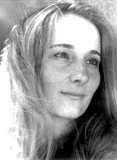
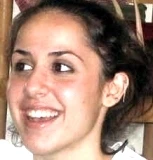
Donna Haghighat Jou was nineteen years old in June 2007, living with her mother in Rancho Santa Margarita, California, and going by the nickname Mamoush among people close to her. She was of Iranian descent, five foot three, a hundred ten pounds, with brown hair and brown eyes, her ears double pierced, a small scar around her left breast from an earlier surgery. Sometime in late May or early June of that year, Donna connected online with a man who called himself Sinjin Stevens, communicating with him for weeks before the two of them ever met face to face. Sinjin Stevens was not his real name. He was John Steven Burgess, a man in his mid thirties with a documented history as a registered sex offender, though he was not properly registered as one at the time he began exchanging messages with a nineteen year old he had found, by some accounts, responding to an ad she had posted online offering math tutoring.
Onto the Back of a Motorcycle
On the afternoon of June 23, 2007, Burgess arrived at Donna's mother's apartment complex on a black 1981 Yamaha motorcycle, and around 5:30 that evening, Donna climbed on behind him and left with a man she was meeting in person for the very first time. Family members later reported seeing the motorcycle exit the highway near Portola sometime that evening, one of the last independent sightings anyone would have of Donna moving through the world under her own power.
The two of them made their way to Los Angeles, where Burgess's roommates later told investigators Donna attended a party at their home that night. At some point during the party, Donna called a friend in San Diego, and according to that friend's later account to investigators, the conversation was casual, giving no indication anything was wrong. But something clearly was, because at another point that evening, according to witnesses, Donna locked herself in a bathroom at the party, telling someone nearby that Burgess was freaking her out, a small but telling signal that whatever comfort she may have felt meeting an online acquaintance in person had already started to curdle into something closer to fear.
A Text That Wasn't What It Seemed
The following evening, Donna's mother received a text message from her daughter's phone. It read: battery's dying, I'm in San Diego, be home soon, I love you Mommy. On its surface, the message read like exactly what a worried mother would want to hear, reassurance from a daughter who was simply out later than expected and on her way back. Donna never came home. When she failed to show up for work or school in the days that followed, her family reported her missing on June 25, 2007, just two days after she had climbed onto the back of Burgess's motorcycle.
As investigators began piecing together Donna's final movements, John Burgess emerged almost immediately as the central figure they needed to talk to, and by July he had been identified first as a person of interest and then as the primary suspect in her disappearance. Rather than staying to answer questions, Burgess fled California entirely, and he was eventually apprehended in Jacksonville, Florida, in July 2007, though his arrest there came on unrelated drug charges rather than anything directly tied to Donna. Investigators searching in connection with the case recovered a toolbox containing Burgess's own vanity license plates, a motorcycle helmet, gloves, rope, and a brush, an assortment of items that read less like innocent coincidence and more like the tools of someone anticipating exactly the kind of scrutiny that was now closing in on him.
Twenty Months of Silence
For nearly two years after Donna vanished, the case remained unresolved, a missing persons investigation with an identified suspect but no confession, no body, and no formal charges connected to whatever had actually happened to her. That changed in early March 2009, when an investigative grand jury convened specifically to examine the case. Whatever combination of evidence and pressure that grand jury process brought to bear, it produced what the case had been missing for nearly twenty months: John Burgess talked.
According to the account Burgess gave, he had injected Donna with a mixture of heroin and cocaine commonly known as a speedball at some point after they arrived in Los Angeles together. He said that when he woke up the next morning, he found her dead beside him. Rather than calling for help or contacting authorities, Burgess said he panicked, and instead of reporting what had happened, he loaded Donna's body onto his sailboat and dumped her remains into the Pacific Ocean, disposing of the one piece of physical evidence that might have definitively told investigators, and Donna's family, exactly what had happened to her.
A Guilty Plea and a Short Sentence
Burgess was charged with involuntary manslaughter, a misdemeanor count of concealment of an accidental death, and additional drug related charges connected to the sale and transportation of heroin and cocaine. He ultimately pleaded guilty, or in some accounts no contest, to the manslaughter and concealment charges, and in May 2009 he was sentenced to five years in prison, later reported in some accounts as adjusted to a four year term following additional court proceedings in November 2012. Los Angeles Police Deputy Chief Charlie Beck, discussing the case publicly at the time, said he believed Donna most likely died of an accidental drug overdose, largely consistent with the account Burgess himself had given, even though the truth of exactly what happened in that room, and whether Burgess played any more active role in her death than he admitted to, remained something only he could ever fully answer.
Burgess did not serve anywhere close to the full length of his sentence. He was released from prison after roughly two and a half years, only to be arrested again for violating the terms of his parole, which sent him back into custody to serve additional time. By late July 2014, Burgess, then in his early forties, was released once more, required as a condition of his ongoing registration as a sex offender to notify authorities of his whereabouts going forward, a requirement rooted in convictions that long predated his relationship with Donna Jou.
A Body Never Recovered
Extensive searches of the waters off the California coast, conducted in the years following Burgess's confession, never turned up any trace of Donna's remains, and to this day her body has never been recovered. What the case did produce, unusually for a homicide investigation without a body, was a detailed, first person account from the one person present when Donna died, an account that answered the central factual question of what happened to her even as it left the deeper, more painful questions, about what really occurred in those final hours and whether Donna could have been saved, permanently unresolved.
Donna Jou would be in her mid thirties today had she lived. Instead, her family has spent more than a decade and a half carrying both the confirmation that she is gone and the absence of anywhere to visit her, no grave, no urn, nothing beyond a courtroom confession from the man who put her body into the ocean rather than call for help when he found her dying beside him.
Anyone with information related to Donna Haghighat Jou's case is asked to contact the Orange County Sheriff's Department at 714-647-7000.
Sources
- The Charley Project: Donna Haghighat Jou
- Timeline of Donna's Disappearance
- NBC Los Angeles: Sex Offender Charged in Donna Jou's Disappearance
- ABC News: John Steven Burgess, Who Admitted Dumping Donna Jou in Ocean, Freed After 2 Years in Jail
- ABC7 Los Angeles: Convicted sex offender pleads guilty in death of Orange County woman
- CBS8: Donna Jou killer heading back to prison