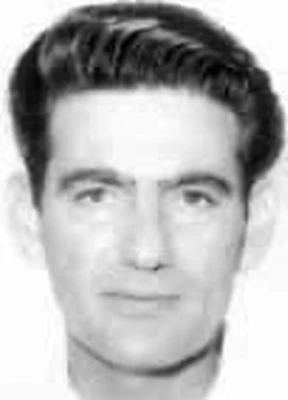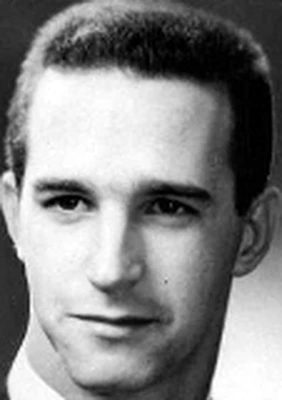
The Boy Who Left His Wallet Behind: The Disappearance of Ronald Tammen Jr.
Ronald Henry Tammen Jr. was born July 23, 1933, in Maple Heights, Ohio, the second of five children in a family that, by all accounts, had no reason to expect tragedy. By the spring of 1953 he was nineteen years old and a sophomore at Miami University in Oxford, Ohio, the kind of student other parents pointed to as an example. He made the dean's list, wrestled on the varsity team, played string bass in the campus dance band known as the Campus Owls, belonged to the Delta Tau Delta fraternity, and had recently taken on the responsibility of a resident hall advisor in Fisher Hall, a rambling old building that had once served as an asylum before the university converted it into a dormitory. He drove a gold 1938 Chevrolet, kept roughly two hundred dollars in his bank account, and by every measure available to the people who knew him, had nothing pulling him away from the life he was living. On the night of April 19, 1953, he walked out of his dorm room and out of that life entirely, and no one has ever been able to explain where he went.
A Fish, a Radio, and an Open Textbook
The evening began with a prank. Someone had slipped a dead fish into Tammen's bed, and around eight o'clock he walked down to see the hall manager to request a fresh set of sheets. He got them, returned to his room, and by his own account to the manager, planned to spend the rest of the night studying psychology, a course that had nothing unusual about it except for the detail that would later strike investigators as strange: Tammen had reportedly dropped that very class about three weeks earlier, and yet the textbook was found lying open on his desk. That detail, along with several others, was kept out of the initial public reporting on the case and only surfaced in 1954, when a local journalist named Joe Cella began digging into inconsistencies in the official account.
His roommate returned to their second floor room in Fisher Hall around 10:30 that night and found it empty, but nothing about the scene suggested anything alarming at first glance. The lights were on. The radio was playing. Tammen's overcoat, a fact that would only later seem important given that it was a cold, snowy night, hung untouched. His wallet sat where he'd left it. His car keys were there too, along with his high school class ring, his identification watch, and virtually every other object a young man might carry with him if he intended to go somewhere on purpose. His roommate assumed Tammen was still out somewhere, maybe at the fraternity house, and didn't think much of the empty room until the next day, when it became clear that nobody on campus had seen him since he'd walked back from getting those sheets. His gold Chevrolet was still parked exactly where he'd left it, his string bass sitting untouched in the back seat.
A Search That Covered Three Miles and Found Nothing
Once it became clear that Tammen was actually missing, and not simply out late, the response was immediate and substantial for a college town in 1953. Students combed the area. The campus ROTC unit joined the search. Local police and eventually the FBI became involved, and searchers fanned out across a three mile radius surrounding the university looking for any sign of him. They found nothing. No struggle had left any mark on his room, which led investigators to rule out a violent abduction almost immediately, particularly given that Tammen was a physically strong, athletic young man who wrestled competitively and would presumably have put up some resistance that left visible traces behind. At the same time, investigators struggled to make sense of an alternative theory, that Tammen had simply wandered off in some kind of amnesiac fugue state, since a healthy, capable nineteen year old in a rural stretch of Ohio should reasonably have been located within days if that were the explanation, not permanently.
The search continued in fits and starts for years, revived periodically whenever a new lead or a look-alike surfaced somewhere in the country. The most dramatic renewal came in 1978, when Fisher Hall itself, the building Tammen had vanished from twenty five years earlier, was finally demolished. Investigators and searchers went through the rubble hoping that some clue, or worse, might have been sealed inside the old dormitory's structure for a quarter century. They came up empty there too.
The Woman at the Door on Seven Mile Road
Roughly fifteen hours after Tammen was last confirmed seen in his dorm room, a woman living about twelve miles east of campus, near Seven Mile, Ohio, reported that a disheveled young man had come to her door around eleven o'clock that night asking for directions to the bus stop. She would later describe him as dazed, with dirt smudged across his face, wearing no coat despite the fact that it was snowing and bitterly cold outside. She didn't report the encounter to authorities right away. It was only after Tammen's disappearance made the local papers that she came forward, by which point she couldn't be entirely certain the young man at her door and the missing student were the same person, though the physical description and clothing lined up closely enough that investigators took the report seriously. There was one significant problem, one that made the encounter almost more unsettling rather than less: the bus line running through the area had already suspended its midnight service for the night, meaning that even if the man in her doorway was Tammen, and even if he'd made it to the stop, there would have been no bus for him to actually catch. His own brother, when told of the sighting, expressed doubt that it was really Ronald at all. Other reported sightings trickled in over the following decades, none ever substantiated enough to move the case forward.
The Blood Test Nobody Could Explain
Two decades after Tammen disappeared, the Butler County coroner came forward with a detail that had sat unspoken in his files since 1953: five months before Tammen vanished, he had come to the coroner's office and requested to have his blood typed. The coroner, reflecting on it after thirty five years in practice, called it the only such request he had ever fielded from a young person with no accompanying medical reason. Nobody, including Tammen's own family, has ever offered a convincing explanation for why a healthy nineteen year old college sophomore would go out of his way to have his blood type recorded outside of a hospital or a routine physical. The detail has become one of the most frequently cited oddities in the case precisely because it resists any simple explanation, and because it predates his disappearance by such a precise and deliberate interval that it feels, to many who have studied the case since, like it must be connected somehow, even if no one can say exactly how.
A Theory Involving Mind Control and a Vanishing Professor
Of all the explanations that have circulated over the past seven decades, the one that has generated the most sustained attention in recent years comes from a researcher named Jennifer Wenger, who has spent more than a decade digging through archives, FOIA requests, and interviews connected to the case. Wenger's theory ties Tammen's disappearance to Project MKULTRA, the real and well documented CIA program that experimented with mind control and behavioral modification techniques on unwitting subjects throughout the 1950s and 1960s. Her research centers on St. Clair Switzer, a psychology professor at Miami University who taught in the same department Tammen was studying in, and who Wenger has connected to Louis Jolyon West, an Air Force major and psychiatrist who was independently documented as a participant in MKULTRA-related research elsewhere in his career. Wenger's theory holds that Switzer, and by extension the broader MKULTRA apparatus, played some role in Tammen's disappearance, potentially recruiting him or removing him from campus life entirely as part of research the young man may have unknowingly become part of.
Adding to the strangeness, Wenger has pointed to Tammen's placement on an FBI Security Index, a designation typically reserved for individuals considered relevant to national security investigations, as evidence that something beyond a simple runaway or accident case was at play. She has also raised the possibility, based on records showing the destruction of certain FBI fingerprint files in 2002, that Tammen may have lived on for decades under circumstances nobody has been able to trace, potentially surviving into the 1990s. An interagency panel was reportedly convened at one point to review aspects of Wenger's research, though what conclusions, if any, emerged from that review have not been made public. Miami University's own campus historian, Stephen Gordon, has called the case the single most important cold case involving a missing student in the school's history, a statement that reflects both how seriously the university now treats the disappearance and how little closer anyone has actually gotten to solving it.
Seventy Years Without an Answer
What makes Ronald Tammen's disappearance endure, decade after decade, isn't just the absence of a body or a suspect. It's the accumulation of small, specific details that each resist easy explanation on their own and that, taken together, refuse to add up into any single coherent story. A fish planted as a prank. A dropped class whose textbook sat open on a desk as if the course were still being taken. A coat left behind on a snowy night. A blood test requested five months in advance of a disappearance nobody could have predicted. A dazed young man at a stranger's door asking about a bus that would never come. Two of Tammen's siblings were still alive decades later, still holding out hope that some answer, any answer, might eventually surface about what happened to their brother after he walked out of Fisher Hall to get clean sheets and never came back. Miami University still marks his case among its own history, true crime writers and podcasters continue to revisit it, and researchers like Wenger continue filing requests for records that might, eventually, close the seventy year gap between the last time anyone saw Ronald Tammen and whatever actually became of him.
Sources
- The Charley Project: Ronald Henry Tammen Jr.
- Wikipedia: Disappearance of Ronald Tammen
- FOX19 Crime Vault: What happened to Ronald Tammen?
- A Good Man Is Hard to Find: Jennifer Wenger's research into Ronald Tammen's disappearance
- The Clermont Sun: The disappearance of college student Ronald Tammen Jr.
- Butler County Historical Society: The Disappearance of Ron Tammen