Blood in the Kitchen, No Body Anywhere: The Disappearance of Joan Risch
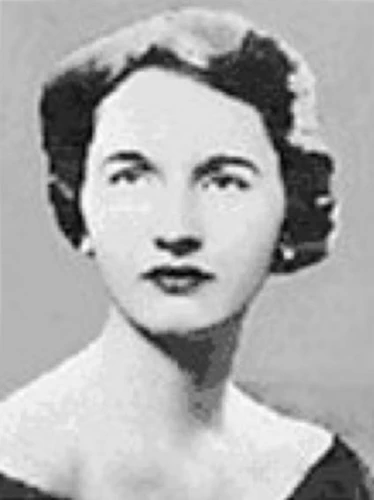
Joan Carolyn Risch was born Joan Bard on May 12, 1930, in Brooklyn, New York, and by the time she vanished thirty one years later she had already survived one tragedy that would have defined most people's lives long before the second one made her famous. When she was eight or nine years old, her family had relocated to Mountain Lakes, New Jersey, and while she was away visiting relatives in Brooklyn, both of her parents died in a house fire that investigators eventually ruled accidental. She went to live with foster parents for a time, an arrangement later accounts described as abusive, before her maternal aunt and uncle took her in and raised her under the name Nattrass. She went on to graduate from Wilson College in Pennsylvania in 1952 with a degree in English literature and moved into publishing in New York City, working her way up from secretary to editorial assistant at Harcourt, Brace and World and later Thomas Y. Crowell Company. In 1956 she married Martin Risch, an executive connected to one of those publishing houses, and gave up her career, as many women of that era did, to raise their children. Their daughter Lillian arrived the following year and their son David a couple of years after that. In April 1961 the family moved from Connecticut to Lincoln, Massachusetts, a quiet town outside Boston where Joan quickly threw herself into the League of Women Voters and told friends she hoped to return to teaching once her children were a little older.
An Ordinary Tuesday Morning
October 24, 1961 began the way most weekday mornings in the Risch household did. Martin left early to catch a flight out of Logan Airport for a business trip to New York. Joan handled the rest of the morning herself, dropping two year old David off with a neighbor, Barbara Barker, across the street, while she took four year old Lillian to a dentist appointment in nearby Bedford that a college friend had recommended. She cashed a check, did some shopping, and was back home by around 11:15, at which point she changed out of her dressier clothes into something more casual and put David down for his afternoon nap once he was back in the house. Nothing about the morning suggested anything was wrong. Just before two in the afternoon, she brought both children back over to Barbara Barker's house and asked if Barbara could watch them for a little while, telling her she'd be back shortly. Around 2:15, Barbara looked out and saw Joan moving quickly up her own driveway wearing what looked like a trench coat, carrying something red held out in front of her with both arms. Barbara would later describe her as looking dazed. That was the last confirmed sighting of Joan Risch alive.
What Lillian Found in the Kitchen
When Barbara Barker brought the children back home sometime around four o'clock that afternoon, it was four year old Lillian who walked in first and came back out to tell Barbara, in the plain language of a small child trying to describe something she didn't have words for, that her mother was gone and the kitchen was covered in red paint. It was not paint. Police were called at 4:33 p.m. and found the kitchen smeared extensively with blood, later estimated at somewhere between half a pint and a full pint, spread across the walls and floor in a way that struck investigators as more theatrical than medically consistent with a serious wound. The kitchen table had been knocked over. The telephone had been physically ripped out of the wall and thrown into a wastebasket. A single bloody thumbprint was recovered from the phone mount, along with two fingerprints and a partial palm print on the wall nearby, none of which were ever matched to anyone, then or since. The family's phone book, oddly, was found open to the page listing emergency numbers, though nothing had actually been dialed or written down. Blood led in a trail from the kitchen up through the house, including into David's bedroom where a piece of his bloodied clothing was found on the floor, and back down through the house and out along the driveway, where droplets were later found on the car's rear fender, its hood, and its trunk. Investigators noted something that deepened the mystery rather than resolving it: despite all that blood, there were no bloody footprints anywhere in the house, as though whoever had bled had somehow avoided ever stepping in it, or as though the blood had been deliberately placed rather than simply spilled.
Joan's own trench coat, the one Barbara had seen her wearing minutes earlier, was found left behind in the house. A plainer coat appeared to be missing in its place. Her pocketbook was still there. She'd had less than ten dollars on her after the morning's shopping. The mail sat unopened at the end of the driveway. Whatever had happened in that house between 2:15 and 4:00 that afternoon had happened fast, and had happened to a woman who, by every account of the morning that preceded it, had given no sign that anything was wrong.
A Bleeding Woman Walking Along Route 128
In the hours after Joan vanished, several separate witnesses came forward describing a disheveled woman matching her description wandering roads in the area, though none of them stopped to help or realized at the time what they might have been looking at. Around 2:45 that afternoon, someone reported seeing a woman on Massachusetts Route 2A dressed similarly to Joan, looking untidy and hunched over as she walked. Between roughly 3:15 and 3:30, drivers passing through Waltham reported a woman standing on the median of Route 128, then under active highway construction, with blood visibly running down the backs of her legs and something clutched against her abdomen. A later sighting placed a similarly disheveled woman walking south along Route 128 near Trapelo Road around 4:30. None of these reports were ever confirmed as Joan, and none led anywhere. After that afternoon, every trace of her simply stopped.
Investigators also noted an unfamiliar two-tone car, described variously as a 1954, 1955, or 1959 model, spotted parked near the Risch house or in the surrounding area around the time of her disappearance, along with a strange wire hanger found sitting on top of her own vehicle. Neither detail was ever tied definitively to what happened.
The Twenty-Five Library Books
The detail that would come to dominate public fascination with the case didn't surface until a local newspaper reporter named Sareen Gerson started digging into Joan's reading habits from the preceding summer. Gerson discovered that Joan had checked out roughly twenty five books from the library in the months before she disappeared, an unusually high number concentrated heavily around a specific and unsettling theme: murders, disappearances, and people who managed to vanish from their own lives. Among the titles was one called Into Thin Air, about a young wife who fakes her own disappearance by smearing blood and towels around a house before walking away to pursue a life she actually wanted. Gerson and others who picked up the theory afterward suggested that Joan might have used that very book as something like a blueprint, staging the entire kitchen scene herself and walking away from her marriage and her children under her own power. A British mystery novelist writing under the pen name Harry Carmichael later floated a version of the same idea publicly, suggesting Joan was alive somewhere but too afraid, or too ashamed of some secret, to ever come home.
Not everyone who knew her believed it. Sabra Morton, the college friend who had originally recommended Joan's dentist, told the Boston Globe flatly that Joan would never have left her family voluntarily, and said she believed her friend was almost certainly dead. Martin Risch, for his part, floated his own quieter theory over the years, that his wife might still be alive somewhere but suffering from amnesia or some kind of psychological break brought on by whatever violence had happened in that kitchen, wandering the world without any memory of the family waiting for her. Joan had no documented history of mental illness before that day, which made the amnesia theory as difficult to prove as every other explanation on the table.
The Construction Pit Theory
Route 128 was, at the time of Joan's disappearance, still an active construction project cutting through the towns surrounding Lincoln, and one investigator's theory held that Joan, disoriented after whatever happened to her in the kitchen, wandered onto the site in a state of shock or blood loss and fell into one of the open excavation pits being dug for the highway's foundation. If that happened, the theory goes, she may have been unknowingly buried when construction crews continued filling and paving over the area in the following weeks and months, entombed permanently beneath a stretch of interstate that thousands of commuters have driven over every day since without any idea what might lie beneath it. No evidence has ever confirmed this either, but it remains one of the more frequently repeated explanations precisely because it accounts for both the roadside sightings and the total absence of any body in the six decades since.
A National Park Service employee named Robert Foster, who had been going door to door in the area that September acquiring land for what would become Minute Man National Historical Park, was looked at briefly as a possible suspect after some women in the neighborhood mentioned he had lingered a bit too long during his visits, Joan's house included. His supervisor and coworkers accounted for his whereabouts that afternoon, placing him at lunch and then back at the office well before and after the window when Joan disappeared, and he was cleared.
A Case That Outlived Everyone Involved
Lincoln's police chief at the time, Leo Algeo, stayed on the case long after his own retirement in 1970, reportedly telling people it felt like a stone around his neck that he could never quite set down. He kept his own private theory about what happened to Joan Risch, one he apparently never shared publicly in full, and maintained until the end of his life that people simply do not disappear without leaving some trace behind, insisting the answer would eventually surface. Algeo died in 2009, the last of the original investigators on the case. Martin Risch died the same year, at seventy nine, having never petitioned to have his wife legally declared dead. The house itself no longer stands where the disappearance happened. In 1975 the National Park Service, expanding the Minute Man historical site, had the structure physically relocated to Lexington, Massachusetts, a strange coda to a case already full of details that refuse to sit still.
More than sixty years later, no body has ever been recovered, no arrest has ever been made, and the bloody prints lifted from the Risch kitchen wall in October 1961 have never been matched to a name. Whether Joan Risch walked away from her own life with a stack of library books as inspiration, was attacked by someone who was never identified, or wandered dazed and bleeding into a highway excavation pit that swallowed every trace of her, remains exactly as unresolved today as it was on the afternoon her four year old daughter first said the words that started it all: that mommy was gone, and the kitchen was covered in red.
Sources
- The Charley Project: Joan Carolyn Risch
- Wikipedia: Disappearance of Joan Risch
- True Crime Society: The Mysterious Disappearance of Joan Risch
- The Boston Globe: Unsolved mysteries of Boston
- The Crime Talk: Joan Risch
- Thar Tribune: What Really Happened to Joan Risch, the Massachusetts Housewife Who Vanished Without a Trace in 1961?