A Garage Floor Washed in Acid, in the Dead of Winter: The Murder of Renee Pernice
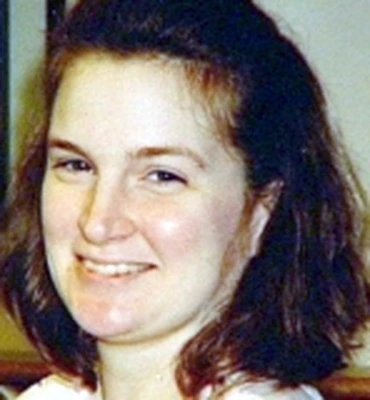
Renee M. Pernice was thirty five years old in January 2009, working as a nurse's instructor for St. Luke's Hospital in Kansas City, Missouri, and raising two sons along with a stepdaughter with her husband, Shon Pernice, an Independence firefighter and Army National Guardsman who had recently returned home from a deployment to Iraq. By that point, the marriage was in serious trouble. The couple had documented marital problems and were actively planning a separation, the kind of quiet, unraveling domestic situation that, in hindsight, so many of these cases seem to share in the weeks before something goes badly wrong.
A Wallet and a Phone Left Behind
Sometime between nine and ten in the morning on January 2, 2009, Renee vanished from the family's home in the 1100 block of northwest 66th Terrace. She left behind her wallet and her cell phone, taking nothing else with her, the kind of detail that almost never fits comfortably with a story about someone simply walking away from their own life. Three days later, that same cell phone turned up roughly twelve miles from the house, discovered near Sixth Street and Gladstone Boulevard, an area investigators could find no connection to Renee whatsoever, no friend, no errand, no reason for her or her phone to have ended up there on its own.
Shon Pernice was the last person known to have seen his wife, and from the earliest days of the investigation, his own account of events began to show cracks. He gave police conflicting dates regarding when he had last actually had contact with Renee, small inconsistencies that took on considerably more weight once investigators learned he had also accessed a hazardous materials station on January 3 that he wasn't even assigned to, an unexplained visit to a facility stocked with exactly the kind of chemicals that might prove useful to someone trying to clean up something they didn't want found.
Acid on the Garage Floor in January
When police executed a search of the Pernice home on January 10, just over a week after Renee disappeared, they found something that would become the case's most damning early piece of physical evidence: the garage floor had been acid etched and recently mopped, an unusual and labor intensive form of cleaning to undertake in the middle of a Missouri winter, for a garage floor that presumably didn't need that level of attention under ordinary circumstances. Investigators also recovered guns, ammunition, and evidence they believed to be blood inside the home. By February, barely a month after Renee vanished, Kansas City police had concluded she was very likely dead, treating the case as a homicide investigation even without a body to confirm it.
Shon Pernice was not immediately charged with anything connected to Renee's disappearance, though he found himself arrested multiple times over the following months on unrelated charges, including, notably, driving drunk with his own children in the car on the Fourth of July in 2009, an incident that would later add its own separate sentence onto whatever punishment he eventually received for what had happened to his wife.
A Confession, Finally, Three Years Later
It took until May 2010, roughly sixteen months after Renee disappeared, for prosecutors to formally charge Shon with first degree murder. The case moved slowly through the legal system after that, without a body and without a confession, until February 2012, more than three years after Renee vanished, when Shon Pernice finally pleaded guilty, not to murder, but to the lesser charge of voluntary manslaughter. According to the account he gave as part of that plea, he and Renee had argued, he had hit her, and the blow knocked her down a flight of stairs, with the fall itself ultimately causing her death, an account that painted the killing as, in his telling, an unintentional escalation rather than a planned act.
What came after that, by his own admission, was considerably more deliberate. Shon confessed to placing Renee's body in the trash, arranging for it to be picked up along with the household's ordinary garbage and hauled away to a landfill in Shawnee, Kansas, a disposal method so mundane and so thoroughly enmeshed in the ordinary machinery of municipal waste collection that it effectively guaranteed her remains would never be recovered. They never have been. His attorney argued that Shon's military service in Iraq had left him with post traumatic stress disorder, and suggested that condition had played a meaningful role in the violence that unfolded between him and Renee that January morning, an argument that shaped his defense strategy without ultimately preventing a guilty plea.
The Maximum Sentence, and a Family's Mixed Relief
A Clay County judge sentenced Shon Pernice in May 2012, imposing the maximum available term of fifteen years in prison for the voluntary manslaughter conviction, on top of two additional, consecutive six month sentences connected to the separate child endangerment charges from his 2009 drunk driving arrest. Roughly a hundred people attended the sentencing hearing, many of them wearing shirts printed with the words Justice for Renee, and after the hearing concluded, dozens of them released balloons together in her memory.
Renee's mother, Linda Lockwood, told reporters afterward that the family felt satisfied that Shon had received the maximum sentence available for the manslaughter charge, though she acknowledged that a life sentence would have felt more appropriate given what he had actually done. She noted, with a kind of practical, hard won relief, that the fifteen year term at least meant Renee's children would likely reach adulthood before their father became eligible for parole. Renee's father, Rick Pretz, was considerably more skeptical of any remorse Shon expressed during the proceedings, telling reporters he believed Shon had mainly been speaking to the judge in a calculated attempt to secure a reduced sentence, rather than offering anything resembling genuine accountability for what he'd done.
A Body Still Missing, Somewhere Beneath a Landfill
More than fifteen years after Renee Pernice disappeared from her own home on an ordinary January morning, her remains have never been recovered, buried somewhere within the vast, shifting mass of a Kansas landfill that received her body along with countless tons of unrelated household waste in the days after her death. The acid etched garage floor that first drew investigators' suspicion, the cell phone that surfaced twelve miles from anywhere Renee had reason to be, and the eventual confession describing a fall down a staircase followed by a body bagged and set out with the trash together form one of the more thoroughly documented cases of its kind, a homicide prosecuted entirely without a body, resolved only because the person responsible eventually chose to admit, in his own words, exactly what he had done.
Sources
- The Charley Project: Renee M. Pernice
- FOX 4 Kansas City: Shon Pernice Receives Maximum Sentence in Wife's Death
- FOX 4 Kansas City: Renee Pernice's Family Feels Satisfied with Justice
- KCUR: Plea In Case Of Vanishing Wife
- KCUR: Fifteen-Year Term In Case Of Vanished Kansas City Wife
- The Pitch KC: Shon Pernice admits that he killed his wife and disposed of her body in the trash