The Van He Drove Back Alone: The Thompson Family
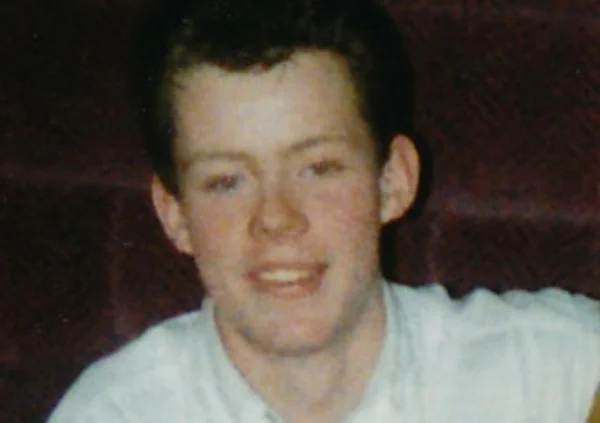
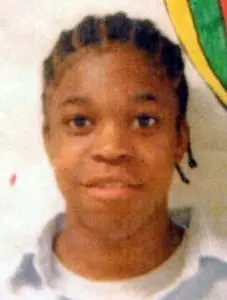
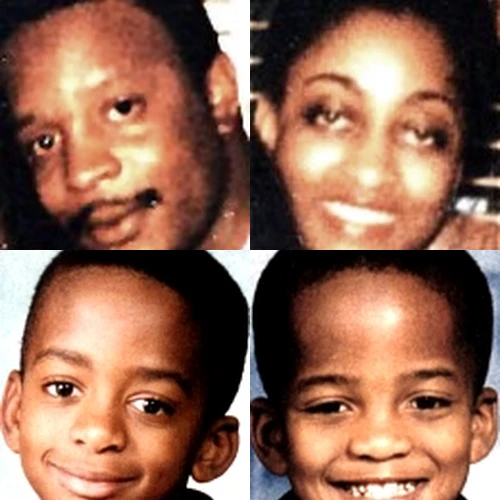
Everett Arthur Thompson Sr. had come to Chicago from Philadelphia, drawn originally by work in the city's steel mills before eventually finding his way into the restaurant business as head cook, and later owner, of a small establishment called E.A.T. and Company in the Park Manor neighborhood on the city's south side. He was forty years old in the summer of 1996, a large man standing six feet tall and weighing around two hundred fifty pounds, married to a woman named Lydia who was a year or two older than him. The two of them lived with their sons, eleven year old Everett Jr. and eight year old Andrew, in a house in the 8100 block of south Rhodes Avenue in the Chatham neighborhood, a home that had originally belonged to Lydia's own parents and had passed down jointly to Lydia and her two siblings, each holding a one third ownership share in the property. On July 5, 1996, all four members of the Thompson family vanished, and none of them have ever been seen again.
A Brother Recently Released From Prison
The household had changed considerably in the months leading up to the disappearance. In February 1996, Lydia's brother, Kenneth White, moved into the family home shortly after being released from prison, where he had served a sentence for rape. His presence introduced a level of tension into the household that escalated rather than settled over the following months. On July 3, just two days before the family vanished entirely, Lydia called 911 to report that Kenneth had threatened to kill her with an ax. Police responded to that call, but by the time officers arrived, the situation had calmed enough that no arrest was made, a decision that in hindsight reads as a missed opportunity to intervene before whatever ultimately happened on July 5.
The Last Phone Call
On the morning of July 5, Everett was working at his restaurant when his own father, Herman, called from Philadelphia, the two of them catching up over the phone in what began as an entirely ordinary conversation. In the middle of that call, Everett received a second call, this one from Lydia, and this one was anything but ordinary. She told him Kenneth was chasing her through the house with an ax again, the same threat she had reported to police just two days earlier, except this time she said she had locked herself and the boys inside a bedroom for safety. Everett told his restaurant manager he needed to leave immediately, ended the call with his father, and left the restaurant to go home. That was the last confirmed sighting of Everett Thompson. It was also, as far as investigators have ever been able to establish, close to the last moment any of the four Thompsons were known to still be alive.
A Van Returned Without Its Owner
Approximately two hours after Everett left the restaurant, Kenneth White arrived back at E.A.T. and Company, driving Everett's own van. He told the restaurant's manager that Everett had been arrested following a car accident, an explanation that gave no account of Lydia or the two boys at all. The manager, understandably unsettled by White showing up alone in his boss's vehicle with an unverifiable story, noticed something else worth remembering later: White was wearing white sneakers with visible red smears across them, a detail that would take on considerable weight once investigators began piecing together what had actually happened inside the Thompson home.
A Rotating Story and a Vanishing Van
In the days and weeks that followed, Kenneth White offered a shifting, inconsistent series of explanations for where the rest of the family had gone. At various points he told people the Thompsons had left town for Philadelphia, for Minneapolis, and for Hawaii, three entirely different and mutually exclusive destinations that never settled into a single consistent account no matter who was asking. Rather than reporting the family's whereabouts to anyone who might actually verify them, White instead sold Everett's van to a scrapyard, where it was crushed almost immediately, destroying whatever physical evidence it might have contained. He went on to forge both Lydia's and her sister Phyllis's signatures in an effort to illegally sell the family home out from under them entirely, a scheme that required considerable planning and directly contradicted any story in which Lydia herself was simply away on vacation and would eventually return to reclaim her own property.
Renovations That Raised Immediate Suspicion
When inspectors eventually went through the Thompson home as part of the attempted property sale, they discovered troubling physical changes that had not been present when police visited the house on July 3, just two days before the family disappeared. The kitchen floor had been removed entirely, and the bathroom fixtures had been freshly painted red, alterations that offered no innocent explanation and that investigators would come to view as a clumsy, urgent attempt to eliminate physical evidence from specific parts of the house. White also forged a check in Lydia's name for thirteen thousand two hundred seventy two dollars, a separate financial crime that, combined with the fraudulent home sale, painted a portrait of a man rapidly and methodically working to seize control of his sister's entire estate in her absence rather than someone waiting for her return.
Blood in a Trailer in Gary, Indiana
The investigation's most significant physical evidence surfaced more than a year after the family vanished. On July 14, 1997, FBI agents searched a house trailer Kenneth White had rented in Gary, Indiana, bringing cadaver dogs along with them. Inside, they recovered a pair of men's gym shorts and a boy's sock, both saturated with blood. The discovery of a child's bloodied sock in particular collapsed any remaining possibility that the Thompsons might simply be alive somewhere, off on the vacation White had described in one version or another of his shifting story. Despite the blood evidence, investigators were never able to develop enough to formally charge White with the murders themselves, a gap between strong circumstantial suspicion and prosecutable proof that would ultimately go unresolved.
Arrested for Everything Except the Murders
Authorities did manage to build cases against Kenneth White on charges connected to the aftermath of the disappearance rather than the disappearance itself. In November 1997, he was arrested for failing to register as a sex offender, a requirement tied to his earlier rape conviction. The following month, in December 1997, he was arrested again, this time for forging the thirteen thousand dollar check in Lydia's name. While being held at the Federal Metropolitan Correctional Center on those charges, Kenneth White died by suicide on Christmas Day, 1997, taking with him whatever specific knowledge he had about what actually happened to his sister and her family, and leaving behind no note explaining any of it.
Four People, No Remains
More than a year of investigation, a trailer full of bloodied evidence, forged signatures on a stolen house deed, a crushed van, and a suspect's own death in custody were still not enough to produce the one thing the Thompson family's surviving relatives most needed, actual physical remains belonging to Everett, Lydia, Everett Jr., or Andrew. Searches of both the Gary, Indiana trailer and the Thompsons' own Chicago home failed to turn up any human remains at all, leaving investigators confident enough in their working theory of what happened to close the case in every practical sense while never actually being able to prove it in a courtroom or give the family anywhere to hold a funeral. Investigators believe the killings most likely occurred on July 5 or July 6, 1996, within the same narrow window as Everett's final phone call and White's arrival back at the restaurant driving a van whose owner would never be seen again.
A Case Frozen at Four Names
The Thompson family's disappearance remains one of the more disturbing entries in Chicago's history of unsolved cases specifically because of its scale, not one victim but four, an entire family erased within what appears to have been a matter of hours, by someone who had been welcomed into their own home only months earlier. Area South detectives with the Chicago Police Department have continued to list the case as open, and anyone with information has been asked to contact them directly. What makes the case particularly bleak is the total absence of ambiguity about who was almost certainly responsible, paired with the total absence of any resolution for the family members left behind, no trial, no conviction, no remains, only a dead suspect who spent his final eighteen months methodically converting his sister's life and property into his own before answering to a different set of charges entirely and then refusing, permanently, to answer for the four people who actually mattered most.
Sources
- The Charley Project: Everett Arthur Thompson Sr.
- The Charley Project: Lydia Thompson
- The Charley Project: Everett Thompson Jr.
- The Charley Project: Andrew Thompson
- Cold and Missing: The Thompson Family
- CrimeWatchers: EVERETT, LYDIA, EVERETT JR. & ANDREW THOMPSON