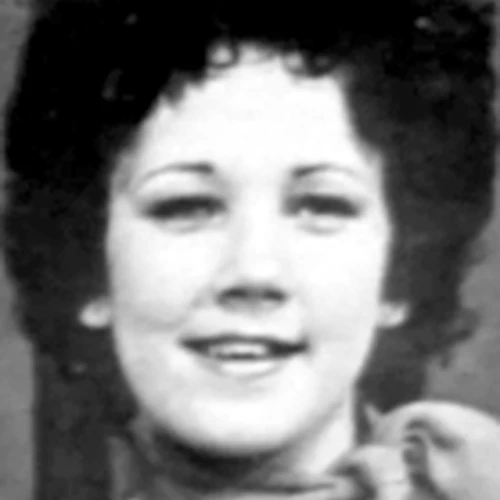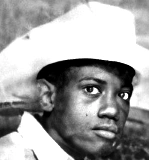
A Kiss, a Klan, and a Levee: The Disappearance of Joseph Edwards
Joseph Edwards, known to friends as Joe-Ed, was 24 years old, working as a porter and handyman at the Shamrock Motel in Vidalia, Louisiana, when he vanished sometime after midnight on July 12, 1964. He was, by every account, a neat dresser with a reputation as something of a ladies' man, a young Black man from Natchez, Mississippi, who was quietly struggling with debt and anxiety in the weeks before he disappeared. What happened to him has never been fully resolved, but the circumstances surrounding his vanishing place his case squarely within one of the darkest chapters of the civil rights era in the Deep South, a chapter that federal investigators would spend decades trying, and ultimately failing, to close with any arrests.
An Incident at the Motel
In the weeks before he disappeared, Edwards forcibly kissed a white coworker named Iona Perry, a registration clerk at the Shamrock who also lived with polio. Perry rebuffed him, and Edwards reportedly apologized immediately, begging her not to report what had happened. For a time, it seemed the matter might simply end there. It did not. When Perry's boyfriend, a Louisiana probation officer named James Buford Goss, learned about the incident, he brought it directly to Vidalia's police chief, J.L. "Bud" Spinks, and pushed for Edwards to be arrested. According to investigators who examined the case decades later, other rumors also circulated about Edwards around this same period, including allegations that he had been discovered with a white female guest inside a motel room, and that he may have been involved in arranging encounters between white sex workers and white male guests at the motel. Any one of these things, in the racial climate of rural Louisiana in 1964, could have been enough to mark him for violence. Together, they made him an obvious target.
The Group That Met at the Shamrock
What makes Edwards's case especially significant is where it intersects with one of the most violent Klan factions to operate in the Deep South during this period. The Silver Dollar Group, a militant splinter faction of the Ku Klux Klan that took its name from the silver dollars its members carried as identifying tokens, was formed in the spring of 1964 at the very same Shamrock Motel where Edwards worked. The group grew out of frustration among its roughly twenty members with what they saw as the broader regional Klan's unwillingness to take sufficiently aggressive action, and it was led by a Vidalia man named Raleigh Jackson "Red" Glover. Crucially, the Silver Dollar Group's membership overlapped directly with local law enforcement. Concordia Parish Sheriff's Office deputies Frank DeLaughter and Bill Ogden were both reportedly members, giving the group not just the will to carry out violence but the institutional cover of badges to help conceal it afterward.
A Request for Someone to "Take Care Of" Him
According to FBI informants who later spoke to investigators, when Iona Perry declined to press charges against Edwards, Police Chief Spinks turned instead to Red Glover and the Silver Dollar Group, effectively asking that the group handle the situation outside of any official channel. It was an arrangement that fit the broader pattern investigators would eventually uncover connecting Concordia Parish law enforcement to Klan violence throughout this period, where officers who might have been expected to protect residents instead became conduits for extrajudicial punishment against Black men accused, rightly or wrongly, of crossing racial lines.
The Final Night
On the night of July 11, 1964, Edwards left a bar in nearby Ferriday around 10:30 p.m., telling people there that he intended to meet a white woman back at the Shamrock, an arrangement investigators later came to view as possibly a lure designed by law enforcement or Klansmen to draw him out. He waited at the motel for over an hour, and when whoever he was expecting never appeared, he left again around midnight. A witness later reported seeing an unmarked police car, described as a new model white Oldsmobile fitted with a radio antenna on its trunk, force Edwards's own vehicle to stop along the road. Deputy Bill Ogden later claimed that Edwards had jumped out of his car at that point and fled on foot up a nearby levee, successfully evading pursuit. Whether that account was true, exaggerated, or an outright fabrication designed to explain away Edwards's disappearance has never been established.
The Car and the Noose
Days after Edwards vanished, his 1958 Buick, a distinctive two-tone blue and beige model, was discovered abandoned on a street behind a bowling alley along the Ferriday-Vidalia Highway. What investigators found inside the car did little to support any theory of a voluntary disappearance. There was a possible blood spot on the floor along with traces of mud. A belt that did not belong to Edwards was left lying on the seat, and, most chillingly, a necktie had been fashioned into the unmistakable shape of a noose and left hanging from the steering wheel, a message that required no further explanation to anyone who found it in Louisiana in the summer of 1964.
Rumors of Where He Was Left
In the years that followed, several competing rumors circulated locally about where Edwards's body had ultimately been disposed of, including Deer Park Lake, a spot known locally as the Blue Hole, and even a hog pen. In 1967, acting on one of these leads, the FBI sent divers into Deer Park Lake after a commercial fisherman reported finding what he believed was human flesh sealed inside a container submerged at the bottom of the lake. That search, like every other physical search connected to the case over the following decades, turned up nothing conclusive.
Decades of Investigation, No Arrests
The FBI first opened an investigation into Edwards's disappearance in 1967, working from information supplied by a confidential informant identified in later files as E.D. Morace, a source connected to the Silver Dollar Group itself. That initial investigation ran until 1968 without producing charges. Decades later, as part of a broader Department of Justice effort to revisit unresolved civil rights era cold cases, the FBI reopened the Edwards case from 2007 to 2014, ultimately identifying seven men as its most likely suspects: Silver Dollar Group leader Red Glover along with fellow members Kenneth Norman Head and Homer James "Buck" Horton, and four law enforcement figures, deputies Frank DeLaughter and Bill Ogden, Police Chief J.L. "Bud" Spinks, and probation officer James Buford Goss. By the time this renewed investigation concluded, every single one of the seven men identified as suspects had already died, none of them ever having faced charges connected to Edwards's disappearance.
Closed Without Resolution
In 2013, the Department of Justice formally announced it was closing the case, stating that none of the various theories, rumors, and allegations that had accumulated around Edwards's disappearance over the decades were supported by sufficient credible or corroborated evidence to support prosecution, a moot point in any case given that every named suspect was already deceased. Investigators involved in the case have described it as likely the only disappearance investigated by the FBI and the Justice Department during the civil rights era in which the victim's body was never recovered at all, a distinction that leaves Edwards's case in a particularly painful category of its own, without even the grim finality that recovery of remains might have offered his family.
What Remains
Joseph Edwards has never been found. The Silver Dollar Group he is believed to have run afoul of was also tied by investigators to the killing of Frank Morris, a Black shoe repair shop owner in Ferriday who died after his shop was set ablaze, and to the car bombings that targeted NAACP leaders George Metcalfe and Wharlest Jackson in nearby Natchez, Mississippi, part of a broader pattern of violence the group is believed to have carried out with the tacit or active cooperation of local law enforcement throughout the mid 1960s. More than sixty years after Edwards disappeared from behind a bowling alley on the Ferriday-Vidalia Highway, his case remains a stark reminder of how thoroughly the machinery of local government in parts of the Deep South was, for a time, turned against the very people it was meant to serve and protect, and how a single kiss, real or rumored, could be enough to make a young man disappear without a trace.
Sources
- The Charley Project: Joseph Edwards
- LSU Cold Case Project: The Disappearance of Joseph Edwards
- Wikipedia: Silver Dollar Group
- Concordia Sentinel: Cold Case, Who killed Joseph Edwards? DOJ names suspects, closes 1964 case
- Louisiana Illuminator: KKK may have been involved in Louisiana man's disappearance six decades ago
- PBS Frontline: Joseph Edwards
- U.S. Department of Justice: Joseph "Joe-Ed" Edwards, Notice to Close File
- Whereabouts Still Unknown: Joseph Edwards