The Bicycle Man's Warning to His Barber: The Disappearance of Donald Dietz
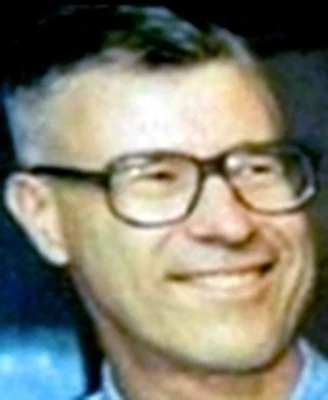
Donald Leo Dietz was born August 18, 1941, and by September 2007 he was sixty six years old, living alone on a remote twenty acre property along Eddy Road near the Ionia State Game Area outside Saranac, Michigan. Locals knew him simply as the Bicycle Man, a nickname earned through his habit of pedaling everywhere he went, even through the harsh stretches of Michigan winter, rather than driving. Don, as his family called him, was a retired Amway worker and a lifelong bachelor who had been raised in an institution and remained, throughout his adult life, extremely shy and largely avoidant of contact with other people. His family believed he was likely autistic, though he had never received any formal diagnosis, and those who knew him described him as a meek, vulnerable man who kept almost entirely to himself out on his isolated property.
A Frugal Man With Real Money
What made Don's isolation particularly striking, in hindsight, was the disconnect between how he actually lived and what he actually had. Despite patching his own worn out shoes with duct tape rather than replacing them, and despite an otherwise frugal, almost austere daily existence, Donald Dietz had quietly accumulated close to four hundred fifty thousand dollars in savings over the course of his working life. He talked about that money periodically, including his interest in eventually investing it, a detail that would turn out to matter enormously once his disappearance was investigated.
A Warning Given to His Barber
About a week before he vanished, Don sat down for what was, by all accounts, one of his twice yearly haircuts, and used the appointment to tell his barber something that reads, in retrospect, like a direct and specific warning about what was about to happen to him. He said someone was pressuring him to invest his money, that this person would not accept no for an answer, had grown increasingly threatening, and that he suspected he might even be followed. It was an extraordinarily candid admission from a man known for being almost entirely closed off from other people, and it would become one of the most important pieces of testimony investigators had once Don actually disappeared.
Vanishing on the Ride Home
On September 8, 2007, Donald Dietz rode his bicycle to a Meijer store, ran his errand, and started the ride back toward his home on Eddy Road. He never arrived. When investigators eventually searched his property, they found almost everything undisturbed, his prescription eyeglasses left behind among his belongings, with the one conspicuous exception being a set of financial papers that appeared to be missing from the house.
The timeline of what happened next moved with unsettling speed. On September 19, just eleven days after Don vanished, a man named Rami Ikbal Saba attempted to forge Dietz's signature in order to transfer nearly half a million dollars out of the country to Lebanon. When that scheme was investigated, Saba eventually admitted to stealing Don's identity outright and cashing a series of fraudulent checks in his name in the days and weeks following his disappearance. On September 30, someone called Don's brother claiming to be Don himself, speaking with a foreign accent and mentioning, bizarrely, both a pregnancy and a recent stroke, details that bore no resemblance whatsoever to anything true about the real Donald Dietz's actual life or circumstances.
Two Scientists With Doctorates in Biology
Authorities arrested Rami Saba in December 2007, charging him with mail fraud, bank fraud, and identity theft in connection with the forged checks and attempted wire transfer. The investigation expanded further in January 2009, when Raogo Ouedraogo, a friend of Saba's from graduate school originally from Burkina Faso, was indicted on nearly identical charges. Both men held doctorates in biology, an unusual academic pedigree for what investigators had come to believe was a plot to kidnap, incapacitate, and ultimately kill a reclusive, financially comfortable retiree specifically to gain access to his money. Ouedraogo had flown into Michigan on September 11, 2007, just three days after Don disappeared, and investigators were never able to fully account for a fourteen hour gap in his movements during that visit, a stretch of unexplained time that became central to the case built against him.
A Trial Built on Divine Protection
By July 2009, both men faced considerably more serious charges, including kidnapping resulting in death and conspiracy to commit murder for hire, elevating the case from financial fraud into an outright homicide prosecution despite the continued absence of Don's body. Rami Saba's own path through the legal system took an unusual turn along the way. He converted to Islam following his arrest, and rather than rely on the attorneys assigned to defend him, he fired them and chose to represent himself at trial, telling the court at points that he believed divine protection would see him through the proceedings. It didn't. A jury convicted him in June 2011 on all counts he faced, and he was sentenced to thirty two years in prison. According to accounts that surfaced afterward, Saba had also allegedly admitted the killing to other inmates while in jail, describing it as something that hadn't actually been planned in advance, a detail that complicated the more calculated murder for hire theory prosecutors had originally built their case around.
Raogo Ouedraogo's case moved through the courts with considerably more turbulence. He was initially convicted of murder in April 2011, only for the presiding judge to overturn that verdict in December of the same year, issuing a judgment of acquittal after concluding there was no real evidence connecting him directly to Dietz, either on his own or through his friendship with Saba. Prosecutors appealed that decision, and while the appeals court declined to reverse the acquittal on the murder charge itself, it did reinstate the separate charge of conspiracy to commit murder for hire. Ouedraogo was ultimately convicted on that reinstated charge and sentenced to five years in prison, a fraction of what Saba received, while continuing to maintain his own innocence throughout. Court records from his appeal describe a case built almost entirely on his friendship with Saba and the timing of his September 2007 visit to Michigan, rather than any direct forensic link tying him to whatever happened to Dietz personally, a distinction that ultimately shaped how differently the two men's cases were resolved despite having been investigated side by side from the very beginning.
Still No Body, Nearly Two Decades Later
Donald Dietz's remains have never been recovered, despite two convictions connected to his death and a body of circumstantial evidence, forged checks, an impersonation phone call, an unexplained fourteen hour gap, and a specific warning given to a barber just days before he disappeared, substantial enough to send both men to prison. What remains unanswered, even after Saba's conviction and Ouedraogo's more limited one, is the most basic fact any of Don's remaining family might have wanted resolved: where, on that stretch of road between a Meijer store and a remote twenty acre property outside Saranac, the shy, duct tape shoed man known locally as the Bicycle Man actually met the men who had already, according to his own words to his barber, begun following him.
Sources
- The Charley Project: Donald Leo Dietz
- Fox 17 West Michigan: New developments in 2007 Donald Dietz disappearance
- CourtListener: United States v. Ouedraogo
- Legal News: coverage of the Dietz prosecution