Three Different Stories, One Missing Toddler: Ke'Shaun Vanderhorst
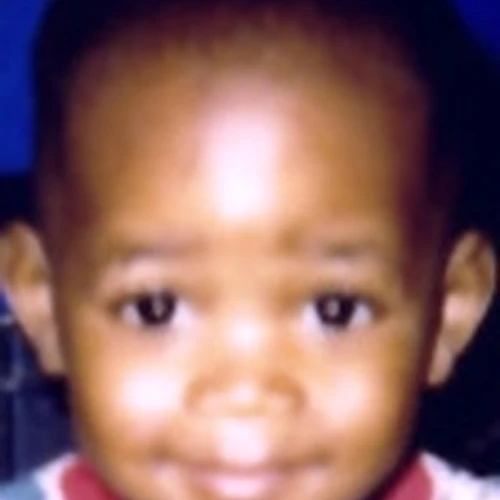
Ke'Shaun Bryant Vanderhorst was born July 17, 1993, while his mother, Tina Vanderhorst, was incarcerated on drug related offenses. He was the youngest of seven children Tina had given birth to by that point in her life, though he would grow up largely without siblings around him. Four of his brothers and sisters had already died in childhood during the 1980s, most from pneumonia or sudden infant death syndrome, before Ke'Shaun was ever born. Two older brothers lived separately with their paternal grandmother. After Tina's release from custody in November 1994, Ke'Shaun, who had spent that period in foster care, was returned to her.
Ke'Shaun was last seen on September 25, 1995, at the family's residence in the 1400 block of North 17th Street in Philadelphia, Pennsylvania, two years old, standing two feet tall and weighing twenty nine pounds. When his aunt began asking questions about where he was, she says Tina told her the child had already been picked up by the Department of Human Services. That explanation was false. No DHS record supported it, and Ke'Shaun's aunt formally reported him missing to police on October 13, 1995, nearly three weeks after anyone outside the household had last confirmed seeing him.
A Home Investigators Described in Blunt Terms
When police finally gained access to the apartment where Ke'Shaun had been living, what they found offered a disturbing window into the conditions surrounding his final days there. The apartment was described in official reports in blunt terms, filthy, cluttered, and infested with rats. Tina was struggling openly with substance abuse at the time, and her boyfriend had reportedly threatened at some point to have Ke'Shaun removed from her custody entirely, a threat that, in hindsight, sat uncomfortably close to whatever actually happened to the boy in the days that followed.
A Story That Changed Every Time She Told It
Once investigators established that the Department of Human Services explanation was fabricated, Tina's account of what had happened to her son shifted again, and then shifted once more. She told investigators at one point that she had given Ke'Shaun to a stranger. Eventually, she offered what became her final and most detailed version of events: that she had sold her two year old son to a Black woman she did not know, someone she identified only by the name Virginia Graham, in exchange for five hundred dollars, money she then used to purchase crack cocaine. In a still later retelling, Tina described instead taking Ke'Shaun to a friend's fruit stand on Cecil B. Moore Avenue while under the influence of drugs, claiming she could not clearly recall what happened to him after that point.
Investigators worked from whatever consistent details they could extract across these shifting accounts to build a description of the woman Tina identified as Virginia Graham, a Black woman believed to be between thirty five and forty years old, roughly five foot four and around one hundred forty pounds, with black hair and brown eyes, last described wearing a maroon skirt paired with a cream colored top. She reportedly drove a light blue four door sedan bearing a license plate that included the letters AL, and notably already had a car seat installed in the vehicle when investigators pieced together witness accounts of that day. Police released a composite sketch built from these descriptions in hopes someone might recognize her. No one meeting that description has ever been identified or located, and it remains genuinely unclear, even decades later, whether Virginia Graham represents a real person Tina actually dealt with that day or a fabricated figure invented to explain her son's absence.
A Plea, But Not for Murder
In November 1996, more than a year after Ke'Shaun disappeared, Tina Vanderhorst pleaded no contest to charges of child endangerment connected to his case, receiving a sentence of two and a half to seven years in prison. Notably, this plea addressed her failure to protect and her role in his disappearance, not a murder charge, since prosecutors never had the evidence, a body, a confirmed cause of death, or anything else, needed to pursue a homicide case against her at that time. The endangerment plea remains, to this day, the only legal consequence Tina has ever formally faced connected directly to her son's disappearance.
An Unrelated Case, Two Decades Later
Tina Vanderhorst's name resurfaced in Philadelphia news coverage two decades later, though in connection with an entirely separate matter unrelated to Ke'Shaun. In October 2016, she was charged with murder, robbery, and arson in connection with the death of a man in the city's Germantown neighborhood, accused of stabbing him seventy seven times inside his own apartment and then setting his body on fire. That case went to trial, and in September 2017, a jury acquitted Tina of all charges connected to that killing. It is worth being precise about what that acquittal did and did not involve. It addressed the Germantown homicide specifically, a case with its own separate victim, evidence, and legal proceedings, and had no direct bearing whatsoever on the unresolved question of what actually happened to Ke'Shaun back in 1995. The two cases share only a defendant, connected across more than twenty years by the same woman's name appearing in two entirely different Philadelphia courtrooms.
A Family Already Shaped by Loss
Ke'Shaun's disappearance did not happen in isolation from the rest of his family's history, and understanding that broader context helps explain why his absence went unreported for as long as it did. By the time he vanished, Tina had already lost four other children in infancy or early childhood during the 1980s, a devastating pattern of loss that, according to those close to the family, had left relatives somewhat accustomed to tragedy touching this particular household repeatedly rather than treating any single absence as automatically alarming. Ke'Shaun's own time in foster care before being returned to Tina's custody in late 1994 reflected a family already well known to Philadelphia's child welfare system, one where a claim that DHS had simply stepped in again to remove a child, however false it turned out to be in this specific instance, was at least plausible enough on its face that it did not immediately trigger the kind of urgent scrutiny a similar claim might have drawn from a family with no such history. That plausibility bought Tina roughly three weeks before her own sister pushed past the explanation and went to police directly, three weeks during which whatever actually happened to Ke'Shaun, whether he was truly handed to a stranger or met some other fate entirely, had already had time to become effectively untraceable.
Still Missing, Still Unexplained
Nearly thirty years after Ke'Shaun Vanderhorst disappeared from a rat infested Philadelphia apartment, he has never been found, and no version of the story his mother eventually settled on, a sale to a stranger for drug money, has ever been independently corroborated by any evidence beyond her own shifting testimony. Philadelphia police continue to list his case as an active missing child investigation, one built almost entirely around the credibility, or lack of it, in a series of accounts given by the one person who was actually present when he vanished. His extended family has continued, across three decades, to hold onto the possibility that Ke'Shaun is alive somewhere, raised by whoever ultimately ended up with him that September, whether that was truly a stranger named Virginia Graham or someone whose real identity has never surfaced in any of the accounts his mother has given.
Sources
- The Charley Project: Ke'Shaun Bryant Vanderhorst
- Disappeared Blog: Ke'Shaun Vanderhorst
- The Doe Network: 1201DMPA, Ke'Shaun Bryant Vanderhorst
- National Center for Missing & Exploited Children: Ke'Shaun Bryant Vanderhorst