Two Hours for a Fifteen Minute Drive: The Disappearance of Crystal Dittmeyer
Crystal Gayle Dittmeyer was 12 years old when she disappeared from the Pick Wick Apartments in Oklahoma City, Oklahoma, on the evening of June 13, 1996. She had been seen near the complex's swimming pool around 5:30 p.m., and by the time anyone realized she was actually gone, the story her family gave investigators had already begun to fall apart in ways that would take nine years, three separate trials, and a guilty plea to fully resolve, even as the most basic question of where her body actually is has never been answered.
A Brother's Account, Then a Denial
Crystal lived at the Pick Wick Apartments with her mother, Tammy Jean Crider, her stepfather, Benjamin Harry Crider Jr., and her younger half-brother. She was last seen by neighbors near the pool on the south side of the complex around 5:30 p.m. that evening, a Thursday like any other in a summer that had, up to that point, given her family no reason to expect anything was wrong. Two weeks after Crystal disappeared, her younger brother came forward with an account of what he said he had witnessed on the day she vanished. According to the boy, he had heard his parents arguing that day, and he told investigators he had seen Crystal lying motionless on the floor of the apartment. He said his mother then took him out shopping, and that by the time they returned home, Crystal was simply gone. Tammy later denied her own son's account entirely, and she was never charged in connection with her daughter's disappearance, but the boy's initial statement would remain a persistent, unresolved thread throughout the entire case that followed.
Bite Marks and an Unconvincing Explanation
The day after Crystal vanished, investigators noticed injuries on Benjamin Crider that immediately drew their attention, marks on his arms that appeared consistent with human bite wounds, along with visible bruising on his shoulder. When asked about these injuries, Crider explained that he had gotten them while replacing the brakes on Tammy's vehicle, an explanation investigators found unconvincing given the specific appearance of the marks themselves.
A Fifteen Minute Errand That Took Two Hours
Investigators also focused closely on Crider's movements on the day Crystal disappeared. According to the timeline they pieced together, Crider left the family's home around 4:30 p.m. on an errand that should have taken roughly fifteen minutes to complete. Instead, he was gone for nearly two hours, a discrepancy he was never able to adequately explain. Investigators came to believe that Crider had placed Crystal's body inside a garment bag sometime while Tammy and her son were out shopping, and that this unexplained two hour absence corresponded to whatever he did with her remains afterward.
Blood in the Apartment and the Company Van
Physical evidence recovered from the family's apartment included blood stains found throughout the residence, along with an empty bottle of hydrogen peroxide, a household item commonly associated with efforts to clean blood from surfaces. Separately, investigators recovered DNA consistent with Crystal's own blood type from inside Crider's company work vehicle. Polygraph examinations were administered to both Tammy and to Crystal's own biological father during the course of the investigation, and both registered deceptive responses when specifically asked about what had happened to Crystal, though neither was ever formally charged.
Extradition and a First Conviction
In 1998, two years after Crystal disappeared, Benjamin Crider was formally charged with her murder and extradited back to Oklahoma from Kentucky, where he had relocated. He stood trial that same year and was convicted, receiving a sentence of life in prison. For a period, it appeared the case had reached its resolution, even without Crystal's body ever having been recovered.
A Conviction Undone by Junk Science
That resolution did not hold. In 2001, the Oklahoma Court of Criminal Appeals threw out Crider's conviction entirely, ruling that the bite mark testimony prosecutors had relied on at trial amounted to what the court itself characterized as junk science. The appellate court found that Oklahoma County District Judge Tammy Bass-Jones should never have allowed that specific evidence, along with certain other prosecution evidence, to be presented to the original jury, and Crider's conviction was vacated as a result.
A Retrial Ending in Deadlock
Prosecutors pursued a second trial against Crider in 2004, this time calling Tammy herself to testify against him. Despite her testimony, this second trial ended in a mistrial, leaving the case once again without any formal resolution and forcing prosecutors to decide whether to attempt a third trial against a defendant who had now avoided conviction twice.
An Admission While Awaiting a Third Trial
While awaiting that third trial, in September 2005, Benjamin Crider changed course entirely. He admitted to causing Crystal's death, telling authorities that he had struck her in a moment of anger and that she had died as a result, though he insisted he had never intended to kill her. Crider pleaded guilty to manslaughter rather than murder, a plea prosecutors ultimately accepted specifically because they acknowledged they did not have enough evidence remaining to secure a murder conviction at a third trial, particularly with the original bite mark evidence already excluded by the appellate court.
A Ten Year Sentence, Then Freedom
Crider was sentenced to ten years in prison for the manslaughter conviction. Because he had already spent nine years incarcerated across his original conviction, appeal, and subsequent retrial proceedings, he was released from custody not long after entering his plea, having effectively served nearly the entirety of his sentence already by the time it was formally imposed.
Death Without Disclosure
Benjamin Crider lived only a few more years as a free man. In 2008, he died of a heart attack in Kentucky at the age of 49, having never disclosed the location of Crystal's remains at any point before his death, whether during his original trial, his years in prison, or the years of freedom that followed his manslaughter plea.
A Distinctive Scar and a Ying-Yang Necklace
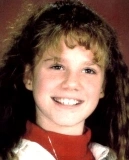
At the time she disappeared, Crystal stood five foot four and weighed roughly 113 pounds, with brown hair and hazel eyes, and a distinctive scar near her hairline that investigators included among her identifying features. She had last been seen wearing a white t-shirt printed with a ying-yang design and a red and blue embroidered patch, blue jean shorts, and a ying-yang necklace, ordinary summer clothing for a twelve year old spending an evening near the pool with no idea it would be among the last things anyone ever documented about her.
Still Missing
Crystal Gayle Dittmeyer has never been found. She would be in her early forties today, a fact that sits alongside the reality that her case took nine years to move from her initial disappearance through two overturned or deadlocked trials to a final manslaughter plea, and that the man who admitted responsibility for her death lived another three years afterward without ever providing her family the one piece of information that might have finally allowed them to bring her home. Her case remains listed with the National Missing and Unidentified Persons System, and anyone with information is asked to contact the Oklahoma City Police Department.
Sources
- The Charley Project: Crystal Gayle Dittmeyer
- Oklahoma Cold Cases: Crystal Gayle Dittmeyer
- NewsBreak: The 1996 story of the disappearance of 12-year-old Crystal Gayle Dittmeyer in Oklahoma City
- NewsOn6: Man being retried in death of missing stepdaughter
- Oklahoma Gazette: Man who confessed to Oklahoma murder dies
- Doe Network: 1535DFOK, Crystal Gayle Dittmeyer
- Bonnie's Blog of Crime: Benjamin Crider II killed his stepdaughter, 12-year-old Crystal Gayle Dittmeyer, whose body has never been recovered