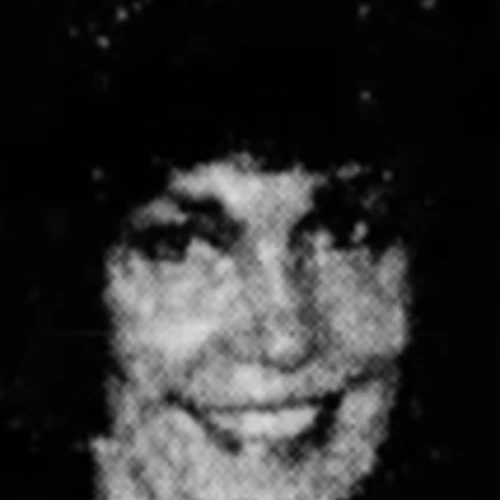
She Left With the Man From the Bar: Rebecca Jane Powell
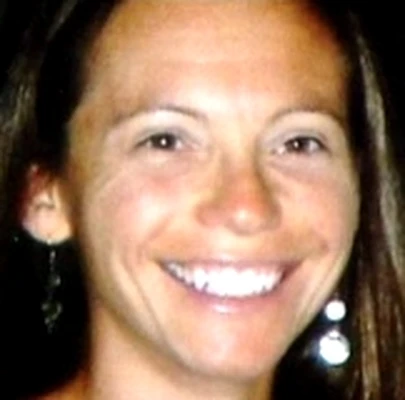
Rebecca Jane Powell, known to those close to her as Becky, was forty one years old on the night of April 29, 1984, when she went out with her sister in Pensacola, Florida. The two of them started the evening at the Flora Bama Lounge, a well known bar straddling the Florida-Alabama state line on Perdido Key Road, before moving on to Richey's Bar and Package Store on Navy Boulevard to pick up more drinks. It was an ordinary night out between sisters, the kind that would otherwise have faded entirely from memory, except for what happened at that last stop. At Richey's, mutual friends introduced Rebecca to a man named Ronald Harvey Fleming. Rebecca left the bar with him, headed to a party he described. She was never seen again.
A Man With a Documented History
Ronald Harvey Fleming was not a stranger to violence or to law enforcement by the time he met Rebecca that night. He was a member of a motorcycle gang and carried a substantial criminal record along with a documented history of violence specifically directed at women. When investigators first questioned him in the aftermath of Rebecca's disappearance, Fleming told them flatly that he did not know her and could not recall having even been at Richey's the night she vanished, a denial that directly contradicted the accounts of the mutual friends who had made the introduction between them in the first place.
Without a body, a confession, or physical evidence tying Fleming conclusively to whatever had happened to Rebecca, the case stalled for years, one more Gulf Coast disappearance that seemed destined to remain permanently unresolved.
A Case Reopened
In 1989, five years after Rebecca vanished, investigators reopened the case and began systematically re-interviewing everyone connected to that night. That renewed effort produced two significant breaks. Police searched a residence where Fleming and another man had lived back in 1984, and inside they found traces of blood consistent with Rebecca's blood type, along with a hole in the wall that had been patched and filled over at some point after the fact, the kind of small, deliberate repair that suggested someone had gone to specific effort to conceal damage from whatever had happened inside that house.
The second and more decisive break came from Claude Wilkins, a friend and fellow member of the same motorcycle gang Fleming belonged to, known at the time as the Skull Munchers. Wilkins came forward and told investigators that he had personally witnessed Fleming murder Rebecca inside his own residence, an account he had not offered when investigators first questioned him back in 1984. Wilkins later explained that omission by saying he had lied to police at the time simply because he was afraid, a fear that had apparently held for five years before he finally decided to tell investigators what he said he had actually seen that night. According to Wilkins's account, Rebecca had expressed a wish to leave and, in a detail that has remained one of the case's most unsettling elements, had also said something about wanting to die, whether out of genuine despair or simply the kind of thing said in an argument that spirals out of control. Fleming responded by shooting her with a .44 Magnum revolver.
What Happened After the Shooting
Wilkins's account did not stop at the shooting itself. He described how the two of them worked together afterward to dispose of Rebecca's body, placing it inside a sleeping bag, loading it into the back of a pickup truck, and driving it out to a piece of property off Highway 29, where they left it. His testimony, delivered years later at Fleming's trial, was reportedly graphic enough in its detail that it visibly sickened at least one member of the jury hearing it. Despite the specificity of Wilkins's account and his direct participation in disposing of the body, he himself was never charged in connection with Rebecca's death, even though the judge overseeing the case later stated a belief that Wilkins had actually been more deeply involved in what happened to her than he had admitted to on the stand.
Convicted, Then Never Recovered
Ronald Harvey Fleming was arrested in Louisiana in June 1990 and charged with first degree murder in connection with Rebecca's death. He was tried in Escambia County, Florida, in 1991, and took the stand in his own defense, maintaining his innocence throughout the proceedings and claiming he had actually left the residence before whatever happened to Rebecca that night ever occurred, a version of events the jury ultimately did not accept. Fleming was convicted of first degree murder and sentenced to twenty five years to life in prison. He died in custody sometime after his conviction, having never at any point acknowledged responsibility for Rebecca's death or offered any information about where her remains might actually be located.
Despite the property off Highway 29 that Wilkins identified as the disposal site, extensive searching in the years since has never recovered Rebecca's body. She remains, more than four decades after that night at Richey's Bar, a murder victim with a convicted killer, a documented cause of death, and a witness account detailed enough to sicken a courtroom, yet without the one thing that might have allowed her family any physical place to finally lay her to rest.
A Conviction That Answered Some Questions, Not All of Them
Rebecca's case occupies an unusual space among unsolved disappearances, closer to resolved than most, given the conviction Fleming ultimately received, yet still fundamentally incomplete in the most basic sense that matters to a family: knowing that a man has been held legally accountable for killing someone you love is not the same as being able to recover them. Claude Wilkins, the man whose testimony made that conviction possible in the first place, walked away from the case having faced no charges at all, despite a judge's own stated suspicion that his actual role went beyond what he described under oath. Whatever full account of that night in 1984 might still exist, held by Wilkins, or buried along with Fleming's own knowledge of exactly where he and Wilkins left her, has never been fully brought into the open.
An Ordinary Night in a Familiar Place
Part of what makes Rebecca's case resonate beyond its own specific facts is how utterly ordinary the setup was right up until the moment it turned fatal. The Flora Bama Lounge, where Rebecca and her sister started their evening, has operated for decades as one of the most recognizable bars along the entire Gulf Coast, a sprawling, informal institution straddling two states that draws locals and tourists alike without any particular reputation for danger attached to it. Richey's, the second stop where Rebecca actually met Fleming, was by all accounts an equally unremarkable neighborhood bar. Nothing about the night, two sisters out together, a round of introductions among people who shared mutual friends, an invitation to keep the evening going at a party somewhere else, would have struck anyone present as unusual or worth a second thought. That ordinariness is precisely what made Fleming's documented history so easy to overlook in the moment and so damning in hindsight, a reminder that the men responsible for this kind of violence rarely announce themselves as dangerous to the people standing next to them at last call.
Still Unrecovered
More than forty years after Rebecca Jane Powell left Richey's Bar with a man she had only just met, her case stands as both solved and unsolved at once, a murder with a named, convicted, and now deceased perpetrator, and a body that has never been found despite investigators knowing, with reasonable confidence, roughly where to look. Her family has been left with a courtroom's version of justice, a conviction and a sentence, without ever receiving the more basic answer of where Rebecca actually is.
Sources
- The Charley Project: Rebecca Jane Powell
- Pensacola News Journal, via Newspapers.com: Rebecca Powell Murder