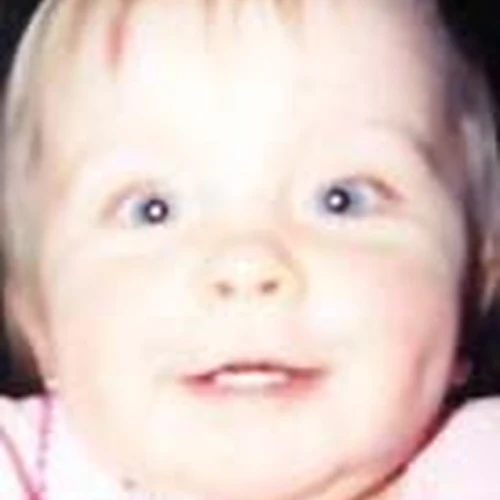
Diapers and Milk Before the River: Acacia Bishop
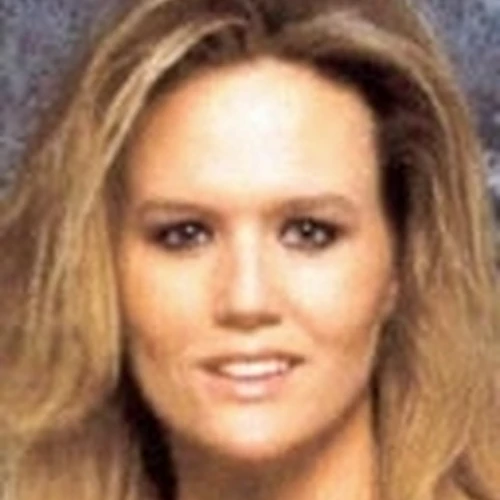
Acacia Patience Bishop was one year old, born October 2001, living with her mother Casey Lodmell in Salt Lake City, Utah. On May 25, 2003, Acacia was at her great-grandparents' home for what was supposed to be a supervised visit with her grandmother, Kelley Jean Lodmell, then 38 years old. At around six o'clock that evening, the great-grandmother supervising the visit stepped out of the room for just a moment. In that brief window, Kelley took Acacia and left. She has never been seen again.
A Grandmother Already Considered Dangerous
Kelley Lodmell was not an unknown quantity to the family or to authorities by the time of the 2003 abduction. She suffered from paranoid schizophrenia, a diagnosis that had already produced documented crises in the years before Acacia disappeared, including a 1999 arrest for the aggravated assault of a police officer. An assistant United States attorney who later dealt with her case described Kelley in blunt terms, calling her a very disturbed individual and a highly dangerous one. More specifically relevant to what would happen in May 2003, Kelley had already abducted Acacia once before, in 2002, hiding the child in a basement for over an hour without permission from anyone in the family. That earlier incident should have made clear exactly what Kelley was capable of when left unsupervised with her granddaughter, and yet the family visit structure in place by 2003 still allowed her a moment alone with the child, a moment that proved to be all she needed.
A Two Hundred Mile Drive
After leaving her great-grandparents' home with Acacia, Kelley drove roughly two hundred miles north to Idaho Falls, Idaho, where she checked into a hotel near the Snake River. The following day, May 26, she reportedly jumped into the river with Acacia in what she later described as an attempted murder-suicide. Kelley herself survived. She turned up afterward at a nearby hydroelectric power plant, soaking wet, telling workers there that she had lost the baby somewhere near the river. Investigators recovered a pair of baby shoes and a doll from the riverbank near the location Kelley described, physical evidence consistent with her account, though notably not conclusive proof that a drowning had actually occurred there.
Twelve separate dive teams searched the Snake River in the aftermath, working the area Kelley had identified as thoroughly as investigators knew how. Acacia's body was never found.
A Detail Her Parents Cannot Get Past
Acacia's parents have never accepted the drowning account at face value, and their skepticism centers on one specific, practical detail that sits uneasily alongside a story of spontaneous murder-suicide. Shortly before the alleged drowning, Kelley had stopped somewhere along her drive and purchased diapers and milk for Acacia. To her parents, that purchase reads less like the behavior of someone in the grip of an acute psychotic break intent on killing a child and herself together, and more like the behavior of someone planning to keep that child alive and cared for, at least for a while longer, somewhere else entirely. Their working theory holds that Kelley may have handed Acacia off to friends or acquaintances rather than actually harming her, staging the river incident afterward as a way to end the search for a child she had, in this version of events, already placed somewhere safe from her family's reach.
Adding a further loose thread to that theory, Acacia's parents have provided investigators with a composite sketch of an unidentified man reportedly seen with Kelley at a hotel around the time of the abduction, a detail they believe may connect to wherever Acacia actually ended up. Detectives who have reviewed that lead have reportedly questioned how relevant the man in the sketch actually is to the case, and his identity, along with any concrete connection to Acacia's disappearance, has never been established.
Why the Visit Was Supervised at All
The fact that Acacia's family had already arranged for Kelley's contact with her granddaughter to be supervised says a great deal about how seriously they had come to take her mental illness by 2003. Following the 2002 incident in which Kelley hid Acacia in a basement for over an hour, the family evidently understood that leaving Kelley alone with the child carried real risk, and they built a supervision structure specifically meant to prevent exactly the kind of unsupervised window that ultimately allowed her to disappear with Acacia the following year. That the system still failed, reduced in the end to a single unwatched moment while an elderly great-grandmother briefly left the room, has remained one of the case's most painful details for the family to sit with, a reminder that even a household actively trying to manage a known danger could not close every gap in time.
Kelley's paranoid schizophrenia had, by all accounts, shaped years of her adult life well before Acacia was ever born, producing episodes serious enough to draw police involvement independent of anything connected to her granddaughter. Her 1999 arrest for assaulting a police officer reflected a pattern of crisis that predated the custody arrangements surrounding Acacia entirely, suggesting a woman whose illness had already repeatedly outpaced whatever informal or formal interventions had been tried with her over the years.
A Search That Covered Ground but Found Little
The search effort mounted along the Snake River in the days following Kelley's account of the drowning was substantial by any measure, twelve separate dive teams working a stretch of cold, fast moving water in an attempt to locate Acacia's remains. Investigators worked from the specific location Kelley identified near the Broadway overpass, an area she had pointed to directly in her own statements about what happened. The recovery of a pair of baby shoes and a doll from the riverbank offered searchers something tangible connected to the scene, physical objects that at least confirmed a child's belongings had genuinely been present at the location Kelley described, even as the river itself refused to yield anything more conclusive. Rivers with strong current, particularly ones fed by dam releases and seasonal snowmelt the way the Snake River often is in late May, can carry small remains considerable distances downstream or bury them in shifting sediment, a reality that has complicated recovery efforts in comparable drowning cases well beyond this one.
Found Not Guilty by Reason of Insanity
Kelley Lodmell was formally charged in connection with Acacia's disappearance, but the case never proceeded to a standard conviction. In January 2005, nearly two years after Acacia vanished, a court found Kelley not guilty of kidnapping by reason of insanity, accepting that she had been delusional at the time she took her granddaughter from her great-grandparents' home. Rather than prison, Kelley was committed indefinitely to a mental health facility, eventually placed at a Texas institution. Reports on her prognosis in the years following her commitment described it as poor, largely because she reportedly refused ongoing treatment for her underlying condition, leaving her long term mental state, and any hope of a clearer account of what actually happened to Acacia ever emerging from her directly, essentially unresolved.
Still an Open Case, Decades Later
Acacia Bishop's case remains formally classified by Utah authorities as a homicide with suspected foul play, even as her body has never been recovered and her parents continue to hold onto the alternative possibility that she is alive somewhere, raised under circumstances neither they nor investigators have ever been able to trace. More than two decades after a great-grandmother stepped out of a room for a single moment in Salt Lake City, the Snake River has given up a doll and a pair of small shoes, but nothing else, leaving Acacia's actual fate suspended between a confession her own family does not believe and a river that has never confirmed it either way.
Sources
- The Charley Project: Acacia Patience Bishop
- Wikipedia: Disappearance of Acacia Bishop
- Utah Bureau of Criminal Identification: Acacia Patience Bishop