The Murder of Evon Young
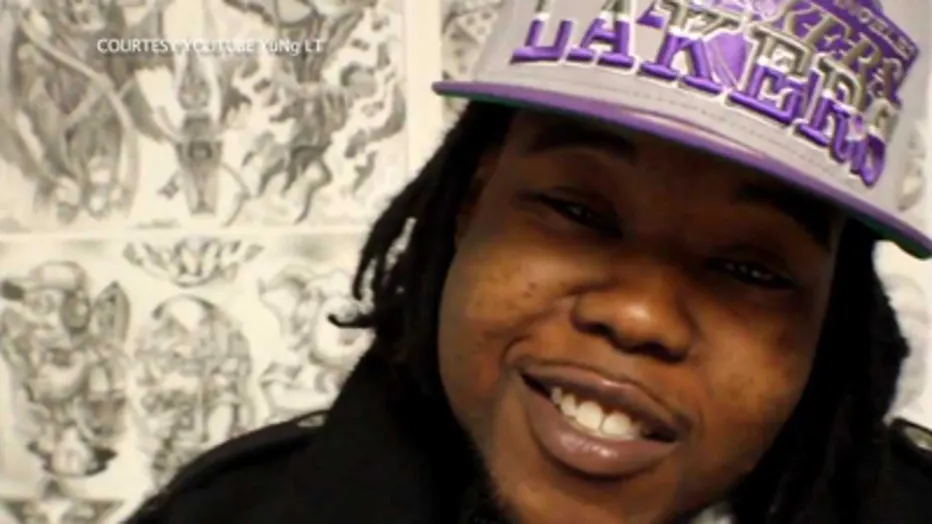
Evon Young was twenty-two years old and building something. Known in Milwaukee's rap scene by his stage name Yung LT, he was a young Black transgender man with ambition, a growing following, and plans for an upcoming album. He worked at Perkins, kept his schedule, and had a meeting with his mother arranged for January 2, 2013. He had tattoos of the phrase "Lord's Advocate" on both arms. On New Year's Day, he was killed in the basement of the home he shared with his roommate, and his body was disposed of in a way that made it nearly impossible to recover. Five men were eventually charged. All five were convicted or pleaded guilty. Evon Young's remains have never been found.
A New Year's Day That Wasn't
Evon lived in a house near North 52nd Street and West Custer Avenue in Milwaukee. His roommate was a 26-year-old man named Billy Griffin. On the morning of January 1, 2013, Griffin told police that a Chevrolet Impala had pulled up outside the house at around 10:45 in the morning, and that Evon had climbed in and been driven away. Griffin said he had no idea where Evon had gone. That was the story he offered when Evon was reported missing the next day, after he failed to show up for work and failed to keep his scheduled meeting with his mother, Annette Cross-Perry.
Cross-Perry told Fox6 News that she could not bring herself to look at the faces of the men who had done this to her son. "It's not fair. It's just not fair. There was no reason behind this. There's nothing you can tell me to make this right," she said. She had been the one to report him missing, and she was also the one who, in the days that followed, found a cell phone near the house that would begin to unravel everything.
The Lie at the Center of It
The cell phone Cross-Perry found near Evon's home turned out to belong to, or at least be traceable to, Ashanti McAlister and Victor Stewart, two of the men who would later be charged in the case. Investigators also turned their attention to the car Griffin had described. Stewart came under suspicion partly because his wife initially told police he had stolen her Chevrolet Impala on January 1 and not returned until around 6 in the morning on January 2. She later admitted that she had lied, that she had reported the car stolen out of anger because his absence had caused her to miss work. When Stewart brought the car back, it smelled powerfully of bleach. A bottle of bleach was inside the vehicle. Police would later find Stewart's fingerprint on the bleach bottle and on a piece of duct tape recovered from the basement of the house where Evon had been killed.
Griffin's story about Evon leaving in a car was also a lie, one he eventually admitted to. What had actually happened was considerably more brutal, and Griffin had been present for most of it.
What Happened in the Basement
According to the criminal complaint and testimony that emerged throughout the legal proceedings, Stewart, McAlister, Ron Joseph Allen, and Devin Lattrez Seaberry came to the house where Evon lived with Griffin. All four were connected to the Black P. Stones, a Chicago-based street gang with a Milwaukee presence. The pretext they brought with them was an accusation: that Evon had helped facilitate a burglary of Griffin's home the previous year, that he could not be trusted. Whether this accusation was true, fabricated, or exaggerated to justify what followed was never definitively resolved in court.
Stewart told Griffin that he could be reinstated into the Black P. Stones if he killed Evon. Griffin agreed or at minimum went along with it. The four men took Evon to the basement of his own home. There, they taped a plastic bag over his head, choked him with a thick chain until he lost consciousness, and beat him with tools. Griffin later said he had gone upstairs because he could not watch. While upstairs, he heard three gunshots from the basement. Ashanti McAlister, then just eighteen years old, fired those shots from a .22 caliber semiautomatic silver handgun that had been provided by a man named Bruce Christopher, an acquaintance of Stewart's who said he had no knowledge of what the weapon would be used for. Christopher was not charged in connection with Evon's death but did face charges for illegal possession of a firearm.
After Evon was dead, the group cleaned the basement. They wrapped his body in a bed sheet, loaded it into Stewart's car, and drove it to the 8100 block of North 84th Street, where they placed it in a trash dumpster behind an apartment complex and set it on fire. When law enforcement later investigated that location, they found a chain, burned clothing, and evidence consistent with a fire having been set in the garbage container.
A Landfill and a Search That Failed
By the time detectives learned where the body had been disposed of, the dumpster had already been emptied. It had been picked up and taken to a transfer station around January 8, then moved to a massive landfill in Menomonee Falls, Wisconsin. On January 28, 2013, Milwaukee police launched a large-scale search of that landfill. Workers and investigators sifted through the debris for nearly three weeks, until mid-February. They found nothing. The search was formally called off, and Evon Young's remains have not been located since.
It is worth pausing on this detail, because it is one that the coverage of this case sometimes glosses over. Evon's body was not simply undiscovered. It was deliberately destroyed and discarded by people who knew him, by a roommate he had trusted enough to live with, in a trash bin that was then processed through a waste system that made recovery all but impossible. The fire, the landfill, the bleach in the car: these were not accidents. They were choices.
The Question of Identity and Motive
Evon was a transgender man. He was biologically female and lived fully as male. His name at birth was Ebony, but he used Evon, and the people in his life, his friends, his family, the other men in this case, knew him as a man. One of the defendants, in giving a statement to investigators, confirmed he had believed Evon to be male. Investigators looked closely at whether his transgender identity played any role in his killing and concluded that it did not. None of the accused were apparently aware that Evon was transgender, and the stated motive, to the extent there was one, was the theft accusation and the gang's internal logic of loyalty and punishment.
That determination matters, and it also sits uncomfortably alongside the reality that Evon was a young Black transgender man whose murder received relatively limited mainstream coverage at the time. Much of the initial reporting misgendered him, referring to him by his birth name and with female pronouns despite his identity being clearly documented and known to those who loved him. His mother, his friends, and the formal record all confirmed who he was. The true crime community and mainstream outlets were slower to follow.
Five Men, Five Outcomes
The legal cases against the five men moved through the Milwaukee County court system over the course of about a year and a half. Stewart and Seaberry both pleaded guilty to second-degree reckless homicide, reduced from the original first-degree intentional homicide charge, and agreed to serve as the prosecution's key witnesses in the trials of Griffin and McAlister.
McAlister, who had fired the three shots that ended Evon's life, went to trial in June 2013. He was convicted of first-degree intentional homicide and sentenced to life in prison. He will not be eligible for parole until 2066, when he would be in his early seventies. Ron Joseph Allen also went to trial and was found guilty of murder in February 2014, receiving a life sentence at his subsequent sentencing. Seaberry was sentenced to eight years. Stewart's sentencing followed as well, under his plea agreement.
Griffin's case was the most complicated legally. His first trial ended in a hung jury in June 2013. A second trial was scheduled, but on February 17, 2014, the day that trial was set to begin, Griffin pleaded guilty to amended charges: hiding a corpse, harboring or aiding a felony by falsifying information, and solicitation of substantial battery. He was later sentenced to seven and a half years in prison. Whatever role Griffin played in the planning and execution of what happened in that basement, the charge that stuck to him in the end was a fraction of what the others faced.
What Was Left
On the album cover Evon had been working on before he was killed, he had drawn a self-portrait. He gave himself angel wings. His mother said after his death that she intended to honor him by completing and releasing that album. She had already spent the days after his disappearance distributing flyers, going to the media, doing everything a parent does when they do not yet know the worst has already happened.
Evon Young was twenty-two years old. He was not killed because of who he was, at least not in the narrow sense that investigators concluded. But he was killed in his own home, by men who included his roommate, over an accusation about a theft that may or may not have ever happened. He was killed on New Year's Day, in a basement, with a chain and a plastic bag and three bullets, and then he was set on fire and thrown away. The people who did it were caught, charged, and sentenced. The place where what remained of him ended up has never been found.
His mother kept looking for him. She kept working on his music. She kept speaking to the press and speaking his name, making sure that the person the headlines sometimes referred to incorrectly was remembered correctly: as Evon Young, as Yung LT, as her son.
Sources
- The Charley Project — Evon Young
- Wisconsin Missing — Evon Young
- FOX6 Milwaukee — Jury Has Case in Trial of One of Five Accused in Evon Young Murder (June 2013)
- FOX6 Milwaukee — Billy Griffin Pleads Guilty to Amended Charges in Evon Young Murder (February 2014)
- The Advocate — First Gang Member Sentenced to Life in Prison for Murder of Trans Rapper (September 2013)
- TransAdvocate — Evon Young Case Update (May 2013)
- Trans Day of Remembrance — Evon Young (Yung LT)
- Lexie Cannes — Police Abandon Search for Body of Murdered Milwaukee Trans Man After 3 Weeks