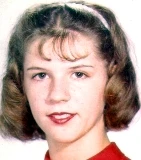
There's Only One Person Who Knows Where She Is: The Kidnapping of Dennise Jeannette Sullivan
Dennise Jeannette Sullivan was fifteen years old in the summer of 1961, living in Rockville, Connecticut with her mother, Jeannette, and her four year old sister. Jeannette Sullivan was divorced and worked as a seamstress to support her two daughters, and that summer an acquaintance of the family, a man named Charles E. Boothroyd, invited Jeannette and Dennise to join him on a vacation out west, all the way to Utah. Jeannette and Dennise agreed, leaving the younger girl behind with her grandparents, and the three of them set out together on what should have been an ordinary summer road trip through some of the most striking scenery in the American Southwest.
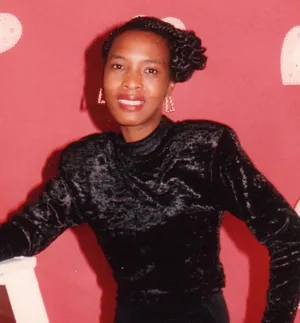
Dennise stood about five feet tall, weighed around ninety pounds, and had brown hair and brown eyes. She had broken a leg at some point before the trip, a detail investigators would later circulate alongside her description in the hope it might help identify her someday. On the Fourth of July, 1961, the trio visited Dead Horse Point, a dramatic overlook roughly seventeen miles outside Moab, Utah, the kind of stop that belonged on any tourist's itinerary through the region. It would turn out to be the last ordinary moment of the trip.
A Man With Car Trouble
As the group made their way back from Dead Horse Point that evening, sometime around nine o'clock, they encountered a man along the road who appeared to be having car trouble. He introduced himself in a friendly, talkative way, sharing bits of local history about Utah's badlands as though he were an informal tour guide, and Boothroyd, seeing what looked like a stranded motorist, stopped to offer help. It was a ruse. The man was Abel Benny Aragon, an unemployed coal miner from Price, Utah, and once he had the group's guard down, he pulled a gun and demanded their money.
Aragon was, by any account before that night, an unlikely candidate for what came next. He had served as a Marine in the Pacific during World War II and had been awarded the Navy Cross, the second highest decoration the Navy Department can bestow, for extraordinary heroism during the fighting on Guam in 1944, where he had reportedly exposed himself repeatedly to enemy fire, despite his own wounds, in order to help save fellow Marines. After the war he settled in Utah, worked in the coal mines, married, and raised five children. But by 1961 the region's coal industry was collapsing, Aragon had been laid off that February, and by late June he had reportedly taken to camping alone in a peach orchard outside Moab, unemployed and by every account increasingly desperate.
When Jeannette Sullivan refused to hand over the bulk of the family's roughly two hundred and fifty dollar vacation fund, Aragon shot her in the back of the head. She died at the scene. Boothroyd tried to intervene and was shot twice in the face at close range, left for dead but, remarkably, he survived. Dennise, who had watched her mother killed in front of her, ran for the family's Volkswagen and attempted to drive it away, even though she had never driven a car before in her life and had reportedly only just begun learning on that same trip. Aragon gave chase in his own vehicle, rammed her car off the road, and forced her into his, driving off with her into the darkness of the Utah desert.
Five Days, Then a Gunshot
A passing motorist named Leonard Brown came upon the scene shortly afterward and found Boothroyd and Jeannette Sullivan's body, later saying he could hardly believe that Dennise had been in the car he had passed on the road only minutes earlier, apparently unaware anything was wrong until he came upon the aftermath. Grand County Sheriff John Stocks organized an immediate response, setting up roadblocks throughout the region, and over the following days more than a hundred volunteers and law enforcement officers joined an intensive search across the rugged canyon country surrounding Moab. The FBI was brought into the case within three days.
For five days, Aragon evaded the massive manhunt that had formed around him. Then, on Friday night, July 7, 1961, FBI agents located and stopped him at a roadblock near Crescent Junction, roughly forty miles north of Moab. Confronted by agents, Aragon shot himself in the head with a .22 caliber pistol. He was rushed to a hospital but died there two hours later, on what would have been his thirty fifth birthday, without ever regaining consciousness and without ever telling anyone what he had done with Dennise.
Investigators recovered physical evidence in the days that followed near the Polar Mesa mining camp, including the rifle used in the shooting, hidden beneath a juniper tree, along with a set of work clothes Aragon had stashed between rocks. Searchers also found footprints in the area that appeared to show Dennise had been kept close to Aragon at some point, along with signs suggesting a struggle had taken place. Beyond that, nothing. No further trace of Dennise Sullivan was ever located, despite extensive searches of Polar Mesa, nearby abandoned mine shafts, and the Colorado River itself, all of which investigators combed through in the following months without success.
What Was Left Behind
Sheriff Stocks, reflecting on the case not long afterward, offered a line that has followed the story ever since: there was only one person in the world who knew where Dennise was, and he was dead. Theories about what became of her have circulated for more than sixty years since, most centering on the idea that Aragon disposed of her body somewhere in the Colorado River or down one of the region's many abandoned mine shafts, though none of those theories has ever been confirmed by any physical evidence.
Charles Boothroyd survived his wounds and eventually returned home to Connecticut, carrying both the physical scars of being shot twice in the face and the psychological weight of having watched Jeannette Sullivan killed beside him. He spoke about the case again years later, saying that he still thought about it sometimes and felt a pull to go back out to Utah and look for Dennise himself, or at least to try to find where she might have ended up. Jeannette Sullivan was buried back in Massachusetts. In Price, Utah, where Aragon had lived with his wife and five children, the community held a requiem mass for him, a town left to reckon with how a decorated war hero, a man once celebrated for risking his own life to save others under fire on Guam, had become the man responsible for a woman's murder and a teenage girl's disappearance.
The case remains classified as an unsolved non-family abduction, still carried by the Grand County Sheriff's Office more than sixty years later, making it among the oldest active missing persons cases in Utah's history. A local historian named Steve Lacy has spent decades of his own life researching the case, piecing together what details he can about that night, including the fact that Dennise had reportedly only just begun learning to drive before she was forced to attempt an escape in a car she barely knew how to operate. If Dennise Sullivan is alive today, she would be in her late seventies. She was last seen wearing a blouse, homemade purple plaid pants, and red sneakers, details that have remained part of her case file for more than six decades in the hope that, somewhere in the canyon country around Moab, some trace of her might still be found.
Anyone with information about Dennise Jeannette Sullivan's case is asked to contact the Grand County Sheriff's Office at 435-259-1346.
Sources
- The Charley Project: Dennise Jeannette Sullivan
- Canyon Country Zephyr: July 4, 1961: Murder & the Enduring Mystery at Dead Horse Point, by Jim Stiles
- KUTV: Man spends 64 years looking for woman in Utah's oldest missing persons case
- ABC4 Utah: Missing in Utah: The disappearance of Denise Sullivan
- Martin Missive: Remembering the Account of a Murder/Kidnapping Near Moab, Utah in 1961
- Defrosting Cold Cases: Dennise Jeannette Sullivan