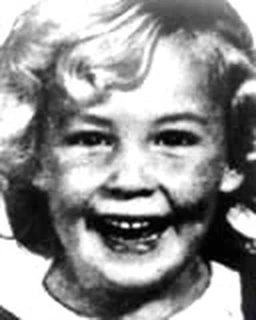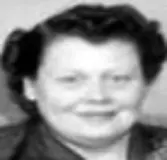
A Garage Sale of a Missing Girl's Toys: The Murder of Elisabeth Huster
Elisabeth Ann Huster was born September 26, 1986, and by the summer of 1996 she was nine years old, living in the Portland, Oregon area while her parents, Michael and Karen Huster, went through the final, bitter stretch of a nineteen year marriage that was ending in divorce. She stood four and a half feet tall, had light brown hair and blue eyes, and a set of noticeably crooked upper front teeth, the kind of ordinary physical detail that later became part of the description investigators circulated once it became clear something was seriously wrong. On August 31, 1996, Elisabeth was seen at a wedding in the Cedar Mill area outside Portland. It was the last confirmed sighting anyone would ever have of her.
Months of Silence Before Anyone Called Police
What makes Elisabeth's case so unsettling isn't simply that she disappeared, but how long it took for anyone outside her immediate family to realize that anything had actually happened. Her father, Michael, found himself unable to reach her in the weeks and then months that followed the wedding, and it was only as that silence stretched on that he began digging deeper into where his daughter actually was. What he eventually discovered was that Elisabeth had never been enrolled in school for the new academic year at all, a detail that, for a nine year old girl in the fall of 1996, should have been an immediate red flag to anyone paying attention. Michael reported Elisabeth missing in December 1996, roughly three and a half months after that wedding, an enormous gap during which her mother Karen had told relatives and neighbors a story meant to explain the girl's absence: that Elisabeth was simply staying with family in California.
Neighbors later told investigators something that made that explanation considerably harder to believe. Around the same period, they had watched Karen hold a garage sale at which she sold off Elisabeth's own toys and clothing, the kind of act that reads, in hindsight, like someone clearing out the physical evidence of a child who was never actually coming back, rather than a mother simply tidying up while her daughter visited relatives for an extended stay. When investigators pressed Karen directly about where Elisabeth actually was, she refused to provide any real, verifiable answer.
A Conviction for Something Smaller
Without a body, a confession, or any way to independently confirm Elisabeth's whereabouts, prosecutors in 1997 could only bring Karen up on a charge connected to the custody dispute itself rather than anything more serious. In May 1997, Karen Huster was convicted of custodial interference and sentenced to two years in prison, a conviction that treated her daughter's disappearance, at least in the eyes of the legal system at that specific moment, as a parent unlawfully keeping a child from the other parent rather than anything worse. It would be years before the full truth of what that custodial interference charge had actually been covering came to light.
What She Told Her Cellmates
While serving that sentence, Karen allegedly told several fellow inmates something considerably darker than a custody dispute gone wrong. According to those cellmates, Karen said outright that she had killed Elisabeth, and that no one would ever find the body. Whatever combination of those statements and any independent investigative work followed, an Oregon grand jury formally indicted Karen Huster for murder in April 2000, nearly four years after Elisabeth was last seen at that wedding in Cedar Mill.
By that point, Karen was no longer in Oregon at all. She had relocated to California and was living under circumstances that would soon expose something even more disturbing than her own daughter's murder.
A Second Body in a Freezer
In November 2000, authorities in Canoga Park, California, acting on a tip that a murder had occurred inside a specific apartment complex, went to the Parc Place Club Apartments and found Karen Huster living there, seemingly having taken over the residence of a man named James Cameron, a seventy three year old tenant. Investigators searching the apartment discovered human remains inside two separate freezers within the unit, remains that were identified as belonging to Cameron himself. Karen had apparently been posing as Cameron's wife in the time since his death, telling anyone who asked that he had died of a heart attack. She would later admit that she had personally dismembered his body, explaining that she had done so specifically to avoid drawing attention to herself and, in turn, to the fact that she was already wanted in connection with her own daughter's disappearance back in Oregon.
A Confession Involving Angels
Karen Huster was extradited back to Oregon to face the murder charge connected to Elisabeth, and her trial began in February 2002, more than five years after her daughter vanished. At trial, Karen offered an account of what had actually happened that went well beyond the vague explanations she had given neighbors and investigators in the years prior. She told the court she had shot Elisabeth in the head on September 1, 1996, just one day after the wedding where she had last been seen publicly, and that she had done so after concluding, in her own words, that angels had told her to entrust the child to their care. She went on to describe dismembering Elisabeth's body afterward and disposing of the remains by throwing them from a boat into the Pacific Ocean, an account that, if true, meant Elisabeth's remains had likely been unrecoverable from almost the very first days of an investigation that wouldn't even formally begin for months.
Karen's defense attorney argued at trial that she had been suffering from a brief psychotic disorder at the time of the killing, brought on by the combined stress of her collapsing marriage and worsening financial situation, and that she had killed her own daughter specifically because she feared Elisabeth had inherited the same mental illness that was, by her own account, driving her toward violence. The presiding judge ultimately rejected that defense, finding Karen legally sane both at the time of Elisabeth's murder and at the time of the trial itself. She was sentenced to twenty five years to life in prison for her daughter's death.
Two Victims, One Ocean With No Answers
Elisabeth Huster's remains have never been recovered, a direct consequence, if Karen's own account is accurate, of a decision to scatter them at sea rather than bury them anywhere searchers might eventually locate. James Cameron's death, meanwhile, exists almost entirely in the shadow of Elisabeth's case, a second victim whose actual cause of death remains murkier than Elisabeth's, since Karen's own admission focused on the dismemberment and concealment of his body rather than a clear account of how he actually died in the first place. What is clear is that a nine year old girl vanished from a wedding in Cedar Mill, Oregon, in the final days of August 1996, that her own mother spent months explaining away her absence with a story about relatives in California, and that the truth, once it finally surfaced years later in a California apartment building, turned out to be almost impossibly worse than anyone searching for Elisabeth in those first quiet months could have imagined.
Sources
- The Charley Project: Elisabeth Ann Huster
- San Mateo Daily Journal: Murder suspect to go to Oregon to face charges
- Murder in the Rain podcast