I'm Going to Bury Him: The School Bus Rivalry That Killed Frank Lee Black Jr.
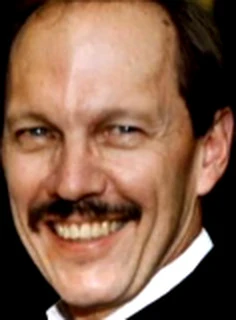
Frank Lee Black Jr. was fifty eight years old in February 1996, a white man with brown hair who had spent most of his adult life building a school bus contracting business in Sussex County, New Jersey. He ran the Frank L. Black Bus Service, ferrying children to and from school districts across the northwestern corner of the state, work that had made him a familiar and, in some circles, a controversial figure in New Jersey's small and fiercely competitive world of student transportation contractors. On February 24, 1996, Black boarded a Kiwi Airlines flight out of Newark bound for West Palm Beach, Florida, telling his daughters he expected to be home by Sunday or Monday. He had a business meeting scheduled back in New Jersey for that following Tuesday and had packed light, planning on nothing more than a short trip. He never returned. Frank Lee Black Jr. has never been seen again, and despite a murder conviction that eventually followed, his body has never been recovered.
A Friendship Built on Buses
To understand what happened to Frank Black, it helps to understand who Alan Mackerley was to him. The two men had known each other since Black was a teenager driving a school bus, eager to learn a trade that Mackerley, already established in the business, was willing to teach him. Their relationship went beyond simple mentorship. Mackerley had introduced Black to the woman who would become his wife, and over the following decades the two builders of competing bus companies remained close, their friendship surviving even as they both grew their businesses in the same small geographic market. Mackerley eventually founded his own company, Byram Bus Line, based in Hopatcong, New Jersey, and for years the two men coexisted as rivals who had once been, and in some sense still considered themselves to be, friends.
That balance collapsed in 1995. Black's company won a lucrative contract to transport roughly a hundred and fifty students for the Mine Hill school district in Morris County, a contract that Mackerley's Byram Bus Line had previously held. Losing that business to a former protégé, in a market as small and interconnected as northwestern New Jersey's school transportation industry, was more than Mackerley could apparently absorb quietly. According to later testimony, Mackerley told people that he was going to "bury" Black over the loss. Within a matter of months, that was no longer just a figure of speech.
The Van Deal That Wasn't
In early 1996, Black's office received a call from a woman identifying herself as Mia Giordano, who claimed to represent an export business interested in purchasing sixty conversion vans, potentially for shipment to buyers in South America. Giordano described herself to Black in flattering, suggestive terms during their phone conversations, and arranged for him to travel to West Palm Beach, Florida, to finalize the details of what appeared to be a genuinely lucrative deal, the kind of opportunity that made the trip worth Black's time despite the distance. There was no export company. Mia Giordano did not exist. The woman on the phone was Lisa Costello, Alan Mackerley's girlfriend, and the entire transaction had been invented to get Frank Black on a plane to Florida.
Black landed in West Palm Beach on February 24, 1996, and was picked up by the woman posing as Giordano. Costello had rented a car that same day using cash, and would not return it until February 26, after putting more than four hundred miles on it. In the early hours of February 25, between about 1:30 and 2:30 in the morning, Black's debit card was used at an Embassy Suites hotel. Around 4:00 that same morning, it was used again at a gas station in North Miami. Prosecutors later theorized that Costello had drugged Black, using the sedative Rohypnol, and that Mackerley shot him in the head in the entryway of his own home in Stuart, Florida, once Black had been brought there. According to the theory presented at trial, Black's body was wrapped and taken roughly sixteen miles offshore aboard a speedboat, then dumped into the Atlantic Ocean along with the gun used to kill him. On February 26, the day after the killing was believed to have occurred, Mackerley began renovating his own home, work that eventually included replacing all of the carpeting.
A Family Starts Looking
Black's daughters reported him missing on February 26, 1996, when he failed to return home as expected. One of his daughters was married to a New Jersey police officer, and that family connection helped push the investigation forward quickly. By March 1, a New Jersey detective had traveled to Florida to assist in a search that, from very early on, focused heavily on the mysterious Mia Giordano and the business deal that had lured Black south in the first place. Investigators eventually traced the calls attributed to Giordano back to phone records connecting Mackerley's and Costello's homes to Black's residence in New Jersey, undercutting the story of an unrelated export business almost entirely.
On June 13, 1996, Lisa Costello was called before a grand jury investigating Black's disappearance. She refused to answer questions and was jailed for contempt. Even after prosecutors later offered her immunity in exchange for her cooperation, she initially declined to talk, a silence that held for weeks while investigators continued building their case using phone records, financial transactions, and the physical evidence they had already gathered from the rental car and the hotel and gas station charges on Black's debit card.
The Confession That Broke the Case
The investigation's turning point came in August 1996, when a man named Bill Anderson came forward with information that changed the direction of the case entirely. Anderson, who had been close to Mackerley, told investigators that Mackerley had confessed to him directly, describing how he shot Black in the head, wrapped his body in a tarp, and disposed of it in the ocean along with the murder weapon. The FBI began covert surveillance of Mackerley following Anderson's disclosure, though Mackerley reportedly remained cautious in his communications and the surveillance did not produce a similarly direct confession on tape. Still, Anderson's account, paired with the physical and financial evidence already assembled, was enough. On August 29, 1996, roughly six months after Black vanished, Alan Mackerley was arrested and charged with kidnapping and first degree murder.
Anderson's decision to cooperate came at a lasting personal cost. Years later, after Mackerley was in prison, investigators say he attempted to arrange to have Anderson killed, prompting authorities to place Anderson into the witness protection program. Lisa Costello, for her part, was reportedly attacked while incarcerated during the years the case wound its way through Florida's courts.
Three Trials Over Seven Years
Mackerley's first trial began on January 20, 1998, in Martin County, Florida. On February 4, 1998, a jury found him guilty of both kidnapping and first degree murder. That conviction did not stand. On appeal, both a Florida district court and ultimately the Florida Supreme Court found that the kidnapping charge could not legally be sustained, since Black had traveled to Florida voluntarily, believing he was pursuing a legitimate business opportunity rather than being physically coerced or confined against his will at the outset. Because the kidnapping and murder charges were legally intertwined in the case as originally tried, the reversal unraveled the entire 1998 verdict and sent the case back for a new trial.
That second trial took place in Indian River County, home to Vero Beach, and ended without a resolution when the jury failed to reach a unanimous verdict, reportedly with at least one juror inclined to acquit. Rather than try the case a third time in the same community, prosecutors moved the venue to Pinellas County, where jury selection began in early 2003. On March 15, 2003, after roughly two days of deliberation, a jury found Alan Mackerley guilty of first degree murder in the killing of Frank Black, nearly seven years after Black had boarded that flight to West Palm Beach. He was sentenced to life in prison without the possibility of parole and has been held at the Union Correctional Institution in Raiford, Florida, in the years since.
Lisa Costello's role in the case was resolved separately from Mackerley's. She ultimately entered a plea agreement, accepting responsibility for false imprisonment and manslaughter rather than facing trial on the original kidnapping and murder charges she had been implicated in. She was credited with time already served during the years the case dragged on and was released from custody in 2004.
No Body, No Closure
More than two decades after Frank Black boarded a plane expecting to close a deal on sixty vans, his body has still never been found, and neither has the gun that prosecutors say ended his life. The Atlantic Ocean, sixteen miles off the Florida coast, does not give up what is dumped into it easily, and the passage of time has made the odds of any future recovery smaller with each passing year. For Black's family, that absence means there was no funeral built around his remains, no grave to visit, only a courtroom verdict that, however hard fought and however long delayed, could not do what a family most wants after a loss like this.
What makes the case particularly unsettling is how ordinary its opening chapter looked from the outside. A businessman took a short trip to discuss a deal that seemed, at least on paper, like a reasonable use of a few days. Nothing about a call from an export company interested in used vans would have struck anyone as an unusual risk in February 1996. It was only the underlying relationship, a friendship curdled by a lost contract and a rival's resentment, that turned a routine business trip into a case that would occupy Florida's courts for the better part of a decade. Frank Black spent much of his career building relationships in a competitive industry, and it was ultimately one of the oldest of those relationships that cost him his life.
Sources
- The Charley Project: Frank Lee Black Jr.
- FindLaw: Mackerley v. State (Fla. Dist. Ct. App. 2000)
- Bonnie's Blog of Crime: Deadly Duo, Alan Mackerley and Lisa Costello killed Frank Lee Black
- WolfieWiseGuy: The Murder of Frank Black
- The Cinemaholic: Frank Black Jr. Murder, Who Killed Him? Where is Alan Mackerley Now?
- Criminal Discourse Podcast: Alan Mackerley, Millionaire Murderer
- Monsters and Critics: Murder of Frank Black Jr. by Alan Mackerley