White Out and Shoe Polish: The Murder of Jessica Jo O'Grady
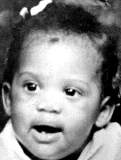
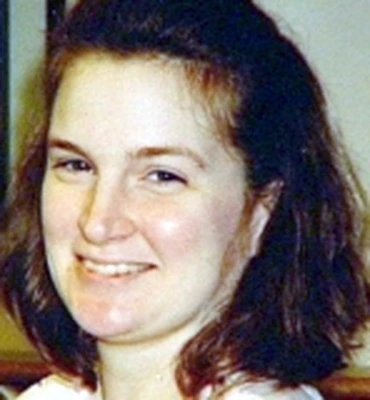
Jessica Jo O'Grady was nineteen years old in May 2006, a student at the University of Nebraska at Omaha with ambitions of becoming a teacher. She stood between five foot eight and five foot nine, weighed between a hundred thirty five and a hundred fifty pounds, with brown hair, hazel eyes, pierced ears, and a palm tree tattoo on her lower back. On the night of May 10, 2006, Jessica left her apartment in the 5800 block of south 156th Court sometime between 10:45 and 11:15, telling her roommates she was heading to her boyfriend's residence. At 11:48 that night, she called her boyfriend, Christopher Edwards, one final time. She was never heard from again.
What Jessica had gone to tell Edwards that night, according to everything investigators later pieced together, was that she was pregnant with his child.
A Car Left Locked, a Cat Left Behind
When Jessica failed to show up for work or contact her family in the days that followed, her disappearance quickly took on an alarming character. Her gray Hyundai Accent, license plate PEI894, was found abandoned near Oak View Mall, locked, with no signs of struggle or forced entry anywhere around it. Inside her apartment, her pet cat remained behind uncared for, along with an uncashed paycheck and untouched funds sitting in her bank account, the kind of total, sudden financial and personal abandonment that read nothing like a young woman who had simply chosen to walk away from her own life.
A Boyfriend Who Never Called Police
Detective Eric Nordby was assigned to the case on May 16, roughly a week after Jessica vanished, and one of the first things that caught his attention was Christopher Edwards's phone activity in the days immediately following her disappearance. Edwards had sent Jessica a text message after May 10, but investigators found no record of any calls placed to Jessica's phone, to her family, or to police from Edwards in the days that followed, despite his own girlfriend having vanished without a trace after supposedly heading to see him. Nordby later described that gap as one of the earliest details that raised real suspicion, the simple, glaring absence of the kind of frantic outreach most people would engage in if someone they loved had genuinely disappeared.
Investigators obtained consent to search Edwards's residence and found blood evidence almost immediately. A follow up search warrant turned up considerably more, with bloodstains discovered on the headboard, mattress, and comforter of Edwards's own bed, as well as on nearby furniture, the walls, the ceiling, and even inside laundry baskets in the room. Investigators also recovered a bloodstained shovel and a Bangkok battle sword from Edwards's closet, along with additional traces of blood found inside the trunk of his car. Adding to the case against him, investigators located a store receipt showing that Edwards had purchased white out correction fluid and white shoe polish in the days following Jessica's disappearance, materials investigators believed he intended to use, or had already used, in an attempt to conceal or cover bloodstains at the scene.
A Second Woman, a Second Pregnancy
As the investigation deepened, another complicating relationship came to light. Edwards had gotten a different woman, Michelle Wilkin, pregnant back in January 2006, several months before Jessica's disappearance. When Wilkin eventually confronted Edwards after learning he was under investigation in connection with Jessica's case, he admitted to her that he had been sleeping with Jessica as well, and testimony later indicated he had known Jessica herself was pregnant with his child at the time she disappeared. That overlapping web of relationships and simultaneous pregnancies gave prosecutors a clear motive to present at trial, a young man facing the prospect of two women, in two separate relationships, both pregnant with children he had fathered within months of each other.
A Conviction Without a Body
Christopher Edwards was charged with second degree murder and use of a deadly weapon to commit a felony. His trial went forward in April 2007, built almost entirely around physical and circumstantial evidence, since Jessica's body had never been located despite extensive searching. The jury convicted him on both counts. He was sentenced to a term reported at various points as either eighty years to life or one hundred years to life, depending on the specific accounting of his combined sentence, and is currently serving that time at the Tecumseh State Correctional Institution in Johnson County, Nebraska, with parole eligibility not arriving until 2056.
The case holds a significant place in Nebraska legal history as the state's first ever murder prosecution to result in a conviction without a recovered body and without any confession from the defendant, a combination that made securing a conviction considerably more difficult than in cases where physical remains or an admission of guilt exist to anchor the prosecution's case. Detective Nordby, reflecting on the investigation years later after a career that continued into military service as a Command Chief Warrant Officer, described the successful prosecution as fundamentally a team effort spanning multiple agencies working together to piece together a case built entirely from blood evidence, phone records, financial records, and a receipt for white out and shoe polish that, on its own, might have meant nothing at all.
Still Searching
More than a decade and a half after Jessica O'Grady disappeared, her body has never been found, and Christopher Edwards has never disclosed where her remains might be located, even after exhausting his appeals and settling into a sentence that will keep him incarcerated for decades to come. His conviction gave Jessica's family a measure of legal resolution that most families of missing persons never receive, a named, convicted killer, serving a life sentence, secured through meticulous circumstantial evidence rather than a body or a confession. What it has never given them is anywhere to actually bring Jessica home to, or a final answer to where those white out and shoe polish purchases were ultimately used.
Edwards has continued fighting his conviction through the appeals process in the years since his 2007 trial, at one point seeking a new trial altogether, an effort the Nebraska courts rejected, leaving his original conviction and sentence fully intact. The Nebraska Supreme Court's own written decision in the case, State v. Edwards, has since become a frequently cited example within legal circles of how a homicide prosecution can be built and sustained entirely on circumstantial evidence, physical traces of blood recovered from a bedroom, a car trunk, and a closet, phone records establishing a suspicious silence at exactly the moment concern would have been expected, and a single retail receipt for cleaning products purchased at precisely the wrong time to look like coincidence.
For Jessica's family, that legal precedent has offered a form of justice most families of the missing never receive, a named killer, tried by a jury of his peers, and sentenced to spend the rest of his working life, and likely the remainder of his natural life, behind bars. It has not offered them their daughter back, and in the years since his conviction, Edwards has given no indication that he ever intends to reveal where he left her. Jessica would be in her late thirties today. Investigators with the Omaha Police Department have said they remain hopeful that new information, or new search technology, might eventually succeed where more than fifteen years of searching already has not.
Anyone with information that could help locate Jessica Jo O'Grady's remains is asked to contact the Omaha Police Department.
Sources
- The Charley Project: Jessica Jo O'Grady
- 3 News Now: A decade later, Jessica O'Grady's body still hasn't been found
- DVIDS: Career 'Citizen Soldier' reflects on conviction in Omaha missing person case, 13 years later
- The Cinemaholic: Jessica O'Grady Murder, Where Is Christopher Edwards Now?
- Omaha World-Herald: Christopher Edwards loses attempt at new trial in 2006 murder of Jessica O'Grady
- FindLaw: State v. Edwards (2009)