The Typed Letters: The Disappearance of Helen Lundgren Dalton
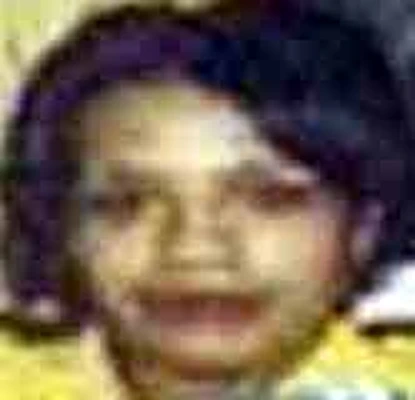
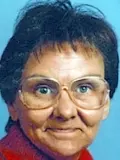
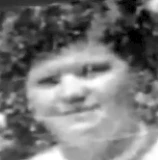
Helen Ester Lundgren was born December 21, 1910, in Chicago, one of eight children raised by Charles and Ester Lundgren. She married Donald Ferdinand Dalton sometime between 1945 and 1946, and the couple settled in Greensboro, North Carolina, where they raised two children who survived to adulthood, a son, Donald Jr., born in December 1946, and a daughter, Bonnie Marie, born in September 1948. A third child, David Robert, was born in January 1952 but died just over a year later, in March 1953. By April 1963, Helen was fifty two years old, five foot seven, weighing around a hundred fifty pounds, and she wore both eyeglasses and dentures, neither of which she had with her on the day she vanished.
On the morning of April 3, 1963, Helen dropped her fourteen year old daughter Bonnie off at Grimsley High School in Greensboro, mentioning as she did that she had a dental appointment later that day. She was supposed to pick Bonnie up again at noon. She never showed up. It was Helen's son who ended up collecting his sister from school that day, and when the two of them asked their father, Donald, where their mother was, he told them she had gone to a Women's Christian Association conference in Winston Salem, North Carolina, an explanation that offered the children a reason to stop worrying, at least for the moment. Neither of them ever saw their mother again.
A Conference That Never Existed
As days passed without word from Helen, investigators began looking into Donald's explanation and found it did not hold up. Police could not locate any record of the Women's Christian Association conference Donald described taking place in Winston Salem around that time. When investigators eventually tracked down a woman named Wanda Flemming, whom Donald had named in connection with the supposed conference, she told police she had never heard of Helen Dalton at all, directly contradicting the story Donald had given his own children about where their mother had gone.
Inside the Dalton home, investigators found nothing consistent with a woman who had planned to travel or start a new life elsewhere. Helen's closet remained full of her clothes. Her luggage sat untouched. Her eyeglasses and dentures, items she depended on daily and would have needed for any extended trip, were both still in the house. Everything about the physical evidence pointed toward a woman who had never intended to leave at all, standing in stark contrast to the story her husband kept offering to explain her absence.
Letters That Didn't Sound Like Her
In the weeks that followed, Helen's sister, Edith Oberg, living in Dearborn, Michigan, began receiving letters that were supposedly from Helen. The first arrived around April, and a second followed in May 1963. Both were typed. Edith found that detail immediately troubling, because Helen always wrote to her by hand, never by typewriter, and the letters themselves contained phrasing that did not sound like the sister Edith had known her whole life. Rather than dismissing her unease, Edith traveled down to Greensboro to ask Donald directly what was going on, and came away without any answers that satisfied her.
When investigators eventually subjected the letters to forensic analysis, they determined that the typewriter used to produce them was located inside the Dalton household itself, meaning whoever wrote those letters claiming to be Helen had done so using a machine sitting inside the very home she had vanished from, rather than from wherever she had supposedly relocated to. Donald refused to take a polygraph examination when investigators asked him to sit for one, a refusal that, combined with everything else investigators had already uncovered, cemented him as the case's central suspect from very early on, a status he has never fully shaken in the more than sixty years since.
A Beauty Shop and a Convenient Story
Donald went on to remarry and divorce twice in the years after Helen disappeared, and at various points over the following decades he offered shifting explanations for what had happened to his first wife. He told people Helen had simply left him in 1963, worn out from raising their children, and in one particularly striking account, he claimed that the beauty shop Helen ran had actually functioned as a drop point for money connected to drug sales and sports betting operations, implying his wife had been entangled in something illicit that might explain a voluntary disappearance. Helen's family rejected that characterization entirely, describing her instead as a devoted mother with no connection whatsoever to the criminal enterprise Donald described, a description that friends and relatives who had actually known Helen consistently supported over the decades that followed.
A Well, Dug Up Thirty Years Later
The case went cold for decades, revived briefly in 1993 when investigators, still working from suspicions that had never fully faded, organized an excavation of an old well located on the Daltons' former property. Georgie Bogdan, an anthropologist from the University of North Carolina at Greensboro, took part in the dig, working alongside investigators in hopes that the well might finally hold the answer to what had happened to Helen thirty years earlier. The excavation had to be called off before crews reached the depth investigators believed would be necessary to reach any remains, and the search ultimately turned up nothing conclusive, leaving the case exactly where it had been for three decades already: unresolved, with a prime suspect who had never been charged and a set of unanswered questions that had simply grown older alongside everyone involved.
The Oldest Case in the State
Helen Lundgren Dalton's disappearance holds the distinction, according to investigators and researchers who have studied North Carolina's cold case history, of being the oldest unsolved missing persons case in the state. More than sixty years after she dropped her daughter off at school and never returned to pick her back up, the case remains open, periodically revisited by local media, most notably in a FOX8 original series titled The Day Helen Disappeared, which examined the case in detail as part of ongoing efforts to keep it in public awareness. Donald Dalton, the one person who most investigators believed held the real answer to what happened, died without ever facing charges connected to his wife's disappearance, taking whatever he actually knew about that April morning with him.
Helen's children grew up and lived out their own lives having spent that entire time without any real explanation for why their mother never came back from what should have been an ordinary dental appointment. What remains of the case today is a home with a full closet, a pair of glasses left behind, and a stack of typed letters written on a typewriter that never left the house, standing in for a woman who, by every piece of evidence gathered in the six decades since, never left it either.
Anyone with information about Helen Lundgren Dalton's disappearance is asked to contact local authorities in Guilford County, North Carolina.
Sources
- The Charley Project: Helen Lundgren Dalton
- Medium: Strange Letters, The Disappearance of Helen Dalton
- FOX8 WGHP: 'The Day Helen Disappeared', FOX8 original series investigates North Carolina's oldest missing person case
- Greensboro News & Record: Unsolved Deaths and Disappearances in Greensboro
- Greensboro News & Record: 30 Years, and No Body: Dig for Woman Called Off