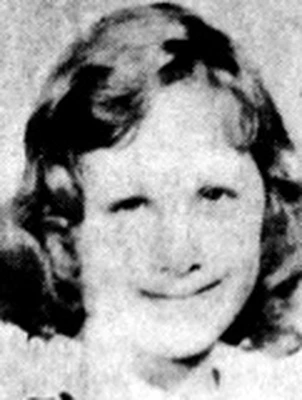
I Will Get the Girls First: The Disappearance of Jeanette Ray
Jeanette Louise Ray was nine years old in October 1965, living in Napa, California, with her parents, Claude and Marlene Ray, her seven year old sister Renay, and a brother old enough to attend junior high school. She stood exactly four feet tall and weighed eighty pounds, with brown hair and blue eyes, and on the morning of October 4, she still had her right jaw bandaged from a recent surgery, a small physical detail that would end up circulated in missing persons descriptions for decades afterward. That morning, according to the account her father, Claude Ray Jr., later gave, he dropped his son off at junior high school and then continued on to drop Jeanette and Renay off at Westwood Elementary School around 8:30. Neither girl ever showed up to class.
A Marriage Already Collapsing
The disappearance did not occur in a vacuum. Claude and Marlene's marriage had been troubled for years by that point, and Claude had a documented pattern of threatening violence against his own family stretching back to at least 1959, threats that escalated sharply after Marlene filed for divorce in January 1965 and the couple separated. He was, by multiple accounts gathered later by investigators and prosecutors, an abusive man who appeared to struggle with serious underlying mental health issues, and he had told people close to the family, in fairly explicit terms, what he was willing to do rather than accept the marriage's end. He said at one point that he would rather see his family dead than see them become beggars or bums. In a conversation with his own mother in law, he was even more direct, telling her plainly that he would get the girls first, and then the boys.
A School That Waited Two Hours to Call
When Jeanette and Renay failed to appear in their classroom that Monday morning, the school did not immediately alert their mother. It wasn't until 10:30, a full two hours after Claude claimed to have dropped them off, that Westwood Elementary contacted Marlene to ask where her daughters were. Police weren't formally notified until around one o'clock that afternoon, leaving several critical hours during which two young girls were already unaccounted for without any organized search underway. Jeanette was last known to be wearing a beige corduroy coat over an orange jumper, with blue or beige knee socks and light colored suede shoes, and she had been carrying a paper sack lunch with her own name written across the side of the bag, the kind of small, achingly ordinary detail that makes a missing child case impossible to read without feeling the weight of it.
A Body at the Bottom of a Ninety Foot Cliff
The investigation moved with grim urgency once it became clear the girls hadn't simply wandered off or been picked up by a relative. On October 11, exactly one week after they vanished, searchers recovered Renay's body at Schooner Gulch, a remote stretch of coastline roughly three and a half miles south of Point Arena on the Mendocino County coast, at the bottom of a ninety foot cliff where the tide washed in and out among the rocks below. An autopsy determined she had died from asphyxiation, most likely from smothering, sometime around the same period she and her sister had disappeared, and her body showed numerous bruises, though notably no broken bones, a detail that stood somewhat at odds with a simple accidental fall from the cliff above. That specific stretch of coastline sat only a short distance from an area where Claude Ray Jr. himself had told investigators he'd been driving that same day, ostensibly out looking for work.
A Recorded Statement That Placed Him at the Scene
Claude was arrested the same day Renay's body was discovered, and the case against him, built almost entirely on circumstantial evidence rather than any single, undeniable piece of physical proof, moved to trial relatively quickly given the era. Claude gave police a taped statement describing his movements that day, and in it he acknowledged having driven right past Schooner Gulch, though he insisted throughout that he had never actually stopped there. Prosecutors also presented statements Claude had made after the girls disappeared that jurors found difficult to reconcile with genuine innocence or concern, including one particularly chilling remark in which he said, I want you to realize when they find them they will be dead, along with an indication that he specifically did not want to be present when that discovery eventually happened. His threats toward the family in the months leading up to the disappearance, the timeline gaps in his own account of that Monday morning, and his own admitted proximity to where Renay's body was ultimately found combined into a case substantial enough for a jury to convict him.
A Defense That Blamed a Mother-in-Law
At trial, Claude maintained complete innocence, insisting he had genuinely dropped both girls off at school exactly as planned and had simply continued on with the coastal drive he described to police. He attempted to reframe his most damning statement, the one about getting the girls first and then the boys, by claiming it had actually been directed at his mother in law rather than at his own children, an explanation the jury evidently did not find persuasive. His defense attorneys also challenged the composition of the jury itself, arguing that excluding jurors who opposed capital punishment produced a panel more inclined toward conviction, an argument the court rejected based on existing legal precedent at the time. Prosecutors introduced autopsy photographs showing the condition of Renay's decomposed body despite defense objections, and the trial judge declined to instruct jurors on the lesser charge of manslaughter, finding no evidence in the record that would support anything less than a deliberate killing.
On January 27, 1966, Claude Ray Jr. was found guilty of first degree murder in Renay's death and sentenced to life in prison. He appealed the conviction, and California's appellate court affirmed it outright, finding no prejudicial error in how the trial had been conducted and specifically citing his prior threats against the family, his position as the last person known to have had the girls in his care, his own admitted proximity to where Renay's body was found, and his unsettling post disappearance statements as evidence collectively sufficient to sustain the jury's verdict.
A Second Daughter Never Found
Jeanette herself was never charged as a separate case in court, largely because her body has never been recovered anywhere, leaving prosecutors without the physical evidence needed to bring a distinct homicide charge in connection with her disappearance specifically. She is widely believed, based on every circumstance surrounding her sister's death, to have met the same fate as Renay that same October morning, quite possibly at the very same remote stretch of coastline where Renay's body eventually washed up among the rocks. No charges were ever filed regarding what happened to her.
Claude Ray Jr. remained in prison in the years that followed, and in 1978, twelve years into his sentence and around the time he might otherwise have become eligible for parole, he received a second life sentence after attacking a prison guard. He died by suicide in Folsom Prison in 1983, at the age of fifty one, taking with him whatever knowledge he alone possessed about where Jeanette's remains might actually be. Investigators separately questioned him at one point in connection with the unrelated 1963 disappearance of a young woman named Doreen Heskett, though he was never charged in that case either.
A Family Photograph With One Sister Missing From It
More than six decades after that October morning in 1965, Jeanette Louise Ray has never been found. Her sister's murder was solved as thoroughly as circumstantial evidence from that era could solve it, resulting in a conviction, a life sentence, and an appellate court's full endorsement of the jury's verdict. Jeanette's own case remains, technically, still open, a nine year old girl with a bandaged jaw and a paper lunch sack bearing her own handwritten name, presumed by every investigator who has ever looked at the case to have died alongside her little sister on a cliffside stretch of the Mendocino coast that her own father had already, by his own words to his mother in law, marked her and Renay for months before either of them ever went missing.
Sources
- The Charley Project: Jeanette Louise Ray
- FindLaw: People v. Ray (1967) California Court of Appeal opinion
- The Doe Network: Jeanette Louise Ray
- Websleuths: Jeanette Louise Ray, 9, Napa, October 4, 1965