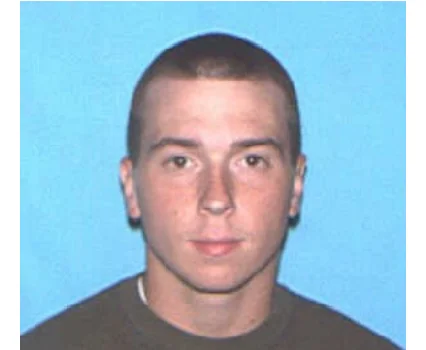
A Family Cabin Trip That Never Happened: The Disappearance of Donna and Thomas Krnak
Donna Kay Krnak was fifty two years old in the summer of 1998, living in rural Helenville, Wisconsin, a small community roughly fifty miles east of Madison, with her husband Allen, fifty five, and their two adult sons, Thomas and Andrew. She stood five foot five, wore eyeglasses, and had a facial scar among her distinguishing features, a family name pronounced CAR-nak that would soon become deeply familiar to investigators across two states. Thomas, the younger of the two sons at twenty one, was a slight young man standing just five foot four, also bespectacled, with a small scar on his right thumb, still living at home with his parents. Andrew, the older brother, had a history that would prove far more consequential than anyone in the family could have anticipated, including prior convictions for theft and breaking and entering, along with tens of thousands of dollars in student loan debt he had defrauded the government to obtain while attending Western Carolina University in the early 1990s.
A Trip to the Cabin That Nobody Confirmed
Sometime over the Fourth of July weekend in 1998, Donna, Allen, and Thomas vanished from their Helenville home, along with the family's cocker spaniel, a dog named Hunter. According to Andrew, who would soon after legally change his name to Derek Anderson, his family had left home headed for their summer cabin in Coloma, Wisconsin, in Waushara County, planning what should have been an entirely ordinary holiday weekend getaway. Andrew was the one who ultimately reported the rest of his family missing, setting an investigation in motion that would stretch on, in various forms, for nearly a decade.
Seven days after anyone had last been in contact with the family, investigators located the Krnaks' black Chevrolet pickup truck abandoned near Reedsburg, in Sauk County, a considerable distance from both Helenville and the cabin in Coloma that the family had supposedly been driving toward. The truck had been wiped completely clean of fingerprints, both inside and out, and contained no luggage whatsoever, despite Andrew's account that his parents and brother had packed for their trip before leaving. The vehicle's odometer reflected 2,618 unaccounted miles, a distance investigators would later note was more than sufficient for a round trip all the way to North Carolina and back.
A Body Found Near a College Campus
The case sat without any confirmed resolution for well over a year, until December 1999, when hunters walking through Roy Taylor Forest in Jackson County, North Carolina, stumbled onto skeletal remains that were eventually identified as Allen Krnak's. The location was notable for reasons that had nothing to do with random chance: the remains were found less than ten miles from Western Carolina University, the same school Andrew Krnak, by then already going by Derek Anderson, had attended in the early 1990s. An autopsy determined Allen had died from severe blunt force trauma to the head and face, trauma serious enough to have fractured his jaw into two separate pieces. Scattered near his remains, investigators also found a woman's shirt, a pair of men's briefs, a wedding ring later identified as belonging to Donna, and the remains of a dog. Of Donna and Thomas themselves, despite an extensive search of the surrounding forest, nothing was ever found.
A Name Changed Within Days
Derek Anderson's decision to legally change his name from Andrew Krnak came remarkably soon after his family disappeared, a detail that, once investigators became aware of it, only deepened their suspicion that he knew considerably more about what had happened to his parents and brother than his initial missing persons report had suggested. He was not arrested immediately. It took until 2001, after Allen's remains had been positively identified, for investigators to formally take him into custody, and the case did not actually go to trial until 2006, eight years after the family vanished over that July 4th weekend.
A Case Built Entirely on Circumstance
Prosecutors argued at trial that Anderson had murdered his entire family specifically to gain access to an estate estimated at somewhere between five hundred fifty thousand and six hundred thousand dollars, a motive built on financial desperation given his existing debts and prior criminal record. The case against him rested entirely on circumstantial evidence, since no witness had seen the killing itself and no direct physical evidence tied him conclusively to his father's death, only the wiped down truck, the abandoned vehicle's unexplained mileage, the proximity of Allen's remains to Anderson's old college, and the sheer speed with which Anderson had changed his identity once his family was gone. His defense argued precisely that absence of direct evidence, insisting that no proof existed that Anderson himself had actually committed the murder.
The jury was not persuaded by that argument. In April 2006, Derek Anderson was convicted of first degree intentional homicide in his father's death and sentenced to life in prison without the possibility of parole. He appealed the conviction, taking his case to Wisconsin's Fourth District Court of Appeals in 2009, only to have that appeal rejected as well, with his attorney at the time indicating an intention to pursue the matter further before the Wisconsin Supreme Court.
Two Members of a Family Never Charged, Never Found
What makes the Krnak case particularly unresolved, even with a murder conviction secured, is that Anderson has only ever been formally charged and convicted in connection with his father's death. Authorities have stated plainly that they believe he killed his mother and brother as well, presumably disposing of their remains somewhere in or around the same North Carolina forest where Allen's body was eventually discovered, but the extensive search of Roy Taylor Forest turned up no trace of either Donna or Thomas, leaving prosecutors without the physical evidence needed to bring charges in either of their deaths specifically. Both Donna Kay Krnak and Thomas John Krnak remain classified as missing persons to this day, their cases technically still open even as the man investigators believe killed them serves a life sentence for the one death prosecutors could actually prove.
A Cocker Spaniel and a Family That Vanished Together
More than a quarter century after that Fourth of July weekend, the Krnak family's disappearance remains a case defined as much by what was never found as by what eventually was. Allen Krnak's remains, recovered from a North Carolina forest near his own son's old college campus, gave investigators enough to secure a conviction and a life sentence, closing at least one chapter of the case with a measure of legal certainty. Donna and Thomas Krnak, along with the family dog that vanished alongside them, have never been located, leaving their fates confirmed only by inference, by a wedding ring found scattered near a shirt and a pair of briefs in the woods, and by a jury's willingness to believe that a son capable of killing his father for an inheritance was capable of doing the same to the rest of his family as well.
Sources
- The Charley Project: Donna Kay Krnak
- The Charley Project: Thomas John Krnak
- Wisconsin State Journal / Cap Times: Appeals court upholds man's conviction in dad's killing
- WFMY News 2: Man Found Guilty In Missing Family Murder Trial
- The Sylva Herald: Wisconsin jury finds former WCU student guilty of murder
- Wisconsin Missing: Donna Kay Krnak & Thomas John Krnak