A Truck Facing the Wrong Direction: The Disappearance of Amanda Gallion
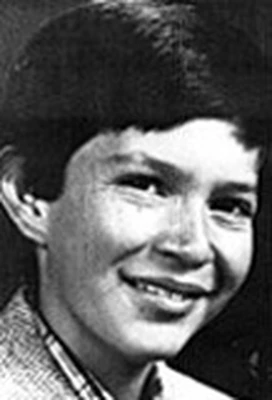
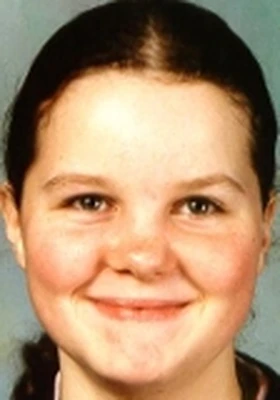
Amanda Dawn Gallion was born September 13, 1983, and by the fall of 1997 she was fourteen years old, a recent arrival in Gillette, Wyoming, having moved to the area with her family only about six weeks before her name would become permanently attached to one of the state's most enduring unsolved mysteries. She was small, standing about five foot two and weighing around a hundred pounds, with naturally blonde hair she had recently dyed black and blue eyes that showed up in the handful of photographs that exist of her from that period of her life. Amanda had recently lost her grandmother, a woman her family called Nanny, and according to her mother Cissy, she had been distraught over that loss in the months leading up to her own disappearance, still processing grief on top of the disorientation of having just moved to an entirely new town right as she was starting to settle into her teenage years.
A Bag Full of Belongings and a Boyfriend Her Parents Didn't Trust
On the morning of October 13, 1997, Amanda left home to walk to school carrying a large black trash bag stuffed with personal belongings, an unusual thing for a fourteen year old to bring along on an ordinary school day, and one that investigators would later point to as a possible sign she had been planning to leave rather than simply vanishing without warning. She never arrived at school that day. Because there was no system in place at the time to immediately flag her absence to her parents, nobody in her family realized anything was wrong until six o'clock that evening, when it became clear the school had never contacted them about her missing an entire day of classes. By then, Amanda had already been gone for close to twelve hours.
At the center of the investigation from almost the very beginning was Patrick Ghering, a twenty year old Amanda had been spending time with despite her parents' clear disapproval of the age gap and the relationship itself. Ghering told investigators he had last seen Amanda at 7:15 that morning, and for a while, police treated the case as a fairly straightforward, if troubling, story of a teenage runaway who had left with an older boyfriend her parents didn't want her seeing. That theory held for six days.
A Truck Facing the Wrong Way
On October 19, six days after Amanda vanished, Patrick Ghering's red pickup truck was discovered abandoned behind a business called Value Villa on Second Street in Gillette, parked facing the wrong direction on the wrong side of the road, the kind of detail that reads as almost theatrically wrong once you know what came after it. Ghering himself was gone. He has never been located, seen, or confirmed alive or dead in the nearly three decades since. Inside the abandoned truck, investigators found two watches and a handwritten letter in what was identified as Amanda's own handwriting. One of those watches had belonged to Amanda's grandmother, the same Nanny she had been grieving, given to her shortly before the older woman's death only months earlier. For her mother Cissy, the presence of that specific watch, left behind in an abandoned truck facing the wrong way down a street behind a business, was almost impossible to reconcile with any version of events where Amanda had simply chosen to run off and start a new life somewhere with her boyfriend. A watch like that, from a grandmother she had just lost and had been so upset about losing, wasn't the kind of object a girl planning her own fresh start would likely leave behind by accident.
Leads That Kept Coming Out to Nothing
The years that followed brought a steady trickle of tips, sightings, and theories, almost none of which held up under any real scrutiny. Investigators fielded reports out of Kansas City describing sightings connected to a blue car bearing Wyoming license plates. Psychics offered their own theories, as they often do in cases that stretch on without resolution. In the early 2000s, human remains discovered in Montana were tested against what investigators had on file for Amanda, and came back unrelated. Officer Brent Wasson, who had taken the original missing persons report back in 1997 and stayed connected to the case for years afterward, would later describe the pattern in blunt terms, saying that everything always came out to be nothing.
That same period brought the case into contact with one of the more disturbing figures in American crime history. Nathaniel Bar-Jonah, born David Paul Brown, was a convicted child predator living in Great Falls, Montana, whose history included a documented childhood attempt at strangling a five year old neighbor after receiving an Ouija board for his seventh birthday, and who, as an adult, had been convicted of kidnapping, sexual assault, and attempted murder involving multiple child victims, ultimately receiving a sentence of one hundred thirty years without the possibility of parole. Friends of Bar-Jonah reported he had served them strange tasting meat at gatherings, feeding long standing suspicion, never conclusively proven, that he may have engaged in cannibalism connected to at least one suspected murder tied to his name. When Montana investigators reached out to Wyoming authorities in 2000 regarding Bar-Jonah, Amanda's case was reopened and bone fragments recovered from his property were tested against her DNA. They didn't match. Bar-Jonah died in prison in 2008, having never been definitively connected to Amanda's disappearance, but having briefly represented one of the darkest possible explanations for what might have happened to her.
A Confession Passed Through a Cellmate
The case took its strangest turn yet in 2007, when a South Dakota inmate named Aloysius Black Crow came forward claiming that a fellow prisoner, James Strahl, had confessed to him that he had picked Amanda up hitchhiking, raped her, killed her, and disposed of her body in Keyhole Reservoir, a large reservoir in northeastern Wyoming. The claim was specific enough, and disturbing enough, that investigators arranged a side-scan sonar search of the reservoir, and the search did turn up something, though not what anyone was hoping for: submerged vehicles and snowmobiles resting on the reservoir floor, but no human remains connected to Amanda. James Strahl maintained his innocence throughout, and the credibility of the entire claim collapsed further when Aloysius Black Crow was later separately charged with perjury in connection with testimony he had given in other unrelated cases, a development Officer Wasson referenced carefully afterward, noting that information had surfaced that challenged the credibility of their witness. What had briefly looked like the case's long awaited breakthrough dissolved, like nearly every other lead before it, into another dead end.
A Family Still Waiting for One Way or the Other
Amanda's parents, Cissy and Don Gallion, have said over the years that they believe Patrick Ghering was involved in whatever happened to their daughter, though they remain genuinely uncertain about what actually occurred after that morning in October 1997, uncertain even about whether Ghering himself was a perpetrator, a victim, or something in between. Neither Amanda's Social Security number nor Ghering's has shown any activity since October 1997, a detail investigators consider significant, since it suggests that neither of them has ever applied for a job, opened a line of credit, or obtained any form of official identification anywhere in the United States in the nearly thirty years since they both vanished within days of each other. That absence of activity is consistent with several very different explanations, that both of them died shortly after October 1997, that one of them killed the other and then died or disappeared by other means, or, less probably given the total silence, that both are alive somewhere and have spent almost three decades successfully avoiding any interaction with systems that would leave a paper trail.
Cissy Gallion has spoken about the toll of not knowing in the plainest possible terms, saying simply that she just wishes they could find out one way or another what happened to her daughter. Officer Wasson, reflecting on a career that included plenty of cases, singled Amanda's out as the one that would stay with him longest, saying he would love to see her parents get answers, acknowledging that this particular case had become, for him personally, the kind of unresolved mystery that follows an investigator well past the years he spent actively working it.
Nearly Three Decades of Nothing
What makes Amanda Gallion's disappearance so difficult to sit with isn't a single missing piece of evidence, it's the sheer number of them, stacked one on top of another across almost thirty years. A truck left facing the wrong direction. A grandmother's watch left behind by a girl who was still grieving her. A convicted child predator's property that yielded bone fragments matching no one connected to the case. A jailhouse confession that fell apart the moment its source was shown to be unreliable. A reservoir searched and found to hold submerged vehicles but no answers. Two Social Security numbers that have sat completely dormant since the same October week in 1997. Somewhere in Wyoming, or wherever the truth of that morning actually leads, the full explanation for what happened to a fourteen year old girl carrying a trash bag full of her belongings to school has never surfaced, and the man who was the last person to admit seeing her alive disappeared right along with the answer.
Sources
- The Charley Project: Amanda Dawn Gallion
- The Charley Project: Patrick Lee Ghering
- Wyoming News / Laramie Boomerang: Into thin air, the twists and turns of a 20-year disappearance
- Wikipedia: Nathaniel Bar-Jonah
- The Doe Network: Patrick Lee Ghering