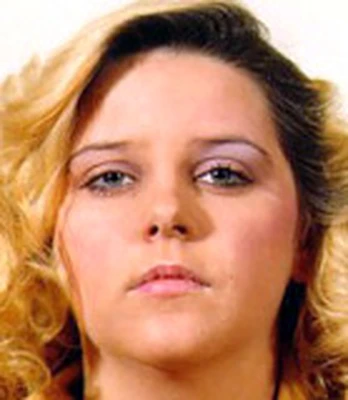
Standing By the Street Outside the Three Bears Motel: The Disappearance of Keli Kay McGinness
Keli Kay McGinness was born April 17, 1965, in Seattle, Washington, to a mother who performed as a singer at venues around the city and a father who worked as a car salesman. Her parents divorced when she was not yet three years old, and her mother later remarried a teacher and eventually went on to own restaurants across Oregon and Washington, building a stable, working life in the years after the marriage ended. None of that stability reached Keli in the way it should have. At thirteen years old, she was gang raped by a group of intoxicated boys, a trauma that, according to those who knew her, changed the entire direction of her life almost immediately. She ran away from home not long afterward, this time for good, and found her way into sex work, eventually becoming involved with a pimp named Raphael Wilson. She had two children with him, a son who was placed for adoption and a daughter, born in early 1983, who was living in a foster home when Keli disappeared just months later.
A Mother Trying to Get Her Life Back
By the summer of 1983, Keli was eighteen years old and, according to people close to her at the time, actively trying to change the direction her life had taken. She had recently served a short jail sentence connected to sex work charges, and during that time her infant daughter had been placed temporarily in foster care, an arrangement Keli understood to be short term. She was, by every account that survives her, looking forward to being reunited with her daughter once her sentence and the logistics around it were resolved, a detail that investigators would later point to directly when weighing whether Keli might have simply chosen to leave Seattle on her own. It didn't fit. A young mother excited to pick her daughter back up from foster care is not, typically, a young mother who vanishes voluntarily and never resurfaces.
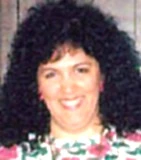
On the evening of June 28, 1983, Keli was working the area around the Three Bears Motel, near southbound Interstate 216 and Pacific Highway South, a stretch of road that had become familiar territory for her. She was last seen around 7:30 that evening, standing by the street in high heels, blue jeans, a tan short sleeved sweater, and a long camel hair coat. Raphael Wilson, unable to locate her later that night, called Keli's mother in a state of panic, and it was two days later that Keli was formally reported missing. She never reunited with her daughter. She was never seen again.
A Name Among Dozens
For years, Keli's case sat among a growing, horrifying cluster of similar disappearances involving young women working the streets around Seattle and the Sea-Tac corridor throughout the early 1980s, a pattern that would eventually become known publicly as the Green River Killer case, named for the river where several of the earliest victims were discovered. Investigators had a suspect early on. Gary Leon Ridgway, a truck painter from the Seattle suburbs, had been questioned by police as far back as 1984, after witnesses placed him in the company of at least two victims and identified his pickup truck at locations connected to their disappearances. For nearly two decades afterward, Ridgway remained a person of interest without enough evidence to charge him with anything, continuing to live an outwardly ordinary life while investigators worked, largely without success, to close the growing list of women who had vanished or been found dead across the region.
The break finally came in 2001, when advances in DNA testing allowed investigators to connect Ridgway forensically to several of the murders that had gone unsolved for so long. He was arrested, and in November 2003 he pleaded guilty to forty eight counts of murder as part of an agreement with prosecutors, one that spared him the death penalty in exchange for his cooperation in identifying additional victims and, where possible, the locations of their remains. It was through that cooperation that Keli McGinness's name was formally and finally connected to Ridgway. He told investigators he had first met her on February 23, 1983, months before her actual disappearance that June, and described picking her up again on the night she vanished. His own words, recorded during his confessions, were blunt and almost clinical: I took her someplace and I killed her, he told investigators. I know that for sure. He described strangling her inside his own pickup truck, the same vehicle witnesses had placed near other victims years earlier, adding her explicitly to a confessed body count that eventually reached forty nine women murdered between 1982 and 1984 alone.
A Confession Without a Body
Confirming Ridgway's guilt did not solve the remaining, aching problem at the center of Keli's case: where her body actually was. Ridgway's cooperation agreement required him to help investigators locate remains wherever possible, but his own accounts of where he had left various victims proved inconsistent and unreliable across many of his confessions, Keli's included. In March 2008, nearly five years after his guilty plea, Ridgway led searchers to a location where they recovered small bone fragments that investigators believed might belong to her, a discovery that offered the first genuine possibility of physical confirmation since her disappearance twenty five years earlier. Even that lead has never definitively closed the case. The fragments have remained subject to ongoing DNA analysis, and Keli McGinness's remains have never been conclusively recovered or laid to rest, leaving her case technically still open even though the man responsible for her death has been in prison, having confessed directly to killing her, for over two decades.
What Became of the Children She Left Behind
Perhaps the only piece of this story that offers anything close to comfort involves the two children Keli had before her death. Both of them survived into adulthood having grown up without her, and both, according to updates provided over the years by Keli's own mother, went on to build stable, functioning lives. Her daughter, the infant she had been so eager to reunite with in the summer of 1983, grew up to become a trained chef working in restaurants, and eventually reconnected as an adult with the older brother she had been separated from since infancy, the two of them finding each other decades after their mother's death made any reunion with her impossible. Both are doing well, Keli's mother has said simply, a small, quiet postscript to a story that otherwise offers almost nothing in the way of resolution.
A Name on a Long List
Keli Kay McGinness was eighteen years old when she disappeared from a street corner outside a Seattle motel, one name among dozens that would eventually make up one of the largest confirmed serial killing sprees in American history. Her case carries a strange, uncomfortable distinction that most missing persons cases never receive: certainty about who killed her, delivered in his own words, without the physical proof that would let her family finally bring her home. Gary Ridgway remains in prison, serving a life sentence for the forty eight murders he pleaded guilty to and the additional victims, Keli among them, he later confessed to separately. Somewhere in the search records and evidence logs built up over decades of investigation sits whatever remains investigators recovered in 2008, still waiting, all these years later, for the kind of confirmation that would let a case this old finally, fully close.
Sources
- The Charley Project: Keli Kay McGinness
- Remembered.com: Keli McGinness's Biography
- Victims of Serial Killers Wiki: Keli McGinness
- King County, Washington: Green River Homicides Investigation
- Find A Grave: Keli Kay McGinness